
Amsterdam in 3 days is doable if you plan the route well and know which areas to prioritize. In this guide you’ll find a clear itinerary to make the most of each day without rushing.
Amsterdam is a city that’s easy to explore on foot or by tram, so in a few days you can combine museums, neighborhoods with their own character, and spots along the canals. The idea is to help you understand how to get around, what to see in each area, and how to fit it all in without making things too complicated.
In this introduction I’ll give an overview of how the city is laid out and what to expect from the trip. Below you’ll find specific day-by-day recommendations, maps, and some practical tips that usually save time.
We’ve visited Amsterdam several times over the years and always come away with the same feeling: the city is best enjoyed by balancing well-known sights with relaxed walks through less touristy neighborhoods. Everything in this guide is based on personal experience and adapted for a short trip, and it’s aimed at travelers who want to make the most of three days in Amsterdam without hassle.
If you want to keep reading and see how to put together your Amsterdam in 3 days itinerary, the full guide starts here.
Map of things to do in Amsterdam in 3 days
Amsterdam is organized in concentric rings formed by its canals, which makes it easy to explore in just a few days. The best-known area is the Grachtengordel, which includes the Herengracht, Prinsengracht and Keizersgracht canals, all listed as a UNESCO World Heritage Site. Many must-see attractions are concentrated here, such as the Anne Frank House, the Van Gogh Museum and the country’s main museums.
In general, distances in Amsterdam are short, neighborhoods are well connected and public transport runs very smoothly. Note that many streets are pedestrian-only and bike traffic is constant, so it’s wise to be cautious when getting around.
3-Day Amsterdam Itinerary Summary
For a three-day itinerary, it’s best to group visits by area. The first day can be spent exploring the historic center, including Dam Square, the Royal Palace and the Jordaan neighborhood, which is just a few minutes’ walk away. Distances are short and walking is the best way to get around the canals.
The second day can be devoted to the museum district, home to the Rijksmuseum and the Van Gogh Museum. A few blocks away is Vondelpark, ideal for taking a break between visits. Trams also connect this area, though walking remains the most practical option.
The third day can be used to visit De Pijp, a neighborhood with a more relaxed pace and the lively Albert Cuyp Market. From there, in just a few minutes you can reach the Heineken Experience or the more residential neighborhoods to the south.
Summary of the 3-day Amsterdam itinerary:
- Day 1: Explore the historic center and Amsterdam’s canals
- Day 2: Museumplein, Vondelpark and De Pijp’s markets
- Day 3: Jordaan, Noordermarkt, the Rembrandt Museum and NEMO

Day 1: Explore Amsterdam’s Historic Center and Canals
Begin your tour at Dam Square, the heart of the city since the 13th century. Here you’ll find the Royal Palace and the Nieuwe Kerk, two iconic buildings that show Amsterdam’s historical and architectural development. In the center of the square stands the National Monument, which commemorates the victims of World War II. It’s a busy area, always with street performers and cultural events.
A few steps away is the Royal Palace, built in the 17th century. For a long time it served as the city hall, and today it’s the official residence of the king of the Netherlands. Inside you can tour rooms decorated with marble and period artworks, and learn how the building has been adapted for royal use.
📌 Head up to the De Bijenkorf mall terrace opposite Dam Square for a direct view of the Royal Palace.
The day continues with a visit to the Anne Frank House, the most moving museum in the city. In this building, Anne and her family hid during the Nazi occupation. The tour includes the original rooms of the secret annex and an exhibition on the persecution of Jews in Europe. It’s best to book tickets in advance, since access is limited.
📷 Book the Anne Frank tour of the Jewish Quarter here. Don’t miss it!
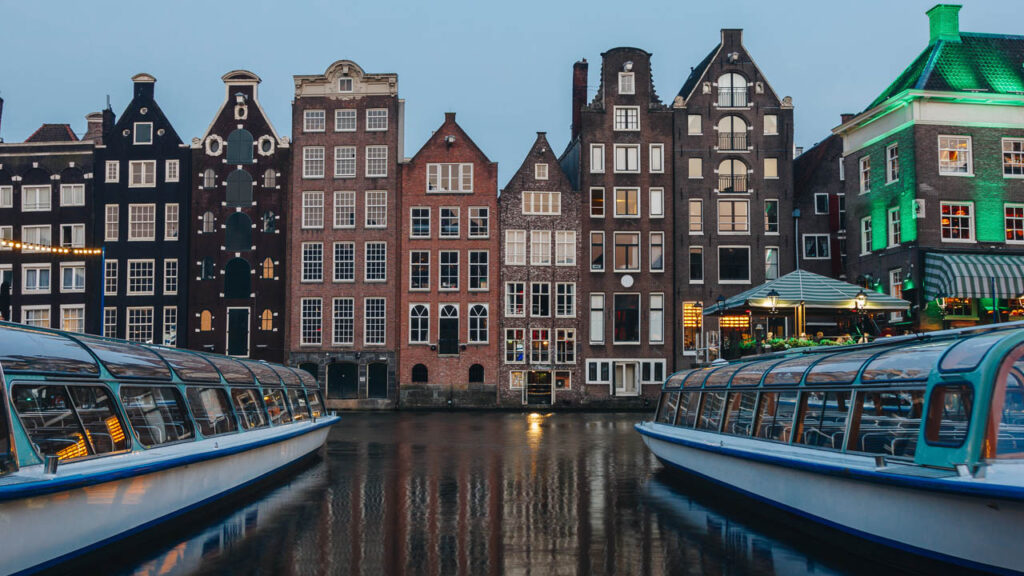
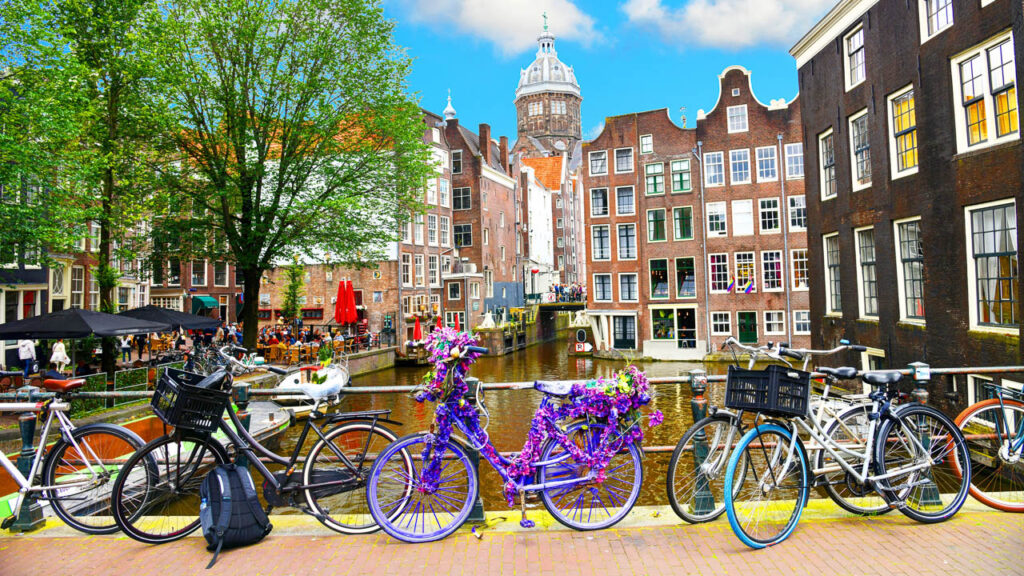
Walk along the Singel canal heading south, the oldest canal in Amsterdam and part of the canal belt that’s a UNESCO World Heritage Site. The leaning houses and reflections in the water offer the city’s most classic postcard views. It’s a peaceful walk, perfect for ending the day enjoying the canal atmosphere.
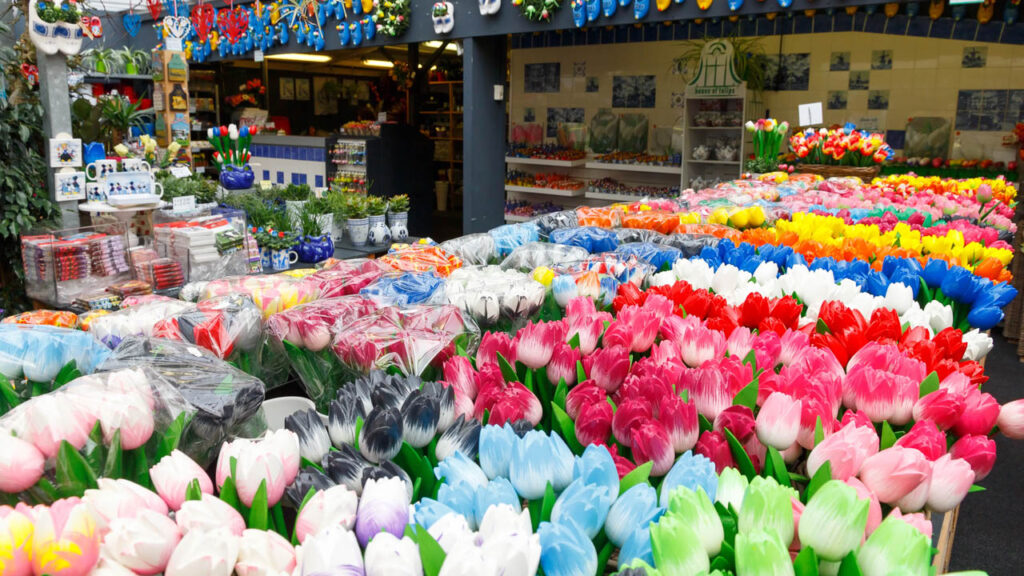
Head to the Bloemenmarkt, the floating flower market. At the stalls you’ll find tulips, bulbs, and all kinds of plants. It’s a short, picturesque stroll, ideal if you want to take home a typical Dutch souvenir. On our last visit, we went to the Bloemenmarkt on a Tuesday and there were fewer people.
From there, walk to the Red Light District, one of the city’s most famous areas. Its streets lit by neon reflect part of Amsterdam’s liberal history. Apart from the bars and windows, there are museums like the Museum of Prostitution, which explains the neighborhood’s evolution and the regulation of sex work in the Netherlands.
📷 Take this guided tour of Amsterdam’s Red Light District.
Day 2: Museumplein, Vondelpark and De Pijp markets
The Museumplein is the ideal place to start the second day of this Amsterdam in 3 days itinerary.
The Rijksmuseum houses one of the Netherlands’ most important art collections, and its 19th-century neo-Gothic building is a highlight in itself. The galleries display paintings by Rembrandt, Vermeer and other Dutch Golden Age masters. “The Night Watch,” by Rembrandt, is one of the best-known works. The museum also preserves sculptures, ceramics and objects that tell the country’s story from the Middle Ages to the 20th century.
📷 Book the guided tour of the Rijksmuseum, with admission and a guide included.
Nearby is the Van Gogh Museum, dedicated to the Netherlands’ most famous artist. It holds the largest collection of his work in the world, including “Sunflowers,” “The Bedroom in Arles” and several self-portraits. The displays let visitors follow his development as a painter and understand his influence on other artists. It’s one of the city’s most visited museums, so it’s best to buy tickets in advance.
📷 Book the guided tour of the Van Gogh Museum
After visiting the museums, pause at the Vondelpark, Amsterdam’s largest park. It’s where locals meet to walk, picnic or simply relax under the trees. In summer, there are free outdoor concerts and cafes with terraces where you can have lunch or a drink before continuing the tour.
📌 If it’s a rainy day, consider replacing the Vondelpark stroll with a visit to the Stedelijk Museum, which is dedicated to modern and contemporary art. It’s on the same museum square, so there’s no need to leave the area.
From there, head to the De Pijp neighborhood, one of the city’s liveliest and most diverse areas. Its streets are filled with a mix of international shops, bars, bakeries and restaurants from around the world.
The Albert Cuyp Market, Amsterdam’s largest market, is the neighborhood’s heart. With more than 250 stalls, it offers everything from fresh produce to flowers, clothing and souvenirs. It’s a great place to try local foods like freshly made stroopwafels or fries with mayonnaise.

Day 3: Jordaan, Noordermarkt, the Rembrandt Museum, and NEMO
The last day of your Amsterdam in 3 days itinerary starts in the Jordaan neighborhood, an area that still preserves its original 17th-century layout. Once a working-class district, it now blends traditional homes with galleries, design shops, and cafes.
Strolling its narrow streets reveals the typical brick architecture and the canals that run through them. Along the way you can visit small museums like the Tulip Museum or the Pianola Museum, little known but interesting.
📌 If you’re in Amsterdam on a Monday or Saturday, make sure to visit the Noordermarkt. On Saturdays it fills with stalls selling organic, seasonal produce: cheeses, freshly baked bread, fruit, vegetables, and homemade sweets. On Mondays it changes completely and becomes an antiques market, where it’s easy to get lost among curious objects, old books, and collectible pieces.
Spend some time walking the canal ring, watching the leaning houses reflected in the water and the barges passing slowly — the most classic image of Amsterdam. If you’d like a different experience, you can also take a boat tour, ideal for seeing the city from another perspective.
📷 We recommend this budget-friendly option! Take a canal cruise through Amsterdam.
Next, head to the Rembrandt House, where the painter lived and worked for several years. The museum preserves etchings, sketches, and objects from his daily life. The visit lets you see his studio and understand how he prepared the pigments and materials he used in his works.
The NEMO Science Museum is a perfect way to end the day, especially if you’re traveling with children. Its ship-shaped building is visible from afar, and inside you’ll find interactive experiments and workshops that make science accessible and fun for all ages. It’s a different option after the classic museums, ideal for kids to take part while adults enjoy the view from the terrace, which offers a panorama of the port and the eastern canals of Amsterdam.
📌 Stay on the NEMO terrace until sunset: the views of the port and the illuminated boats are one of the city’s lesser-known sights.
Things to do if you have more time
From Amsterdam you can take several short excursions that give a better sense of the history and everyday life in the Netherlands.
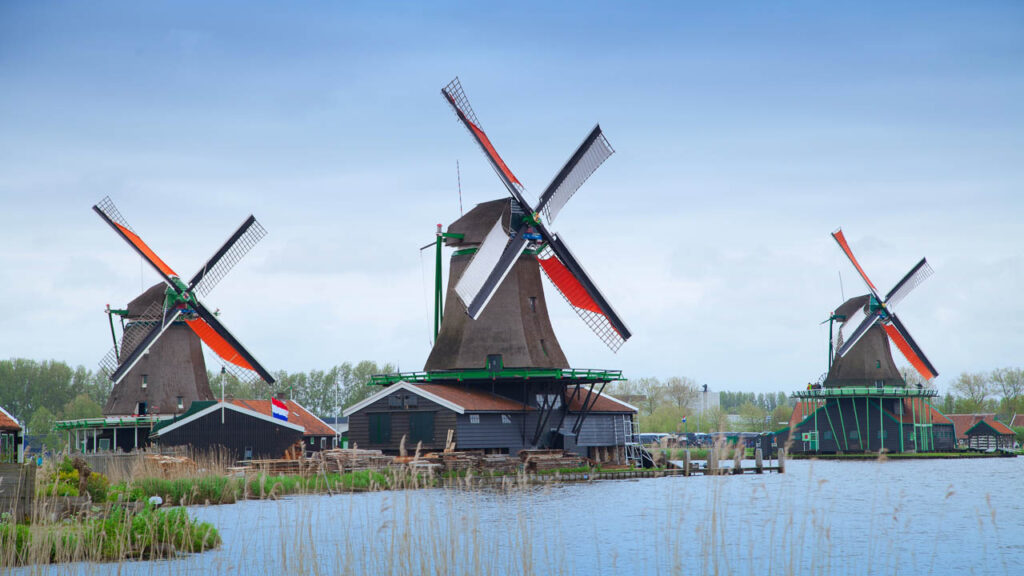
Zaanse Schans is just a 20-minute train ride from the central station (get off at Koog-Zaandijk). It’s an open-air museum with windmills, wooden houses and traditional workshops. It’s worth setting aside half a day to explore it at a relaxed pace and visit its small museums.
In spring, Keukenhof and the tulip fields are among the most popular outings. They’re about 40 minutes by car or bus from Amsterdam. Between March and May, the gardens display millions of tulips in bloom, and a visit can take around two to three hours.
📌 If you’re traveling between March and May, plan to visit the tulip fields early in the morning: the light is best then and there are fewer tour groups.
Haarlem is just 15 minutes by train. It’s a historic city with the Grote Kerk, the Frans Hals Museum and a center full of shops and cafes. It’s ideal for a half-day visit.
Another good option is to combine Edam and Volendam, two towns about 30 minutes away by bus. Edam is known for its cheese and traditional architecture; Volendam for its harbor and fishermen’s houses. They can be explored on foot in half a day, enjoying the scenery and the streets along the water.
- Tour of Volendam, Marken, Edam and Zaanse Schans: this tour is quite comprehensive, letting you visit several inland Dutch towns and fully experience their traditions: traditional houses, windmills, clogs, cheeses… and much more!
- Tour to Giethoorn: known as “the Dutch Venice,” so you can imagine what you’ll see here. That said, it’s not comparable to other towns: there are no cars here, and the trip takes you past traditional thatched-roof houses and wooden bridges. Very rustic.
- Keukenhof Tour: get ready to see a lot of color in these beautiful gardens full of tulips, daffodils and hyacinths, covering about 32 hectares.
💯 Planning a longer trip around the country? Check out our recommended 5-day itinerary for the Netherlands.
Recommended food for this 3-day Amsterdam itinerary
Trying fresh herring at a street stall is a Dutch classic. It’s served with chopped onion and pickles, and is usually eaten on the go, holding it by the tail. In Amsterdam you can find it at stalls near the canals or at the Albert Cuyp Market.
The stroopwafels are another must-try. These thin cookies filled with syrup are made on the spot at many markets. At the Albert Cuyp Market they’re often sold hot, straight off the griddle, filling the street with their sweet aroma.
On any visit to Amsterdam, try Dutch cheeses like Gouda or Edam. Specialty shops offer tastings and explain the differences between young, aged, and smoked varieties. De Kaaskamer, in the city center, is one of the best-known shops.
The Dutch pancakes (poffertjes or pannenkoeken) are another popular option. Thinner than American pancakes and often served with butter or fruit on top, they’re found at several markets around the city and are ideal for a quick breakfast or afternoon snack.
And to end the tour, a glass of jenever, the Netherlands’ national spirit. At the historic Wynand Fockink distillery, behind Dam Square, you can sample different varieties and learn how this traditional drink is made.
📌 At Wynand Fockink jenever is served the local way: the glass is filled to the brim and the first sip is taken without lifting it, straight from the counter.
Practical tips for your trip to Amsterdam
Museum opening hours vary by season and day of the week. In general, they open between 9:00 and 10:00 AM and close between 5:00 and 7:00 PM. Some, like the Van Gogh Museum or the Anne Frank House, are closed on Mondays, so it’s a good idea to check the official sites before planning your visit.
📌 If you only have three days, plan museum visits and attractions for the first two, and leave the last day for a relaxed walk along the canals and local neighborhoods.
If you’ll be getting around a lot, 24-, 48- or 72-hour public transport passes are a good option. They cover trams, the metro and buses, and let you use all modes without worrying about single tickets. There are also family discounts and combined passes that include museum entry.
During high season, lines at the most popular attractions can be long. To save time, buy tickets online for a specific time slot. Early morning or late in the day tend to be the quietest times.
📷 You might want to buy the Amsterdam City Card to get discounts on major attractions and public transport.
Tuesdays and Wednesdays are the least busy days. If you can, use them to visit the main museums. Weekends and public holidays are usually the busiest times.
🔝 ¿How to travel cheaply in Amsterdam? – Amsterdam isn’t a cheap city to visit, so take a look at this article for tips on traveling on a budget in the Dutch capital.
Where to stay in Amsterdam?
The historic center is convenient if you want to be close to everything: Dam Square, the Anne Frank House, and the main museums. There’s transport in every direction and plenty of accommodation options.
- The Jordaan neighborhood is quiet and residential, with canals, cafés, and galleries. Ideal if you’re looking for a more local, less touristy area.
- De Pijp combines multicultural life with more affordable prices. It has good tram and metro connections, with the Albert Cuyp Market as its central hub.
- Leidseplein is the best area for nightlife, full of bars, theaters, and music venues, and it’s also well connected to the rest of the city.
To make it easier to choose where to stay in Amsterdam, here are three options that work well for different kinds of trips:
- Hotel Van Gogh: On Museumplein, right next to the Van Gogh Museum. It’s a modern hotel with details inspired by the artist’s works. It offers double and triple rooms, convenient for families or groups of friends, and an excellent location for exploring the museum area on foot.
- HEGRA by Stanley Collection: Housed in one of the historic merchants’ canal houses. It’s a good choice if you’re after a charming stay with water views. It’s close to Dam Square, the Anne Frank House, and the “Nine Streets,” an area full of shops and cafés.
- Eric Vökel Boutique Apartments – Amsterdam Suites: Spacious, bright apartments with a fully equipped kitchen and dishwasher, ideal for families or longer stays. They’re next to Central Station, a convenient location if you arrive by train or want to make day trips from the city.
🏨 Find the best accommodation in Amsterdam here.
How to get to Amsterdam?
Schiphol Airport is about 15 km from the city center. The most practical and economical way to get there is by train, a trip of around 15 to 20 minutes to Central Station. There’s a small extra charge for the Smart Card (1 €).
If you’d like more comfort and to avoid transfers, you can book a private transfer from the airport to your accommodation and travel worry-free from the start.
Amsterdam is also well connected by international train, with direct services from Berlin, Paris, Brussels, and other European cities.
This wraps up the itinerary covering the main sights and recommended activities to enjoy Amsterdam in 3 days.
What you need for your trips to Europe
Plan your journey easily with these trusted resources: