In this article we will discuss things to do in Istria in Croatia, an itinerary that we have done by car to be able to travel it quickly and easily.
To see everything there is to do in Istria you need at least 3 days. We traveled in early December, with winter at the gates of the northern hemisphere, with the days short and each of the villages allowing themselves to be seen without the crowds of tourists. In summer, it would be necessary to add the enjoyment of the beaches, but that will be another time.
The Istrian Peninsula is located in the north of Croatia, on a piece of land that juts into the Adriatic Sea. The cities we decided to visit are not so far from each other (between 50-100 kms away), going by highway is quite fast, but when you take the internal roads in the middle of the mountains you have to drive carefully.
From a historical and cultural point of view, many of the monuments that we are going to see and visit there, we should know that in ancient times the whole peninsula belonged to the Roman Empire, later it passed into the hands of the Venetians and then it was under the Austro-Hungarian Empire until the First World War. In the last century, it was part of Italy, Yugoslavia, until its dissolution and incorporation into present-day Croatia.
🔝 Check out this article with the Croatia Travel Guide. Everything you need to know in one place!
Is istria worth visiting
For us, Istria is really worth a visit. Its old towns on the shores of the Adriatic as well as on the top of the hills with their narrow streets are very picturesque. Also, from the gastronomic side, it has regional dishes with many ingredients inherited from the Italians and truffles as the main element.
Things to do in Istria, the best road trip
The itinerary we drove through Istria in 3 days was as follows:
- First we visited Zagreb. For more info, you can read our article on things to do in Zagreb.
- From there we went to Rijeka ‘(A)’, from where we visited Opatija ‘(B)’ and Trsat.
Rijeka was our starting point for our Istrian Peninsula itinerary by car. They gave us lots of recommendations of other towns to visit, but we didn’t get to do much more because it was getting dark very early in the evening, having traveled in winter. Too bad because it’s all so cute!
- Pazin ‘(C)’, a village in the middle of the mountain with a medieval castle.
- Pula ‘(D)’, coastal town with a spectacular Roman amphitheater.
- Rovinj, ‘(E)’ a mini peninsula with a beautiful old town.
- Poreč ‘(F)’, in the style of Rovinj, also beautiful.
- Motovun ‘(G)’, the area where truffles grow, an exquisite and expensive product. The village is located entirely on the top of a hill.
📷 If you want to visit the Istrian Peninsula and you don’t have much time, you can take excursions from different cities that will save you a lot of planning:
– Excursion to Rovinj, Porec and Bale from Pula.
– Istria Day Tour from Zagreb.
1) Visiting Pazin, the inspiration of Jules Verne
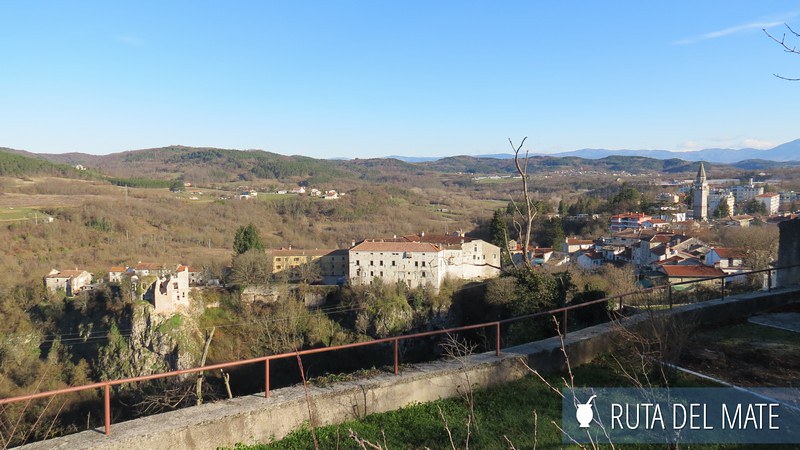
Pazin was the first destination of the places to see on the Istrian Peninsula. It is a small mountain village on the edge of a cliff, which was the inspiration for Jules Verne ‘s novel Mathias Sandford.
We went looking for its medieval castle where the protagonist of this novel was imprisoned. Since the end of World War II, the site has served as a museum.

One of the main things to see in Pazin is the abyss in which the castle hangs, due to the fact that the Pazinčica river goes subway forming 3 lakes. Its interior can be accessed through caves.
2) Things to do in Pula, the must-see in Istria Peninsula
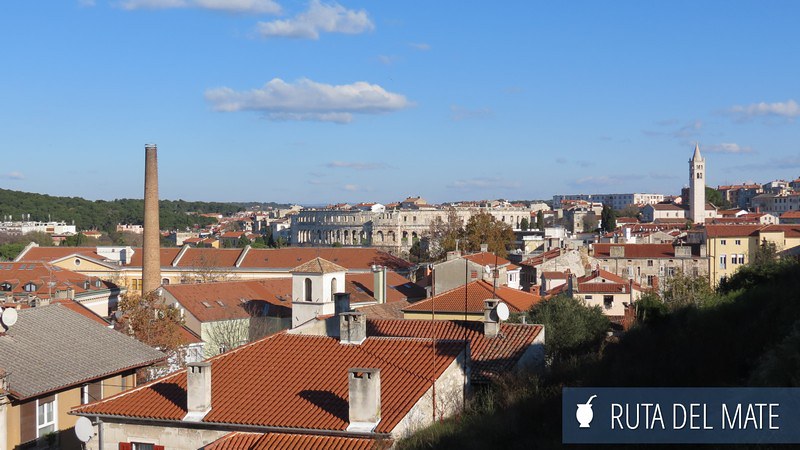
Pula is the largest city of our itinerary through the Istrian Peninsula, where we find the first trace that the Romans were in this region, an amphitheater of the first century, although for them it was also one of the most important ports of their Empire.
This Roman amphitheater with a capacity of 20,000 spectators is one of the best preserved still standing, so much so that it is still used for summer festivals and concerts.
📷 Book your free tour of Pula here and get to know the main attractions with an expert guide. You can also buy a ticket for the amphitheatre in Pula here.
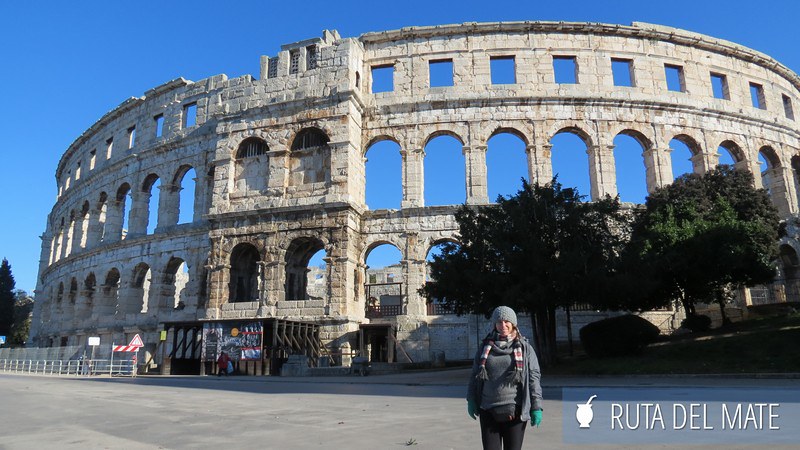
But in addition to the amphitheater there are more Roman ruins, as you go deeper into the historic center, you will find the few remains of walls that are preserved.
The historic center is made up of narrow pedestrian streets, with lots of charm.
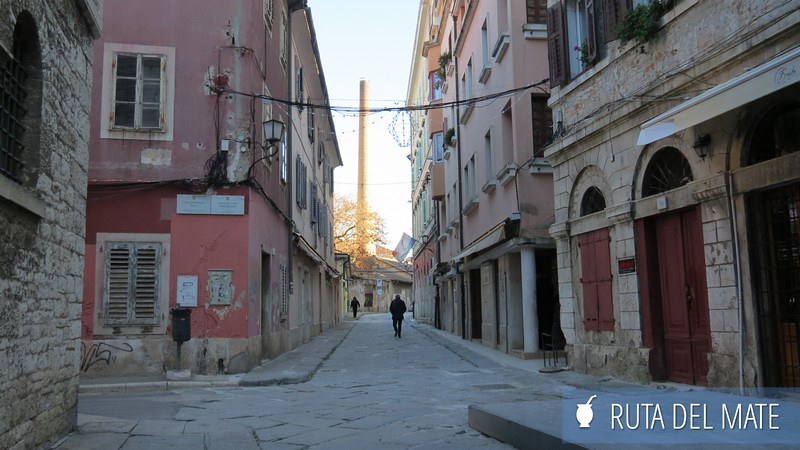
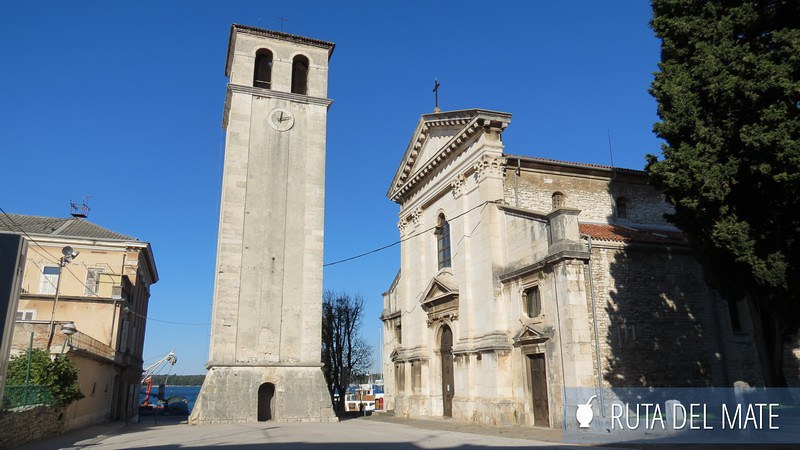
Among the main attractions is the Cathedral of the Assumption of Mary dating from the fourth century, although more structures have been added to what was the original church. Also the bell tower is later, from the 16th century, which was built using stones from the amphitheater.
Both the Cathedral and other monuments, including the Temple of Augustus seen below, were half-destroyed in World War II, but restored again.
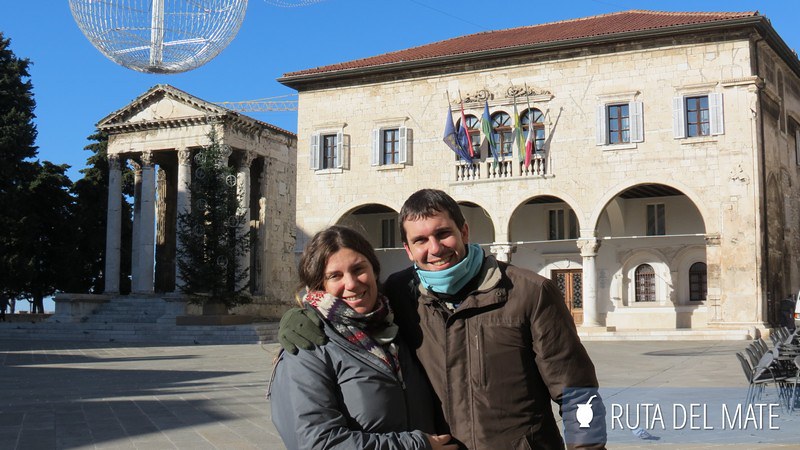
If you continue walking you will find the main square, where the ancient “Roman forum” used to be and where today is the tourist office, the municipality or town hall and more Roman monuments such as the Temple of Augustus.
After the fall of the Roman Empire, this temple was a church and also a kind of warehouse or silo; today it houses a small museum. The municipality building is also somewhat old, dating from the 13th century and has a mixture of architectural styles.
Nearby is also the Chapel of Santa María de Formosa, which is closed to the public and is only opened on special occasions.
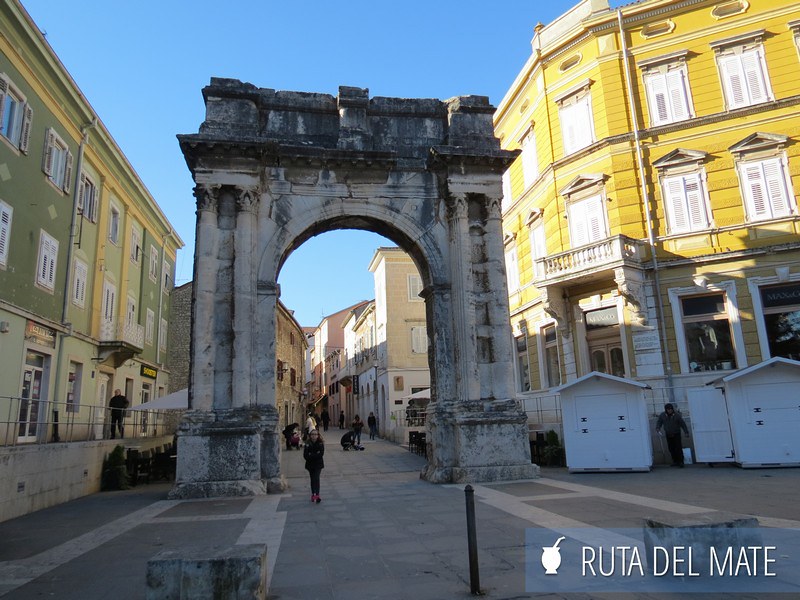
The Arch of the Sergios is at the end of the pedestrian street and is also from the 1st century, it was one of the entry points to the walled city. Unfortunately, in the 19th century, with the expansion of the city these walls collapsed, but at least they left this great arch as a souvenir.
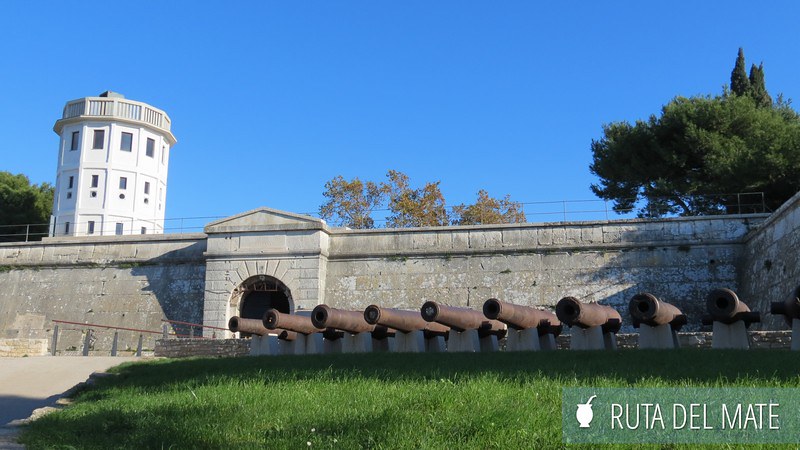
In the upper part of Pula you should explore the Bourguignon Fort that has guarded the city since the 19th century. This fortress was built by the Austro-Hungarian Empire. We took a walk around the outside to see the views of the city.
Where to stay in Pula
The best location to stay in Pula is close to the amphitheatre and the historic city centre. We recommend these three alternatives:
- D&A Amphitheatre: modern, well-equipped flats in the heart of the town, 200 metres from the amphitheatre and at the entrance to the historical centre.
- Rock Rooms: double and triple rooms in the centre of Pula. It is a simple and well decorated hotel, ideal for those looking for budget options.
- Hotel Amfiteatar: just a few metres from the amphitheatre, the hotel offers comfort and spacious rooms, good breakfast and a restaurant for local dishes.
3) Visit charming Rovinj, one of the most beautiful villages in Istria
We continued on our way to Rovinj, another of the must-see places on the Istrian Peninsula.
The old town of Rovinj is located on a piece of land that juts into the Adriatic Sea. It used to be an island, but in the 18th century it was joined to the mainland. It is not accessible by car, but has to be left in the parking lot outside or further uptown, which is what we did.
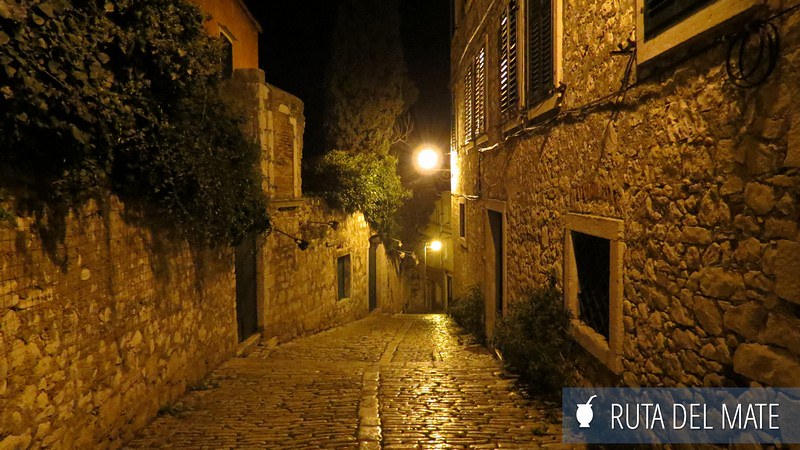
We can’t imagine what these narrow streets will be like in summer, how crowded everything must be, really very lucky to be able to enjoy it like this, in solitude, despite the cool sea.
📷 Book a free tour of Rovinj here to explore the historic centre and learn about its history.
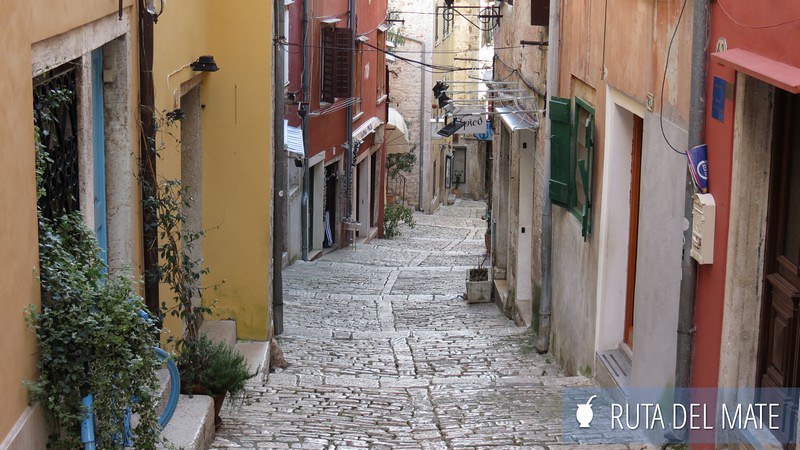
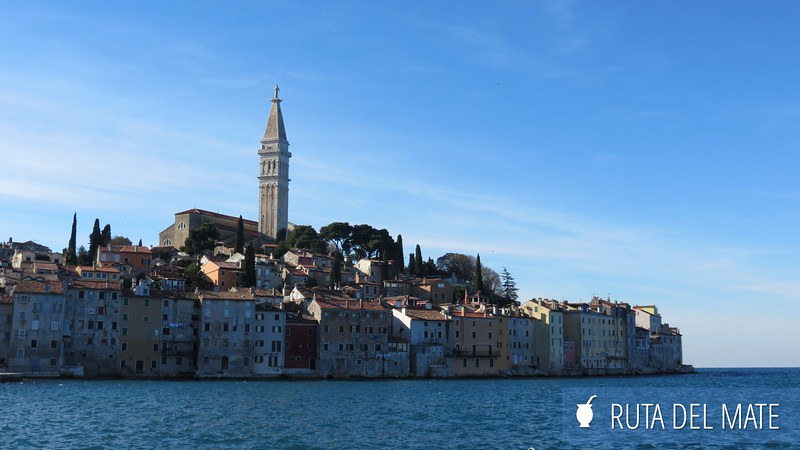
In the upper part of the historic center is the Basilica of Santa Eufemia, in baroque style and from the eighteenth century. It has a bell tower that emulates those of St. Mark’s Basilica in Venice, with the statue of the saint at the top.
Getting there is not complicated, since the hill on which it is located is not so steep, although it is not “accessible” as such because of the cobblestone streets and steps. It is worth the climb both during the day and at night.

Another site to see in Rovinj is the Balbi Arch, one of the 3 gates that were built in the 17th century during the time when Rovinj was one of the most important cities of the Venetian Republic. The arch is decorated, on each side, with the head of a Turk and a Venetian.

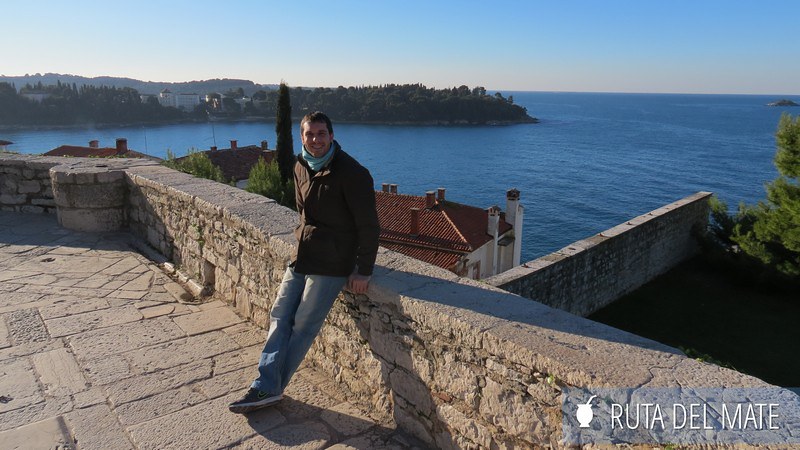
With Juan we did not want to leave without having a panoramic view of both sides of the peninsula, the south side and the north side. On the south side, the best thing to do is to stroll along the marina and fishing port of Rovinj. And from the north approach the parking lot to have a good panoramic view of the peninsula.

Where to stay in Rovinj
We chose Rovinj for our overnight stay, as it suited us perfectly for our itinerary around the Istrian Peninsula.
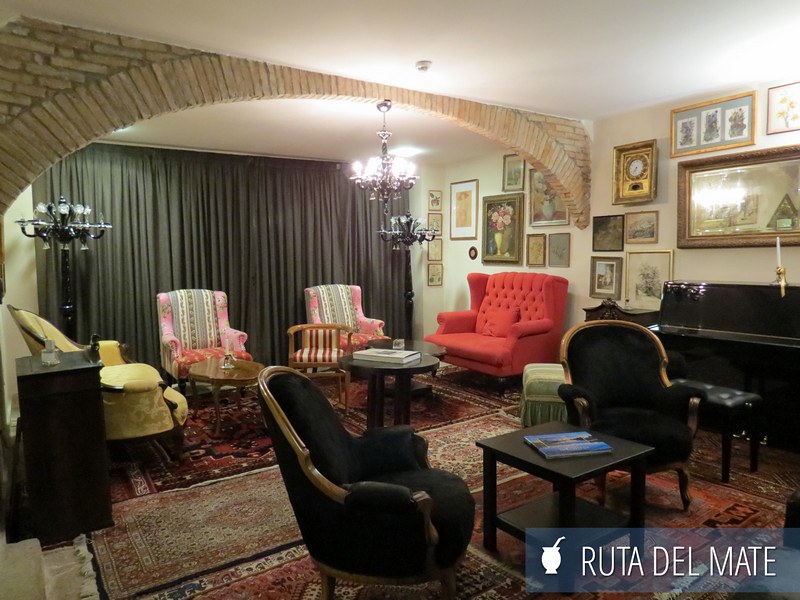
The hotel we chose was Angelo D’Oro, a hotel in the heart of Rovinj’s old town. The building in which the hotel is located is beautiful and blends in with the style of the town. Inside the decor is very tasteful and we enjoyed all the facilities. The rooms were in keeping with the classic and stately decor of the hotel.
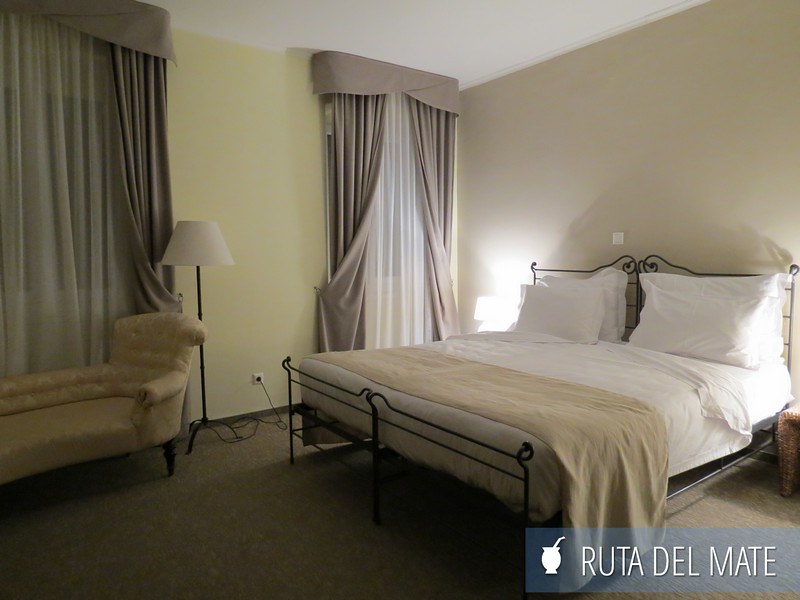
We had breakfast included, which was continental buffet style with a wide variety of fresh produce. In summer you can enjoy the garden terrace at the back of the hotel.
There are different options for accommodation in Rovinj. Hotels and flats within the historic centre are more expensive than accommodation outside the historic centre. We recommend two more alternatives:
- Residence Porta Antica: in the historic centre, opposite the fishing harbour. Rooms with exquisite decoration, rustic furniture and sea views.
- Apartments and Room Eva: a 10-minute walk from the historic centre, it is an excellent option to pay less. It has rooms and one-bedroom flats.
4) Visit Poreč, a World Heritage Site.
The old town of Poreč has as its main monument the Euphrasian or St. Euphrasius Basilica, a clear example of Christian architecture of the 6th century and for that reason declared a World Heritage Site by Unesco.
📷 Book your cruise here to sail along the coast of the Istrian peninsula, visiting Porec, Rovinj and Vrsar, including a barbecue on board!
a) Euphrasian Basilica
The Basilica can be toured inside, finding different rooms such as the sacristy, an octagonal baptistery, a sixteenth-century bell tower which can be climbed to contemplate the views of the city and the bishop’s palace.
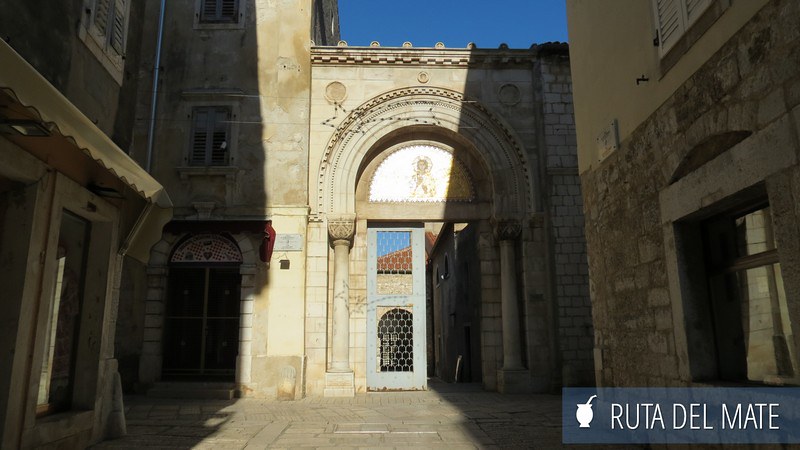
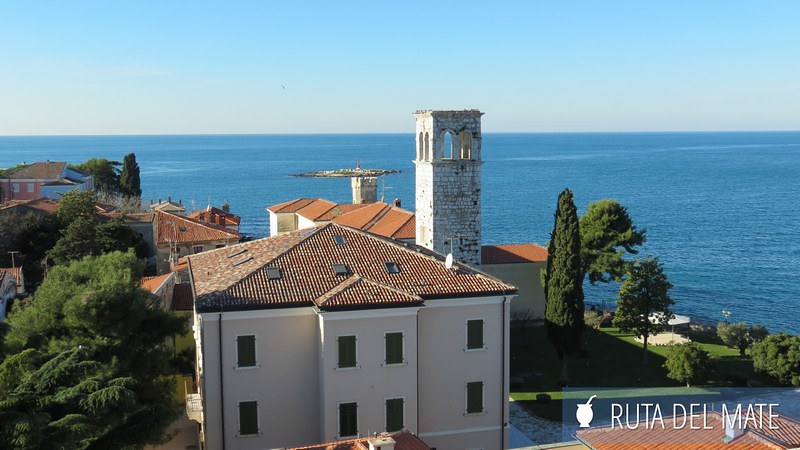
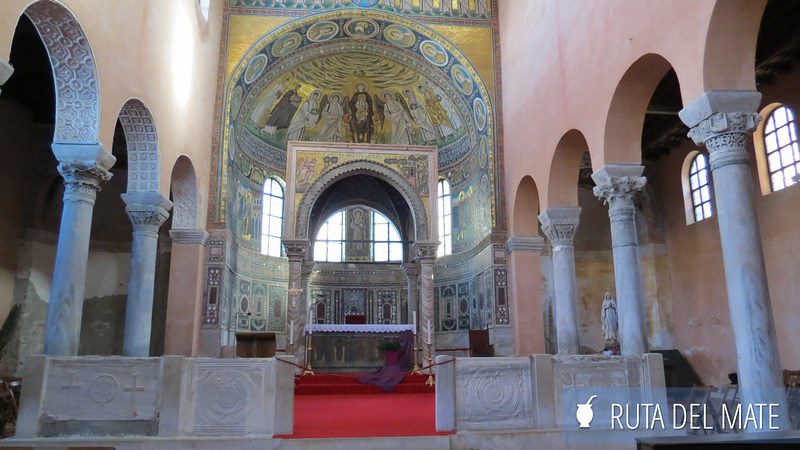
In addition, mosaics, frescoes and the archaeological remains of an earlier sanctuary dedicated to St. Mauro, the first bishop of Poreč, can be seen.

The highlight of the tour is the Church dedicated to the Virgin Mary, whose altar features golden Byzantine mosaics that are a delight to behold.
b) Historic center of Poreč
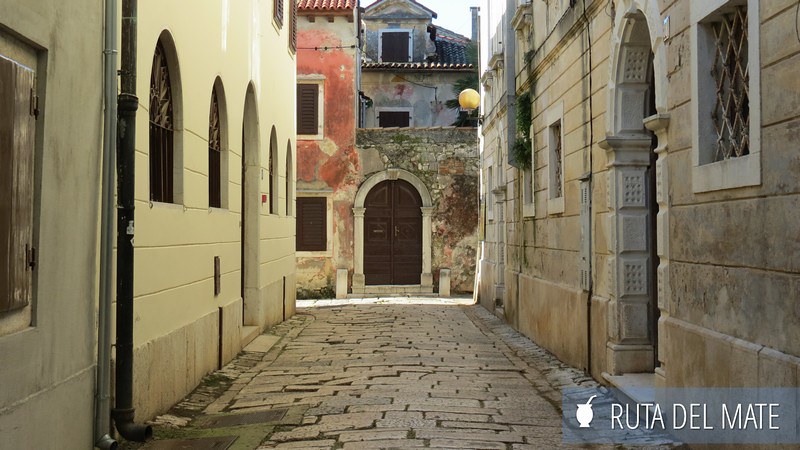
The old town of Poreč is reminiscent of Rovinj in terms of small cobblestone streets, only this one has no ups and downs.
5) Visit Motovun
To return to Rijeka, instead of retracing our steps and going back along the highway, we took an internal route to go through Motovun and if we made it in time (and it didn’t get dark) through a couple of other towns that had been recommended to us from the hotel.
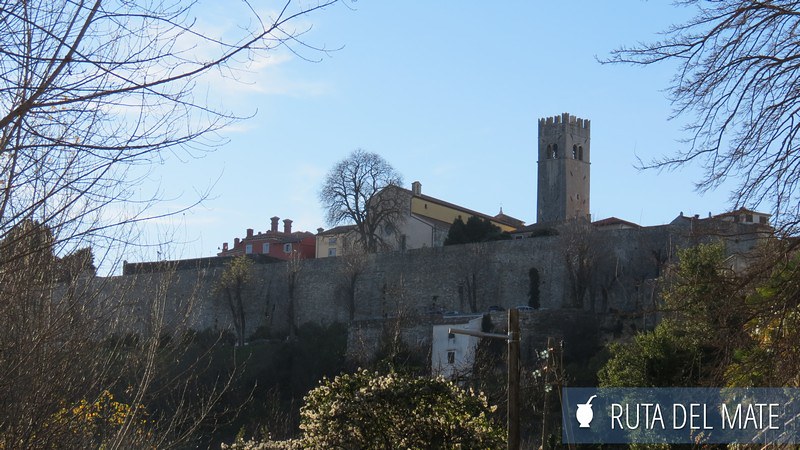
So we went to the center of the Istrian Peninsula and on the top of a hill of about 280 meters above sea level we found the village.

Car access to the village is restricted and you have three options:
- One is to pay an entrance fee for the car and get it as close to the top as you can;
- the other is to pay for a bus that the municipality makes available to the visitor (and leave the car in the parking lot on one side);
- up and down on foot.
Knowing that we would have no problem parking upstairs, we paid to go upstairs with the car and have more schedule independence.
We left it parked very close to the access gate to the medieval city containing examples of Romanesque, Gothic and Renaissance architecture. Look up before entering and you will find the Lion of Venice carved in stone, a legacy of the Venetian period on the Istrian Peninsula.
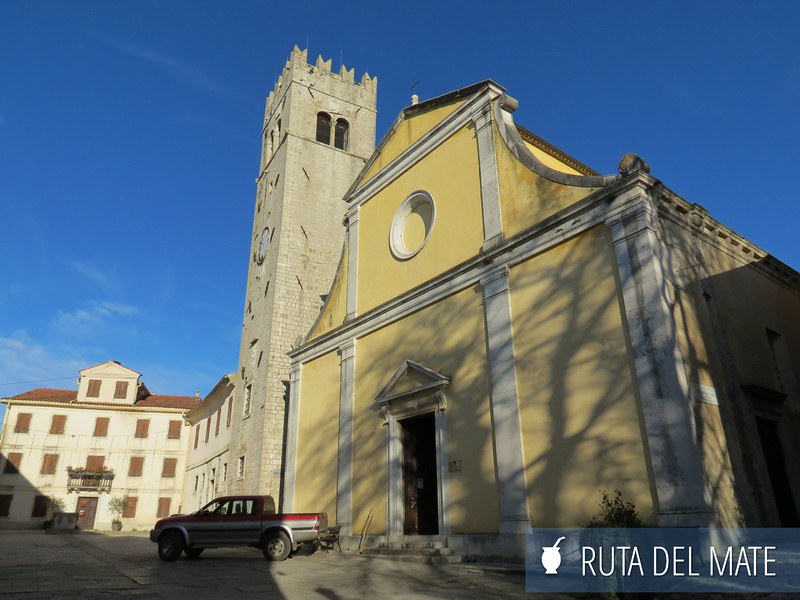
In the main square of Motovun, called Andrea Antica in honor of this illustrious artist born there, stands the church of St. Stephen and, next to it, a bell tower of the sixteenth century. You will also find the medieval cistern.
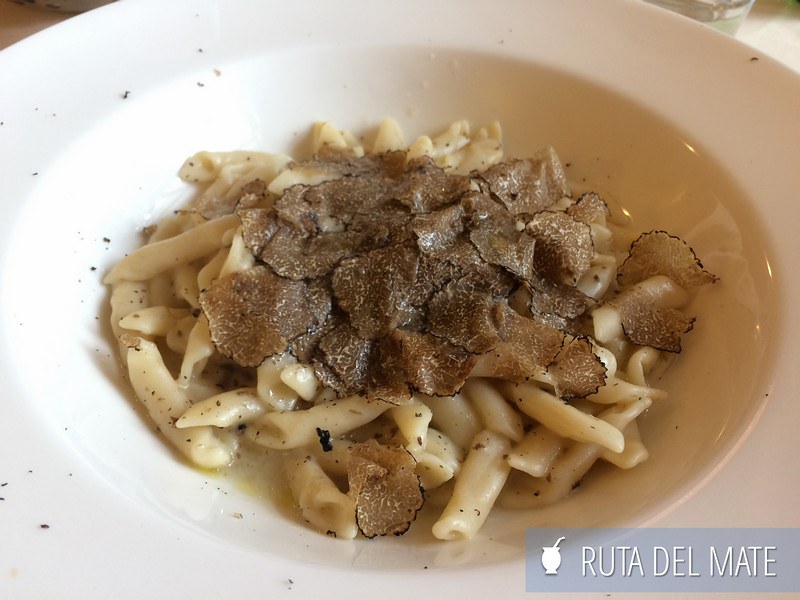
Below the mountain and on the other side of a river is Zigante, where we had lunch with Juan with a plate of pasta with truffles. It seems that this area is ideal for the collection of white and black truffles, although because they grow below the ground, their collectors need the help of trained dogs for their correct detection.
Where to stay in Motovun
The historic centre concentrates most of the accommodation in Motovun. The most affordable options are found on the outskirts of town, in cottages or flats surrounded by vineyards.
- Guesthouse Villa Marija: housed in a renovated 17th century house. Rooms with balconies and fabulous views of the valley and vineyards.
- Casa Rossa: just outside the historic centre of Motovun on the road, with private parking and garden. An excellent choice for a relaxing stay in a renovated farmhouse.
Practical information for travel to Istria Peninsula
– How to get around Istria
We rented a car. It cost us € 50 for 2 days and includes full comprehensive insurance and unlimited mileage. Gas for the trip we made was 26 euros and we spent about 12 euros in toll. In total we spent almost 90€ between the two of us. On the itinerary through the Istrian Peninsula we covered about 300 kilometers.
In short, which towns to see in Istria
For us both Rovinj and Motovun are indispensable and two of the most beautiful towns in Istria. In addition, there is the town of Pula with its Roman legacy. Other Istrian towns to visit are Porec, Umag or Groznjan.
What you need for your trips to Europe
Plan your journey easily with these trusted resources: