Cordoba is one of the most beautiful cities in Andalusia, it has a lot of colour, light and traditions, but above all, a mixture of cultures living together in the same place. In this article we suggest the best things to do in Cordoba in 2 days, for a weekend getaway.
Cordoba still preserves Roman, Muslim and Christian vestiges in its large historic centre, which is a UNESCO World Heritage Site and therefore one of the most visited cities in Andalusia, along with Seville and Granada.
Once the capital of Hispania Ulterior, today it is a city full of life, music and the smell of flowers.
If, like us, you only have a couple of days to visit Cordoba, we have a tour of the city that you will love.
📷 If you plan to visit the city’s two main attractions, we recommend you book this full tour of Cordoba, which includes a guide and skip-the-line entry to the Mosque Cathedral and the Alcazar.
1) Alcazar of the Christian Monarchs
At the moment, the Alcázar de los Reyes Cristianos is temporarily closed for restoration works, with reopening planned for the end of February 2026.
It dates from the 14th century and is a military building (a fortress). It was one of the main residences of the Catholic Monarchs, Isabella I of Castile and Ferdinand II of Aragon.
Don’t forget to go up to the wall and its towers, where you will have incredible 360º views, some of the most beautiful to see in Cordoba.
✏️ Admission for adults to visit the Alcazar of Cordoba 2026: 7 €. Discounts are available for students. Monday closed.
📷 To get the most out of your visit to the Alcazar of Cordoba, it is best to take a guided tour.

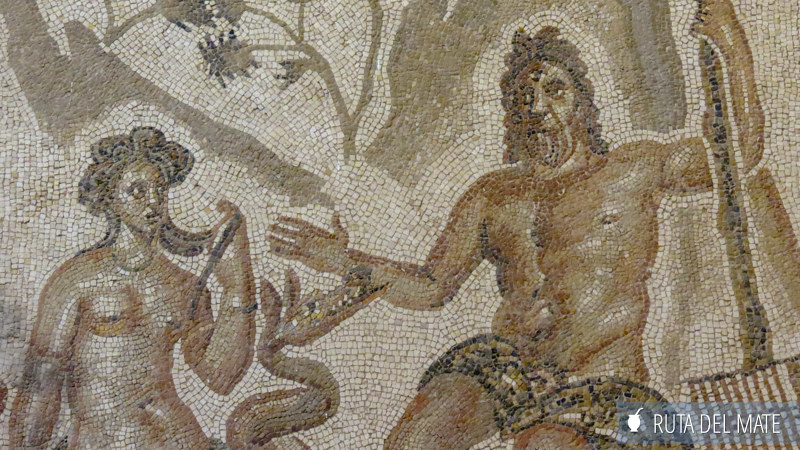
Large Geometric Mosaic
Inside the Alcazar, I discovered the Great Geometric Mosaic. The Mosaic Room contains several mosaics from the 2nd to 3rd centuries AD found in the 1959 excavations in the Plaza de la Corredera. They are impressive!
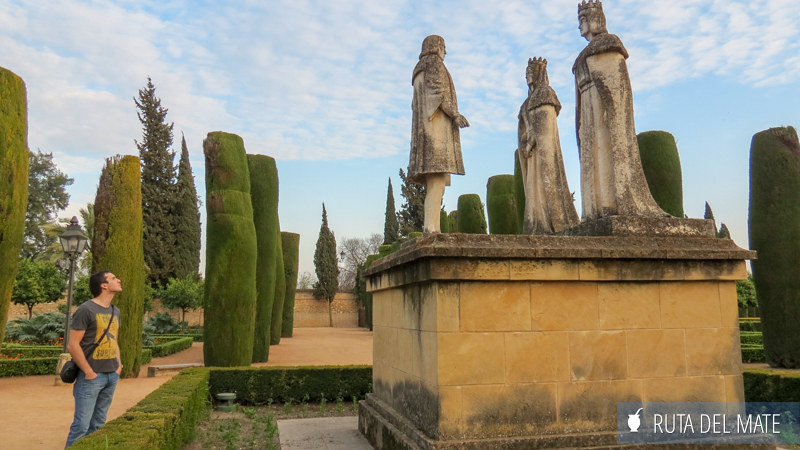
Statue of the Catholic Monarchs and Columbus
It is located in the Alcazar Gardens. It is said that in 1492 Cristobal Colon met with the Catholic Monarchs in the Alcázar of Cordoba, before setting out on his voyage to what would later become America (although he never knew that he had discovered a new territory).
The plants, trees, fountains and sculptures that adorn the Gardens make the walk to the aforementioned statue one of the most pleasant and best things to do in Cordoba.
2) Mosque-Cathedral of Cordoba
Is one of the most emblematic and important places to see in Cordoba. Inside there is much to discover:
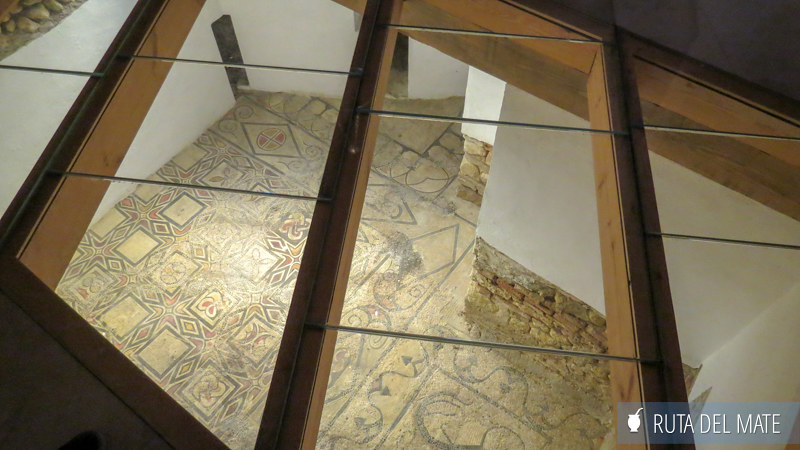
- The remains of the Church of San Vicente, which is the first church before the Muslim invasion. In the 8th century, it was destroyed and the mosque was built on its ruins.
- The arches of the mosque in perfect symmetry. This mosque would come to be regarded as the most important Islamic shrine in the western world.
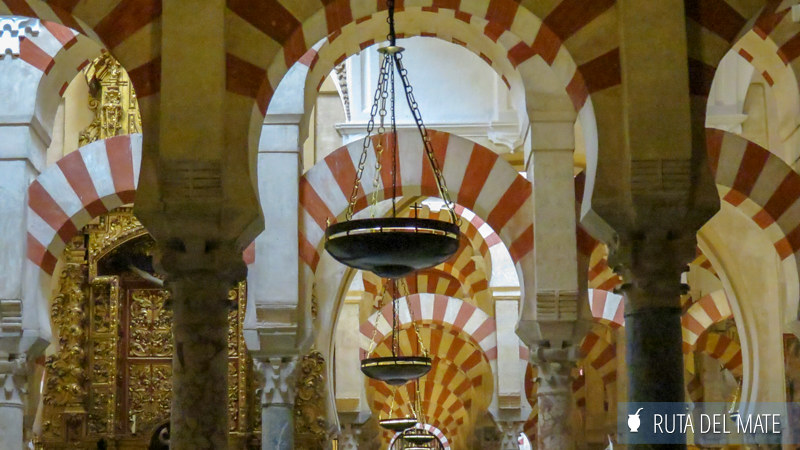
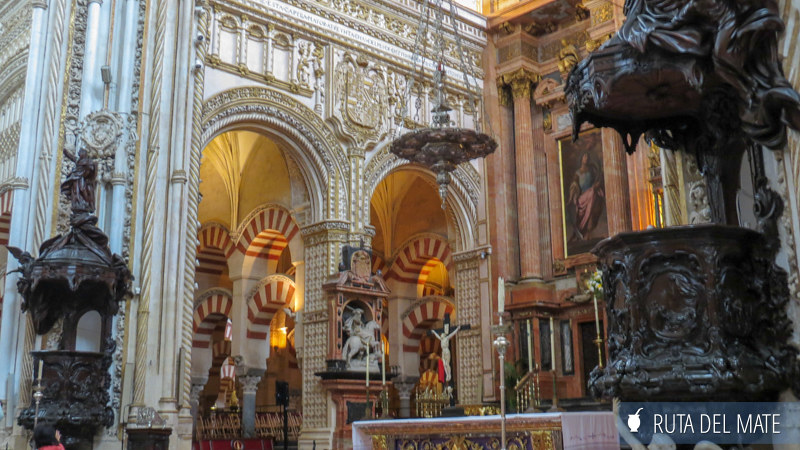
- The impressive cathedral was sent to be built after 1236, the year in which Fernando III “The Saint” reconquered Cordoba and the Christian faith was re-established in the territory. The main chapel, the transept and the choir were built, as well as the small private chapels around the cathedral.
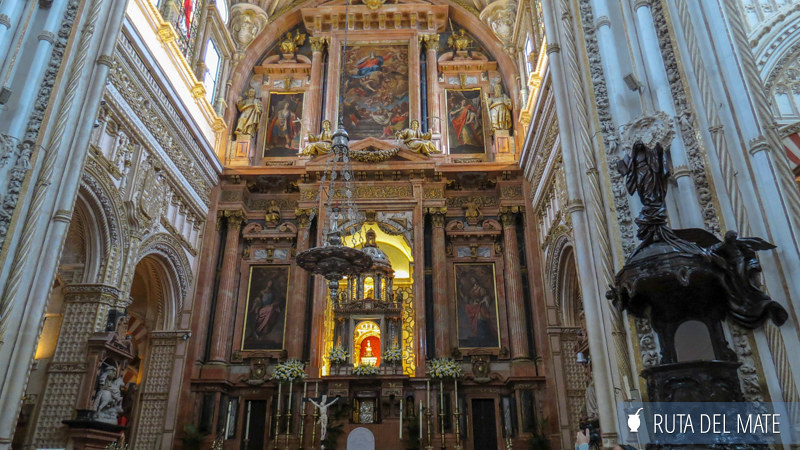
- The contrasts between the Mosque and the Cathedral. The good thing is that the mosque was not completely destroyed, but you walk through the arches and arrive at the centre of the complex, where you find a Christian cathedral that is perfectly maintained and beautifully detailed. On the visit, the contrasts are striking.
✏️ General admission to visit the Mosque-Cathedral of Cordoba 2026: €13.
📷 Don’t miss out on the details of your visit to the Mosque Cathedral by taking a guided tour.
3) The Patio de los Naranjos
In the Muslim period, served as a meeting point for all those who went to pray.
Today, it is a beautiful courtyard where you can rest peacefully after a visit to the Mosque Cathedral, in the shade of the orange trees that were planted in the 18th century. Together with the fountains, risk canals and flowers, it is one of the main tourist attractions in Cordoba.

4) Bridge Gate
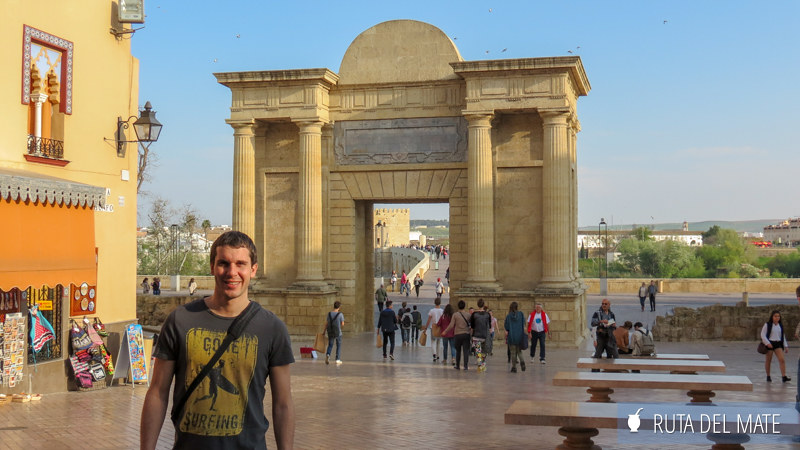
Is opposite the Roman Bridge and is a kind of triumphal arch (in fact it is called Triunfo de San Rafael).
It is one of the 3 gates to be seen in Cordoba that still remain from what was the Muslim walled city.
It has been heavily restored, as the original ones were not in very good condition. Nor has the origin of the paintings been respected, as the style is rather westernised.
5) Roman Bridge
The Roman Bridge is of great historical importance as it was built in the 1st century BC, when the Romans inhabited this area. Obviously, for its proper maintenance, it has undergone several refurbishments.
In the centre of the bridge is a 16th century sculpture of St. Raphael, to which the faithful pay homage. The bridge also offers views of the city from the other side of the Guadalquivir River.

6) Calahorra Tower
It is located on the other side of the Roman Bridge. It is a tower-fortress of Islamic origin whose function was to protect the entrance to the city before crossing the river.
It can be visited because it houses an audiovisual museum run by the Institute for the Dialogue of Cultures and shows visitors the medieval era of Cordoba, from the 9th to the 13th century, with the Christian, Jewish and Muslim cultures living side by side.

7) The Jewish Quarter in Cordoba
One of the most visited neighbourhoods in Cordoba. Although in each of its corners you can breathe in the mixture of cultures so typical of the city, it was an area typically inhabited by Jews between the 13th and 15th centuries, after the Reconquest.
They settled in the vicinity of the Synagogue they built, which can be visited today.
📷 Book your tour of the Jewish Quarter here and learn about the history and the most emblematic places with an expert guide.
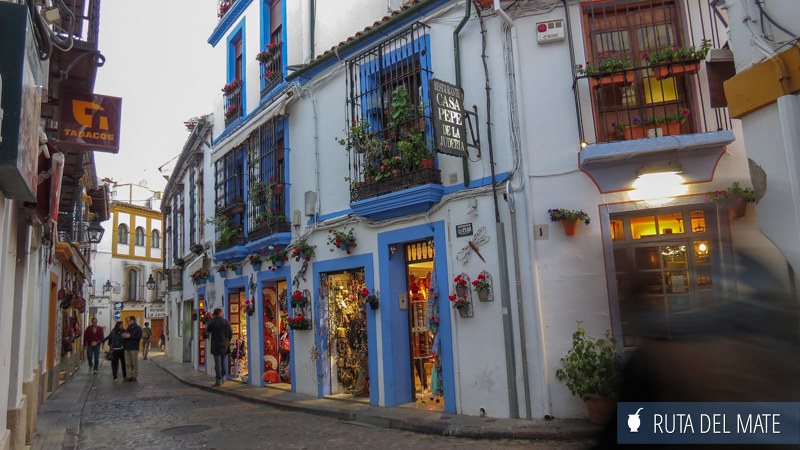
The Synagogue of the Jewish Quarter of Cordoba
It dates from 1315, and its importance lies in its age and good preservation. It has not been used since the Jews were driven out of the city in 1492, but it still retains some details to be observed.
✏️ General admission to visit the Cordoba Synagogue: free for EU citizens. Others: 1,50 €. Check the opening times carefully because it closes early.
8) Municipal Souk
The souk is the name given to the typical markets of North Africa. Here you can find all kinds of handicrafts and souvenirs of your trip, and also see a typical courtyard full of blue flowerpots and red flowers.
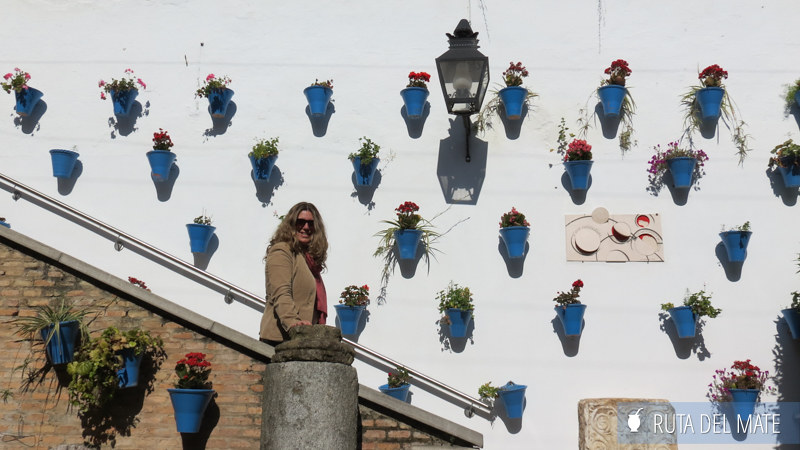
9) “Courtyards” of Cordoba
A must is to visit an Andalusian patio, such as the Patios del Alcázar Viejo or the Casa-Patio at Calle Marroquíes 6. You are welcomed by the locals who live there and they show you the patio full of flowerpots and flowers, and perhaps some rooms in their houses.
✏️ The visit to the patios in the Alcázar Viejo neighbourhood (San Basilio) is done with a single combined ticket, not by paying for each patio separately. The ticket costs 5.5 € per adult and gives access to 4 patios. Children under 12 years old enter for free.
📷 To learn more about this tradition of decorating patios with pots and colourful flowers, take a guided tour. Tickets to the patios included.

If you go to Cordoba in May, among so many other local festivals, you can’t miss the Festival de los Patios Cordobeses, which has been declared an Intangible World Heritage Site by UNESCO.
There is an Interpretation Centre of the Fiesta de los Patios, where you can get more information about the history of the Festival.
10) Puerta de Almodovar and Cairuan Street
This street runs along a part of the wall that defended the city, it is on a slope and there is a long and beautiful fountain that will accompany you along the route.
This gate is so called because the road through it leads to a town of that name, an old Spanish custom.

11) Tendillas Square
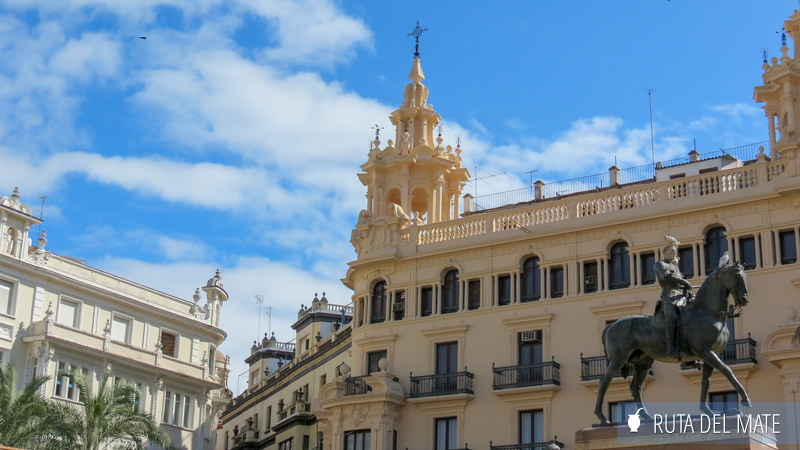
Is a modern area of Cordoba, surrounded by 19th century buildings and in the centre of which stands the equestrian statue of the Great Captain, Gonzalo Fernández de Córdoba.
If you pass by and hear the sound of a guitar strumming, it is the clock on one of the buildings telling the time. Maybe it’s time for a bite to eat at one of the little bars in the square.
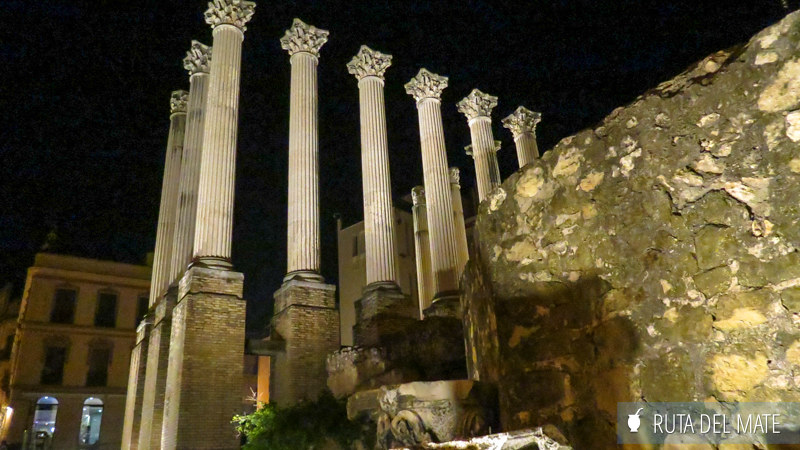
12) Roman Temple
It is located next to the Town Hall. These are not the only Roman ruins to see in Cordoba, there is also the Roman Mausoleum in the Jardines de la Victoria.
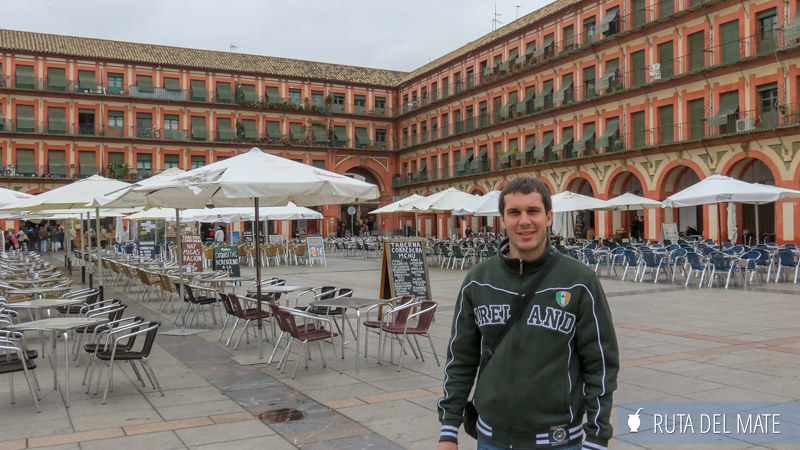
13) Corredera Square
It is the only Plaza Mayor in Andalusia, as most of them are in Castile. Bars and cafés can be found here.
It is called “la Corredera” because in the past bullfights were held here. This is where the mosaics on display in the Alcázar were found.
Next to the square is the Mercado de la Corredera, a municipal market located in a beautiful building. It is open from Monday to Saturday from 8am to 2.30pm and you can find stalls selling fresh produce (greengrocers, butchers and fishmongers), as well as a bakery and bars where you can take a break.
14) Malmuerta Tower
It was built in the 15th century by Enrique III of Castile to defend the city, but over the years it was also used for other purposes.
The tower’s name comes from a legend that says that the tower was actually built by a knight as a sign of forgiveness for having killed his wife, his wife’s lover and some of his wife’s relatives, because he believed that she was being unfaithful to him, which it seems was not true. It is also said to have been built to lock up his wife as an adulteress.
15) Viana Palace
It is a stately mansion from the 14th century that belonged to the Marquises of Viana. You can visit the palace and the courtyards, or just the courtyards.
Book your entrance ticket to the Viana Palace and its gardens here.
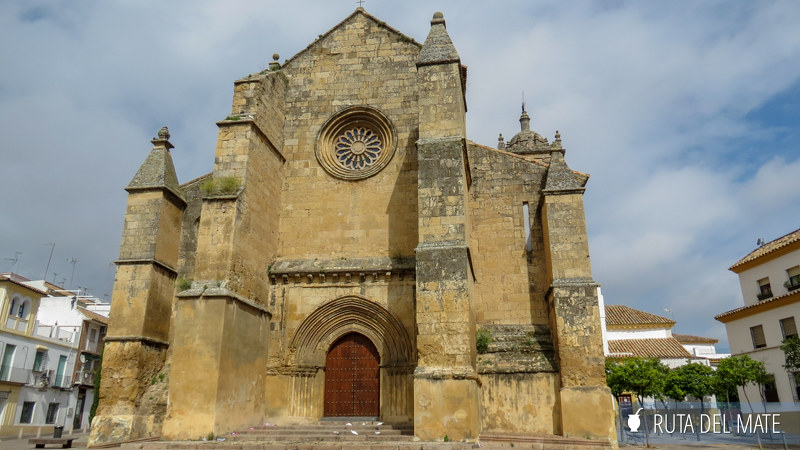
16) Church of Santa Marina
It is located in a very quiet residential area. It is a 13th century Catholic church with a mixture of styles, an impressive rosette and an adjacent bell tower. Nearby is the Monument to Manolete, a bullfighter.
17) Cuesta del Bailío
A beautiful sloping street with mosaic stairs. At the top of the street is the Bailío palace, which gives its name to the street and is a beautiful Renaissance style house.
In the lower part, in the Plaza de los Capuchinos, is the Christ of the Lanterns, carved in stone and adorned with 8 lanterns. Undoubtedly another of the beautiful streets you have to see in Cordoba.

18) San Hipólito Catholic Church
Dates from the 14th century and is where the remains of the monarchs Fernando IV and Alfonso XI rest. It is Gothic and Baroque in style and stands out for its very tall façade. Inside it is quite simple, with a single nave, transept and polygonal chancel.
What other places to see in Cordoba if you have more than two days
Cordoba May Fair (Feria de Mayo de Cordoba)
It is held in May and lasts a whole week. Although it is one of the best times to visit Cordoba as the atmosphere is very lively, it is also the most crowded time of the year.
It works in a similar way to the Feria de Abril in Seville, with stalls where there is a lot of atmosphere, music, colour and “rebujitos”. A very enjoyable experience. ¡Olé!
Medina de Azahara
It is located a few kilometres from Cordoba, but is of great historical importance. This caliphal city is a UNESCO World Heritage Site.
We recommend to take a guided tour of the Medina of Azahara.
Useful information for travel to Cordoba
Where to stay in Cordoba
Cordoba’s city centre is not that big, so it’s not a big city.
- Hospedería Luis de Góngora: If you are travelling on a budget, this is an ideal place to stay. Small but clean rooms and very good service.
- Los Patios: rustic style and facing the Cathedral Mosque, it has an excellent decoration, spacious rooms and a terrace with armchairs and views of the city.
- Hotel Casa de los Azulejos: 50 metres from the Corredera square. It is a typical Cordovan house with a central courtyard and the rooms surrounding it. Good breakfast.
🏨 Do you want to look for other options? Find here the best hotels in Córdoba.
How to get to Cordoba and how to get from the train station to the city centre
The best way to get to Cordoba is by train or bus, as the city has no airport. If you are coming from somewhere further away than Madrid, you might want to take a combination of fast trains or fly to Seville.
Cordoba’s train and bus stations are next to each other. From Madrid, the bus station from which they depart is the South, Méndez Álvaro station.
To get to the city centre, there is bus no. 3, which costs € 1.30 for a single ticket. If you have your hostel in the old town, you have to get off before you reach the river, because then you have to take a detour.
Beautiful all things to do in Cordoba, a city of great historical importance. Did you like it? Do you have a favourite spot in the city? Tell us about it!
What you need for your trips to Europe
Plan your journey easily with these trusted resources:


