In my opinion, it is one of the most beautiful cities in Andalusia. In this article we will take a walk through all things to do in Granada, among which, visit the Alhambra is one of the must-see places. Enjoy!
Both the city of Granada and its province have a complete tourist offer for travellers. Not only will you learn a lot about Spanish history, mainly related to the centuries when this part of the country was in the hands of the Muslims, but you can also enjoy exquisite gastronomy, gypsy culture, ski resorts in the winter and beautiful beaches in the summer.
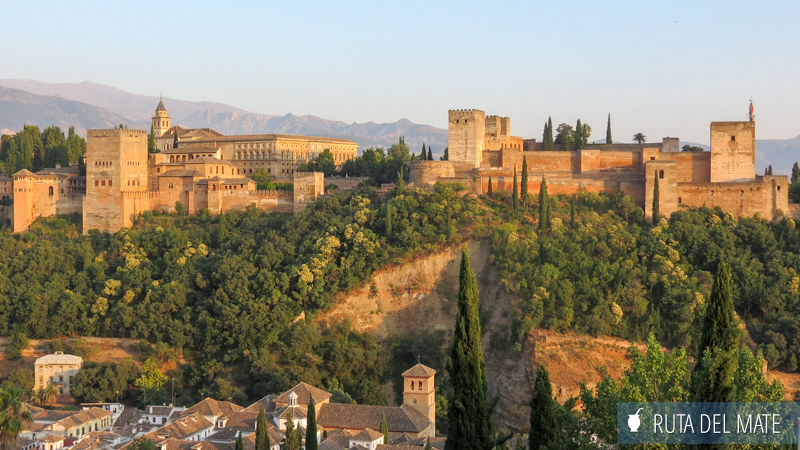
Internationally, Granada is renowned for the palatial city of the Alhambra and the Generalife, a great exhibition of Nasrid art and Hispano-Muslim architecture, mainly built between the 13th and 14th centuries.
In addition, both this palace complex and the Albaicín neighbourhood on the hill opposite have been declared World Heritage Sites by UNESCO.
We will make a tour of all those places to see in Granada in 2 days, and the first stop will be to visit the Alhambra.
How many days are necessary to visit Granada?
Granada can be seen perfectly (albeit quickly) in one day. You can visit the Alhambra in the morning, and in the afternoon, visit the Royal Chapel of Granada, where the crypt and the museum of the Catholic Monarchs are located.
In the evening you should go to the viewpoint of San Nicolás, in the Albayzín district, and end the day with a dinner/show in Sacromonte.
But Grenada is a place to take it easy. It’s a place to sit down for a free tapa, a second free tapa, and so on until you get tired of it.
It is finding a shade to sit in, it is getting lost in the colourful alleys of the Alcaicería to buy hundreds of souvenirs to take home, it is discovering beautiful corners, it is delighting yourself with a flamenco singer, it is watching the gypsies dance flamenco, it is listening to Spanish in every corner without understanding anything.
So our advice is to dedicate at least 2 days to it, because there is a lot to see in Granada apart from the Alhambra, and a visit to this fortified city takes time.
1) Everything you need to know to visit the Alhambra
A trip to Granada would not be complete without a visit to the Alhambra. There are several theories about the meaning of the Alhambra. Etymologically, in Arabic it means “the red one” and this may be due to:
- In olden times, the Alhambra, seen at night, from afar and due to the light of the torches, looked red.
- It would be the female name of its founder, Abu al-Ahmar, which in Arabic means ‘the Red’ because he has red hair.
- It is derived from the Arabic word “al-Qal’a al-hamra” which means red fortress, although some say that in the Andalusian period the Alhambra was whitewashed and its colour was white.
How to get tickets to visit the Alhambra
Tickets can be purchased on the spot, but it is advisable to buy them in advance and online to secure your place. The ones they sell there are limited seats, seats of people who have cancelled and you can risk not getting in.
This is the official website to buy tickets to the Alhambra online. Although there are different types of tickets that you can buy depending on your tastes, if you are going for a standard visit, the best option is to buy the “Alhambra General” ticket, which costs € 22,27 (prices updated as of 2026).
Some information about the entry “Alhambra General”:
- The entrance fee includes the audio guide, that you can download via QR in your mobile. Remember to bring headphones to listen to it quietly (although it has subtitles and can be read). The content is not the same as the audio guide since it’s not Washington Irvin who takes you on the tour, but it’s still good.
- Is it free to enter the Alhambra? Of course! Access to the Palace of Carlos V, the Museum of the Alhambra and the Bath of the Mosque is free of charge.
- The entrance fee is paid to enter the Alcázaba, the Generalife and the Nasrid Palaces.
- To visit the Nasrid Palaces you have to choose a timetable when you buy your ticket and you must enter at that time.
- Please buy the entrance at least 1 month in advance!
- We recommend visiting the Alhambra in the morning to avoid the heat in the afternoon.
📷 Don’t miss the details of your visit by booking this tour of the Alhambra. Including tickets! You can also take a night tour of the Alhambra.
How to get to the Alhambra
To get to the Alhambra you can go by taxi, public transport (the C30 minibus goes up for €1,60 per person) and walk along the Cuesta de Gomérez and the Calle Real de La Alhambra until you reach the Puerta de la Justicia, from where you can get to the Alhambra. This path is pedestrian and uphill.
How long does it take to visit the Alhambra?
If you do the complete tour, you should expect to spend at least three hours in the Alhambra, although it can take up to four hours.
2) What to visit inside the Alhambra
The Nasrid Palaces
To visit the Nasrid Palaces, you have to do it at the time you choose when you buy the ticket and you have to be punctual.
We speak of “Palaces” in the plural because in reality there are three, each one sent to be built by Stintos as he wished, the Palace of the Mexuar, the Palace of Comares and the Palace of the Lions.
I) Mexuar Palace
It is one of the first rooms to be visited in the Nasrid Palaces of the Alhambra and is one of the oldest.
It was used as a courtroom and the detail on the walls is marvellous, from colourful tiles, carved floral motifs and transcriptions of poems and fragments from the Qur’an, it is like a big open book.

II) Comares Palace
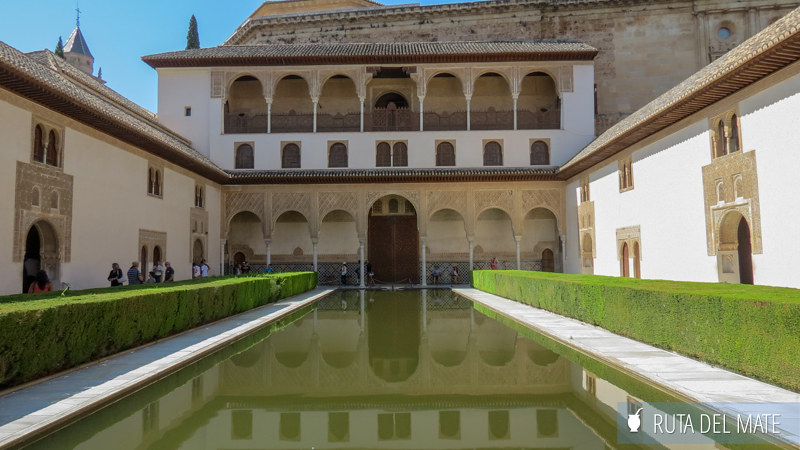
The Palacio de Comares is, together with the Patio de los Arrayanes and its fabulous pond, one of the most photographed places in the Alhambra. The details of the Comares tower and how it is reflected as a mirror in the pond are striking.
III) Lions Palace
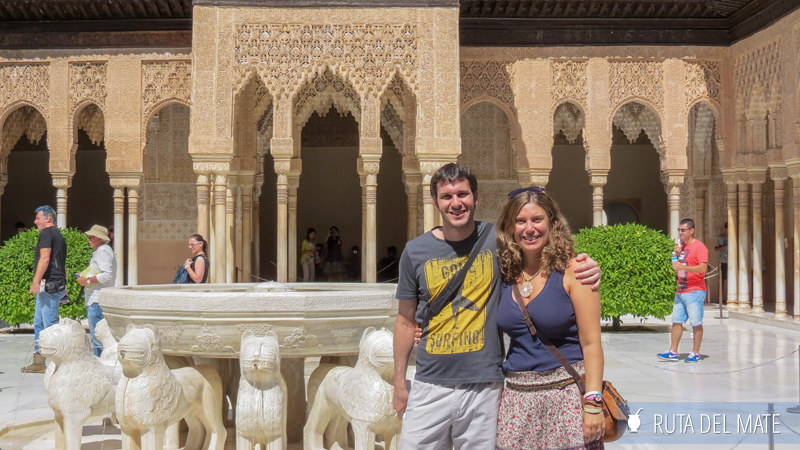
One of the most visited places in the Alhambra is the courtyard of the Lions, where the Fountain of the Lions is located.
It was part of the sultan’s private area. In the centre of the courtyard, the beautiful fountain stands out, with 12 lions guarding each cardinal point. From it, a whole water system is born, which continues to the bedrooms. The details of the arches and columns of the galleries are very beautiful.
Generalife
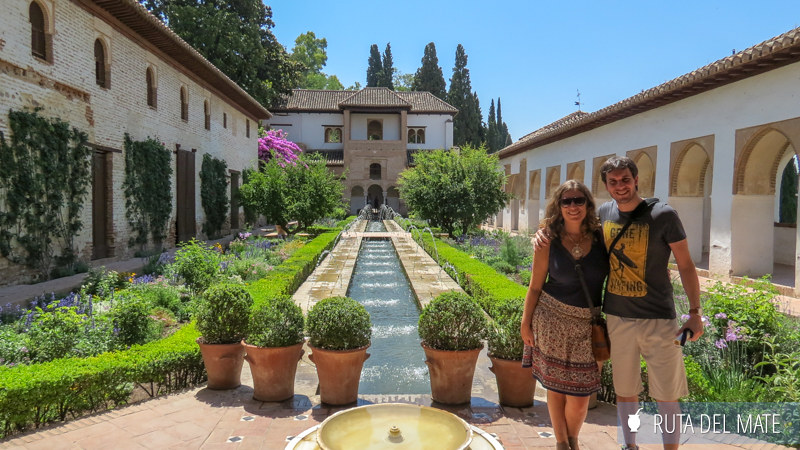
In this area of the Alhambra, which is visited in the open air, you also need a ticket to enter, but you can do so at any time.
The Lower Gardens, the Generalife Palace and the Upper Gardens are toured, and were the resting place and retreat of the muslim kings, away from the palace area, but close enough to return to their functions quickly. Everything is very well looked after.
El Alcázaba
The Alcázaba was the place from which the Alhambra was guarded and defended. Its location was conducive to ensuring the integrity of the palaces and gardens.
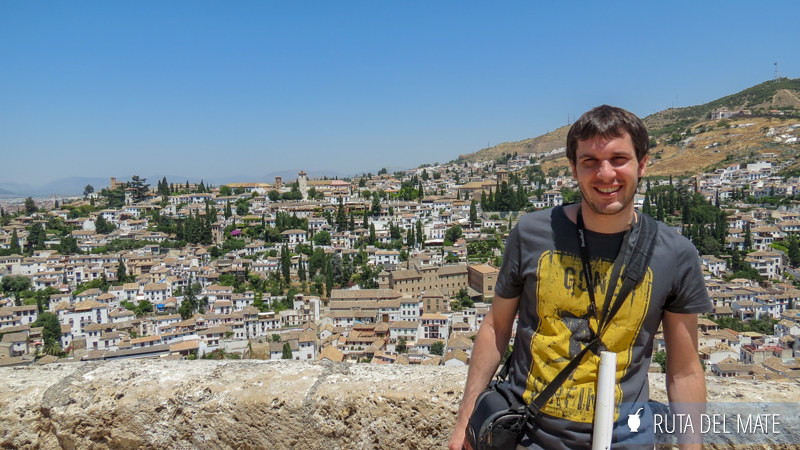
The alcázaba has several watchtowers from which travellers can enjoy beautiful views of the city and the mountains, the most visited of which are the towers of the Cubo, the Vela and the Homenaje.
Palace of Carlos V
The Palace of Carlos V dates from after the Muslim era (the fact that it bears the name of one of the kings of Spain was already a clue to that).
It is Renaissance in style and therefore different from the surrounding palaces, but equally impressive. It was built during the reign of Carlos I of Spain (or Carlos V of the Holy Roman Empire) and he lived here for a time with his wife Isabella of Portugal.
From the outside you will see that the floor plan is square, but the inner courtyard is a perfect circle, formed by galleries and arches. Beautiful.

Gates of the Wall
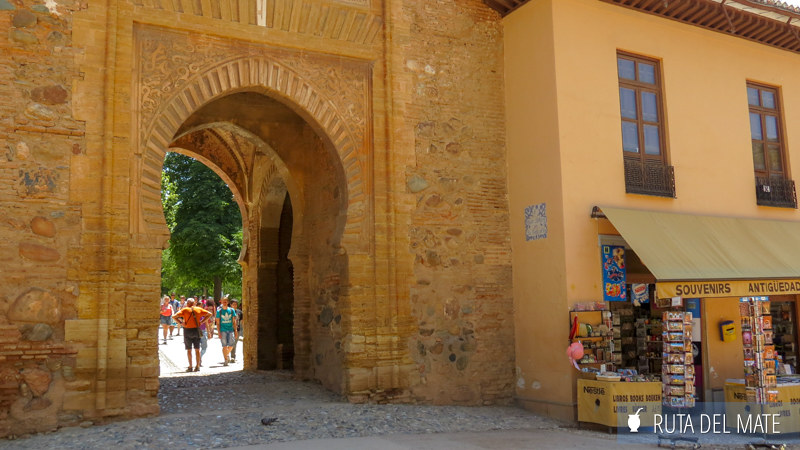
The whole of the Alhambra was walled and to enter you had to pass through some of its gates, which maintain the Moorish style of yesteryear.
Among those that are still standing are the Justice Gate, which is the first one we come across as we go up the Gomérez slope, and the Wine Gate, through which we enter the Plaza de los Aljibes.
3) Isabel la Católica, Nueva and Santa Ana squares
Between the Gran Vía de Colón street and the Church of San Gil and Santa Ana, there are 3 representative squares that you have to see in Granada.
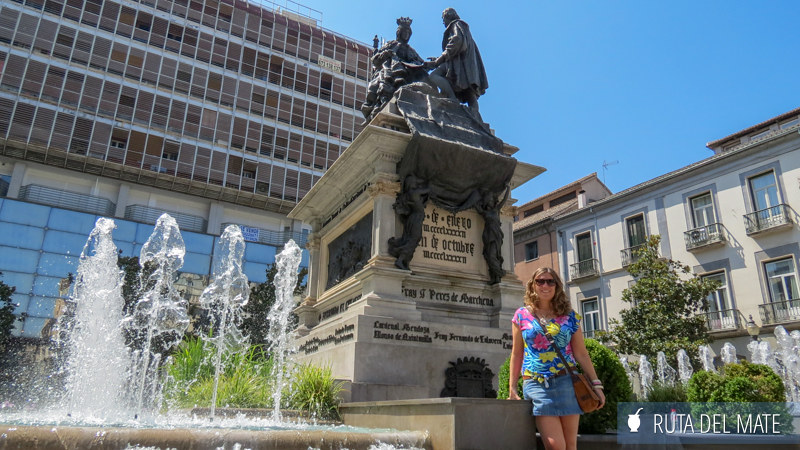
The square of Isabel La Católica is located at the intersection of Gran Vía de Colón and Reyes Católicos. It is named after the statue that dominates the square, in which the Queen is with a kneeling Cristobal Colon telling her about the adventure he wants to undertake.
It is a relatively new square, where historic buildings had to be demolished for its construction in order to make it more accessible to vehicles.
In the Plaza Nueva, the Real Chancillería building stands out, which is a large building from the 16th century, built to serve as the Royal Court (judicial body) of the territory south of the Tagus River and is currently the seat of the High Court of Justice of Andalusia.
Admiring the details of the façade is one of the things to do in Granada.

4) Church of San Gil and Santa Ana
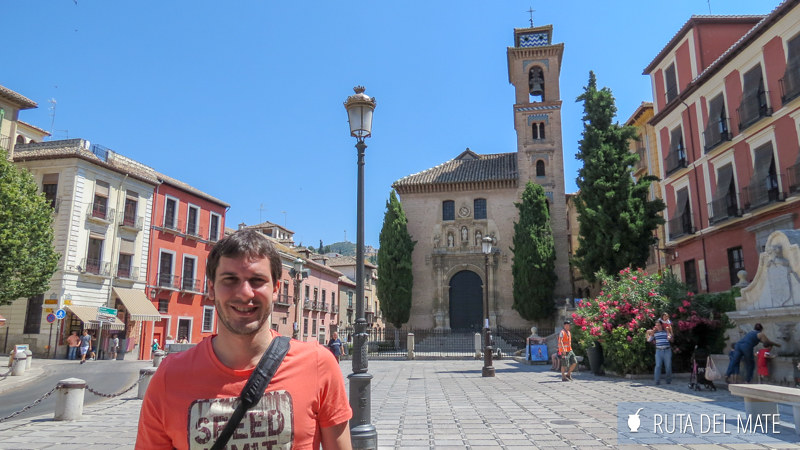
Right at the foot of the Alhambra we find this 16th century Catholic church, which has a mixture of styles that makes it very beautiful.
On the one hand, it has a mudejar style and on the other, a medieval renaissance style. It is a very beautiful place to see in Granada, where the Paseo de los Tristes, the path that follows the river Darro, begins.
5) Carrera del Darro and Paseo de los Tristes
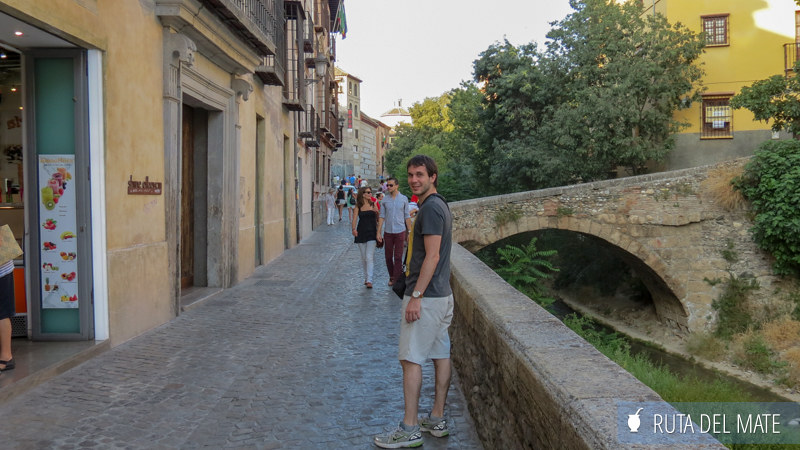
The Carrera del Darro is the street that goes off to the left of the Church of San Gil and Santa Ana, also called Paseo de los Tristes, due to the fact that this street was the obligatory route for funeral processions on their way to the cemetery.
It runs alongside the Darro River, at the foot of the Alhambra and its walls. There are several old stone bridges across the river and then a small square with terraces of restaurants and bars. A must on your visit to Granada is to have a drink in one of them with these views.
6) San Nicolas viewpoint
One of the things to do in Granada is to go up to the San Nicolás viewpoint, from where you have the most spectacular views of the Alhambra. One tip is to go at least twice, i.e. both during the day and at night.
You can go up either on foot or on the C32 minibus, but if you go on foot you start to enjoy the Albaicín neighbourhood, which is where this viewpoint is located. Take a map or an app to guide you so you don’t get lost, because the streets of this neighbourhood are labyrinthine.
The viewpoint is full of people, both tourists and locals playing instruments or singing, or selling handicrafts or souvenirs. A lively atmosphere is guaranteed.
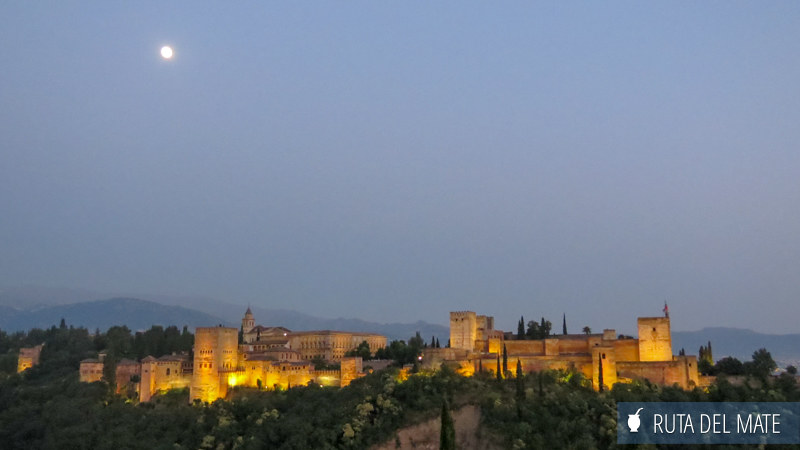
Another alternative viewpoint to San Nicolás is San Cristóbal, which is much quieter because there are fewer people, but it is also higher.
7) Albaicín
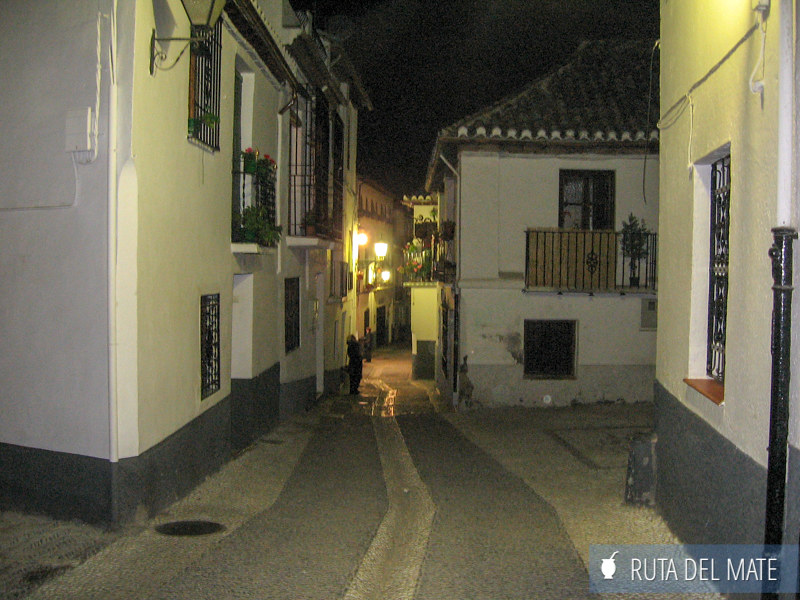
The Albaicín is a neighbourhood in the upper part of Granada and both its streets and some of its viewpoints offer impressive views of the Alhambra. But it is not only for these views that you have to go up, but also because it has a special charm of its own.
Cobbled streets with white painted houses, some of them still preserved from medieval times, and remains of the moorish wall. Ideal for wandering through its narrow streets and discovering the most photogenic corners.
The views of the Alhambra from this neighbourhood are impressive. The views from the Alhambra to the Albaicín neighbourhood are not to be outdone. You can even see the ramparts.
📷 Book a guided tour of the Albaicín and Sacromonte here and don’t miss anything!. You can also combine a visit to the Alhambra with entrance tickets, the Albaicín and Sacromonte neighbourhoods, taking advantage of a discount.
8) Sacromonte
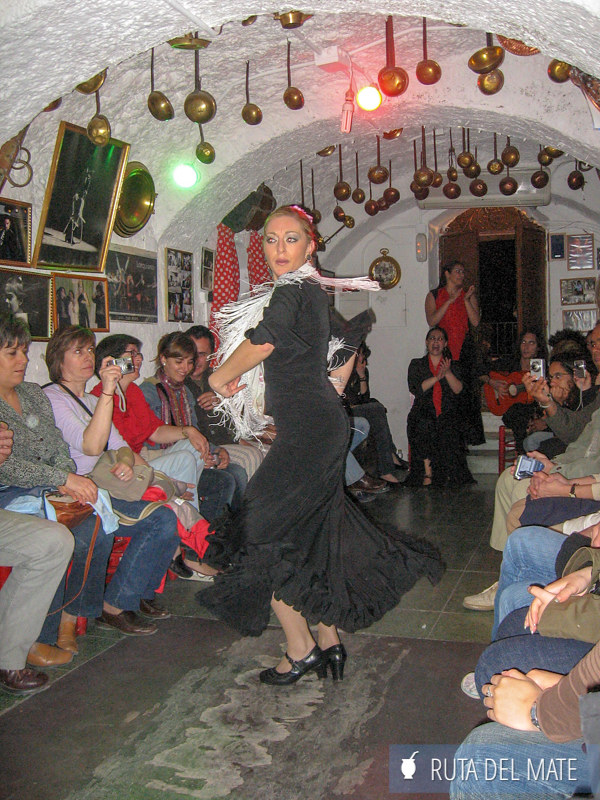
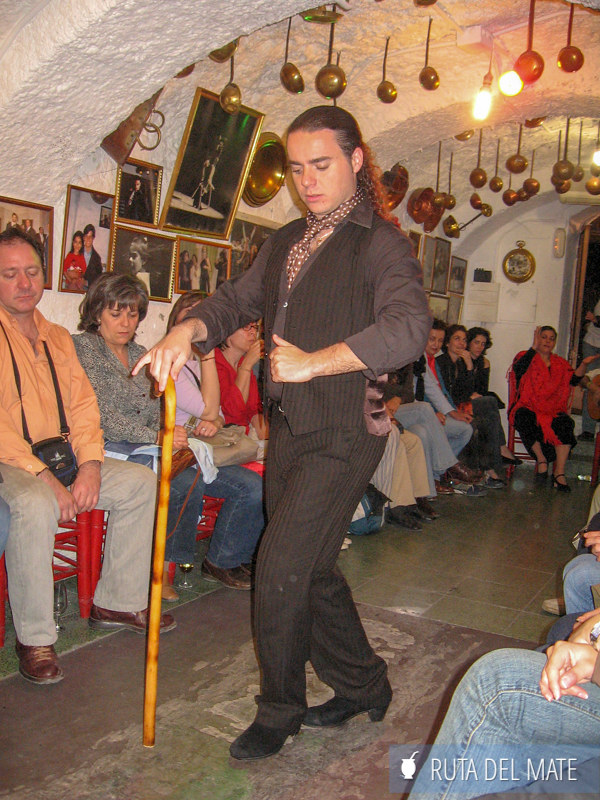
Sacromonte is part of the Albaicín neighbourhood and it is here that we find the traditional gypsy caves, the main inhabitants of which are the gypsies.
The best thing to do is to walk aimlessly and without haste. Whether you hire the gypsies you meet on your walk or through a tourist agency, be sure to return to the caves at night to enjoy the gypsy singers and dancers!
📷 If you want to book your flamenco experience, you can book your show or dinner-show here.
9) Cathedral of Santa María de la Encarnación
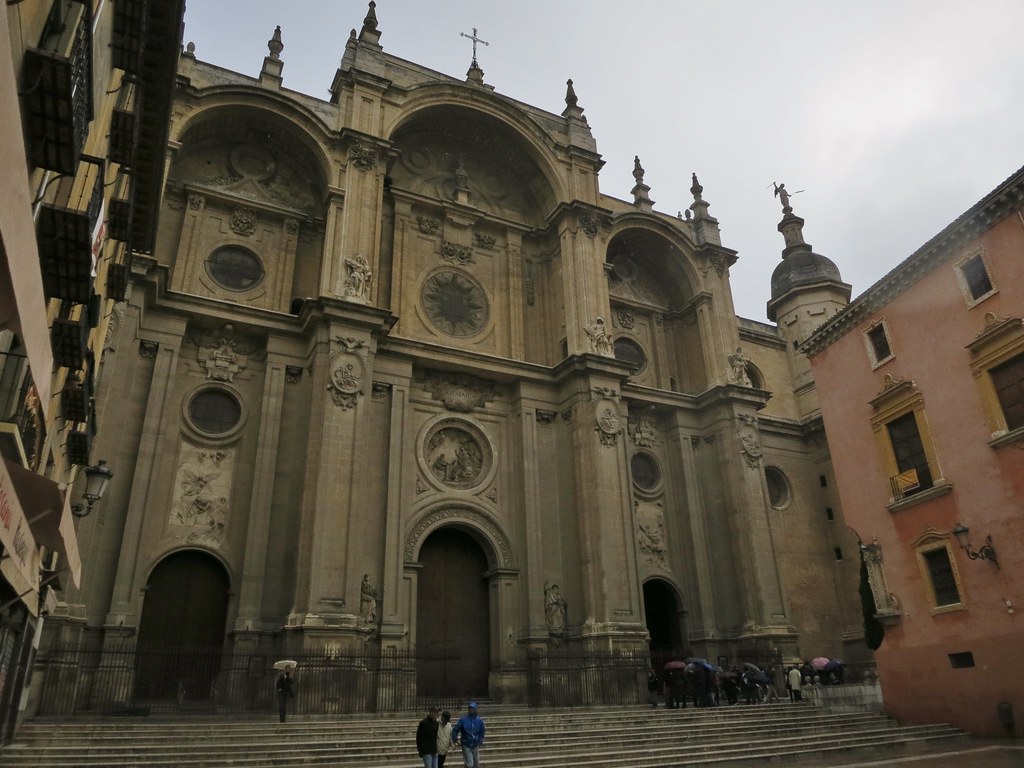
The Cathedral of Granada is imposing, both from the outside and from the inside. Beautiful details on the façade of the building, especially on the heights. The decoration inside is not to be outdone: the various chapels, the high columns and the vaults it supports, the impressive organ, everything is beautiful!
📌 General admission to the Cathedral of Granada in 2026 costs 11 €. It does not include access to the Royal Chapel where the mortal remains of the Catholic Monarchs are kept.
10) Royal Chapel of Granada
The Royal Chapel is part of the Cathedral of Granada, but is visited separately (and paid for separately). The Catholic Monarchs themselves ordered its construction and it is here that their mortal remains rest, along with those of their daughter Juana La Loca and her husband Felipe I, the Handsome. It is very beautiful inside and well worth a visit.
📌 General admission to the Royal Chapel of the Catholic Monarchs in 2026: € 7 each (including audio guide). Children under 12, free.
📷 Take a guided tour of the Cathedral and the Royal Chapel and let yourself be carried away. Entrance fees to both sites are included.
11) The Alcaicería
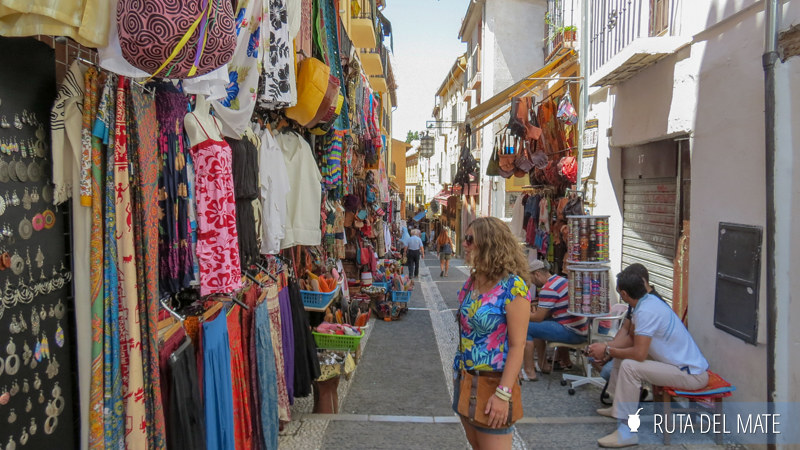
The Alcaicería is a flea market, much like the souks of North Africa. That is to say, they are narrow streets where you can find everything, handicrafts, clothes, shoes, handbags and purses, and all very colourful.
It is the best place in Granada to buy gifts and souvenirs of your trip.
Practical information for travel to Granada
The best place to stay in Granada
To sleep in Granada you have to take into account the location, especially that it is close to the centre and, if you don’t like going up and down, that it is in the lower part of the city and not in the upper part.
In terms of prices, double rooms are available from €50 or even less in low season. Already in high season the prices go up a bit.
Three recommendations for stay in Granada:
- Hostal Verónica: 10 minutes walk from the centre of Granada and close to the Alcaicería. It is simply decorated, with tiles and an internal courtyard with plants. Very good price.
- Guadalupe: if you want to stay near the entrance to the Alhambra, this is an excellent option. Surrounded by a magnificent environment, you can enjoy the tranquillity and the views.
- Anacapri: is housed in a typical 18th century house in the historic centre of the city and only 50 metres from the Cathedral. Excellent decor and spacious rooms.
🏨 Do you want to look for other options? Find here the best hotels in Granada.
The best way to get to Granada
Granada has good connections with the main cities in Spain and with Europe through its airport. You can find
Then, from the station to the city centre, there are buses 3 and 33 for €1,60 per person (although you may want to take multi-trip passes).
You can also book a private transfer from Granada airport or train station to your hotel.
How to get around Granada by public transport
Many of Granada’s tourist attractions are located in the upper parts of the city and the streets turn into small alleyways, there is a whole system of buses that can take you there without any problem. For example: the C30 goes up to the Alhambra, the C32 to the Albaicín and the C34 to Sacromonte.
Fares are €1,60 for a single. With the rechargeable card (Credibús), the trip is cheaper: topping up 10 trips costs approximately €0.88–0.90 per journey, depending on the amount you load.
And there is much more things to do in Granada, although you will agree that the best thing to do is to visit the Alhambra, it doesn’t disappoint anyone. What is your favourite spot in the city? Tell us!
What you need for your trips to Europe
Plan your journey easily with these trusted resources: