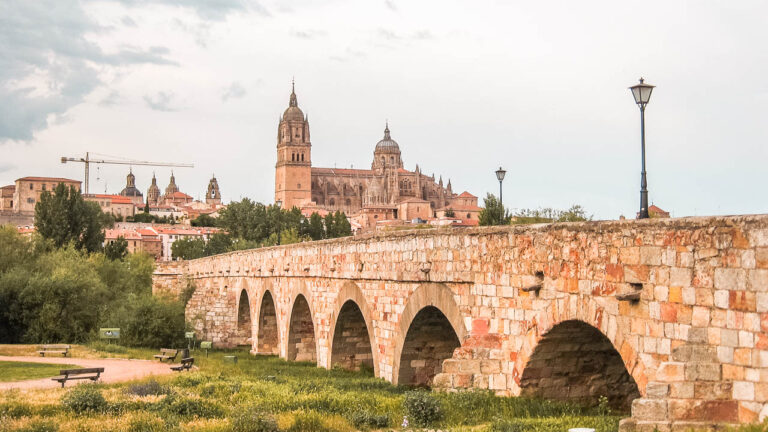
Here’s a road trip itinerary to explore the most beautiful villages near Barcelona. It includes monasteries, film locations, and seaside spots that are worth a visit.
For a long time, we wanted to take a family trip through Catalonia to showcase some of the lesser-known towns and cities in the region’s interior, and step away from the traditional tour of Barcelona.
So we designed this 4-day route through the most beautiful villages near Barcelona, which we’ll share with you in this article.
We had already been to Barcelona several times, both for leisure and for work, and didn’t want to repeat the same visits. In the following link you’ll find an article about things to do in Barcelona.
Map of the route through the most beautiful villages near Barcelona
📷 If you don’t want to do it on your own and would rather have a Spanish-speaking guide explain everything, check out this tour of the medieval villages of the Costa Brava and book your spot.
1) Poblet Monastery
The Poblet Monastery is a complex of great historical, cultural, and architectural importance that has been named a UNESCO World Heritage Site.
It was founded by Cistercian monks who were mainly dedicated to agriculture and livestock, but over time it became highly relevant for the surrounding villages as it had an infirmary, mills, a cemetery, and even served as the royal pantheon of the Crown of Aragon from the 14th to the 15th century, when the Crown ceased to exist and the monastery fell into decline.
The visit was done little by little. We progressed through the monastery as each section was opened for access. Since there are different time slots with limited entry, we waited for a while in the main square of the complex, accessed through the Golden Gate.
Soon, you’ll find yourself in a wide esplanade and at the entrance doors to the cloister and the church. In the next photo you can see the Baroque façade of the church entrance. Not visible in the photo, but to the left, stands the Royal Gate, located between two defensive towers.
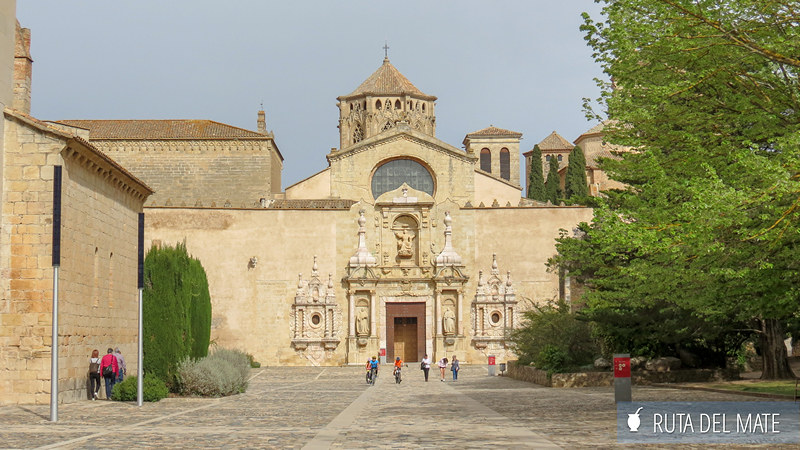
We entered the monastery proper and the cloister area through the Royal Gate, arriving at a beautiful square courtyard surrounded by most of the main rooms.
Instead of entering the church through the Baroque gate, we accessed it from the monastery, immediately finding a beautiful altarpiece and the tomb of the Kings of Aragon, as well as other important medieval figures.

Inside the cloister, you can also visit various rooms on both the ground and first floors, all quite austere—for example, the Chapter House, the Refectory, the kitchen, and the library.
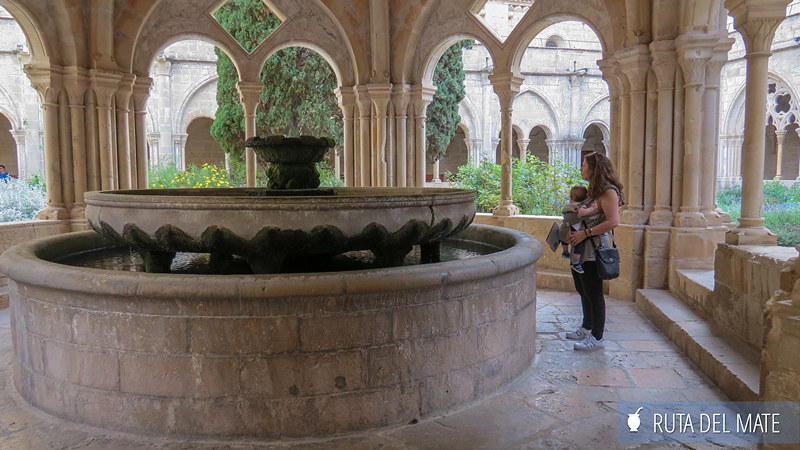
Still, the highlight is the central courtyard, where the greenery contrasts beautifully with the golden arches surrounding it.
2) Girona
We couldn’t have visited Girona at a better time. It was April 23, Saint George’s Day (Sant Jordi in Catalan), and the city’s streets were filled with people, books, and roses. Tradition has it that on this day, men give a rose to women and women give a book to men.

Things to do in Girona in one day: Plaça Catalunya and hanging houses
One of the first things to see in Girona is Plaça de Catalunya and the Onyar River, which crosses the city from south to north before flowing into the Ter River. Along with several beautiful bridges, you’ll find the typical hanging houses with their colorful façades right on the river’s edge.
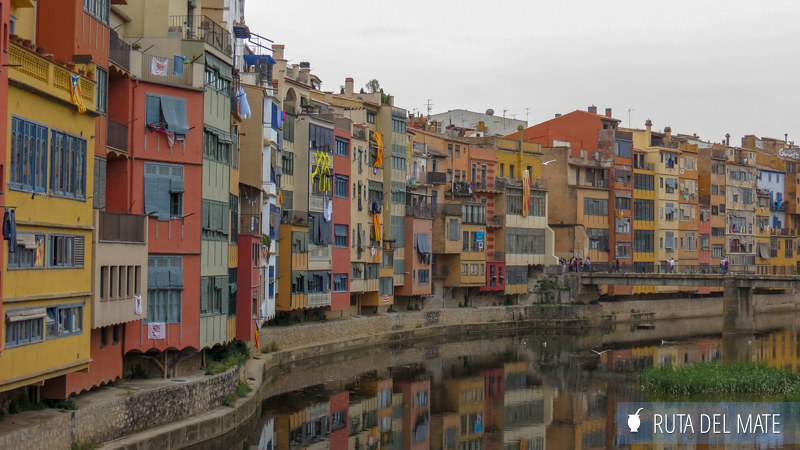
The river’s bridges were all stunning. The first one we saw was the Stone Bridge, built in the mid-19th century during the reign of Isabel II. That’s why it’s also known by that name.
Not far away, a red iron bridge stood out, very picturesque among the famous riverside houses. It was built by Eiffel out of iron, replacing the old wooden pedestrian walkways that used to get damaged during floods.
With the stroller we couldn’t cross it, but we did cross the Gómez Bridge, another pedestrian bridge made of concrete.
These bridges connect Girona’s Old Quarter with the newer part of the city, and from them the views of the hanging houses are just perfect.
📷 Check out the full Girona tour and book your spot.

Before heading into the Old Quarter, we stopped by Independence Square, where we found a lively atmosphere and plenty of terraces to eat or have a drink.
Girona Cathedral
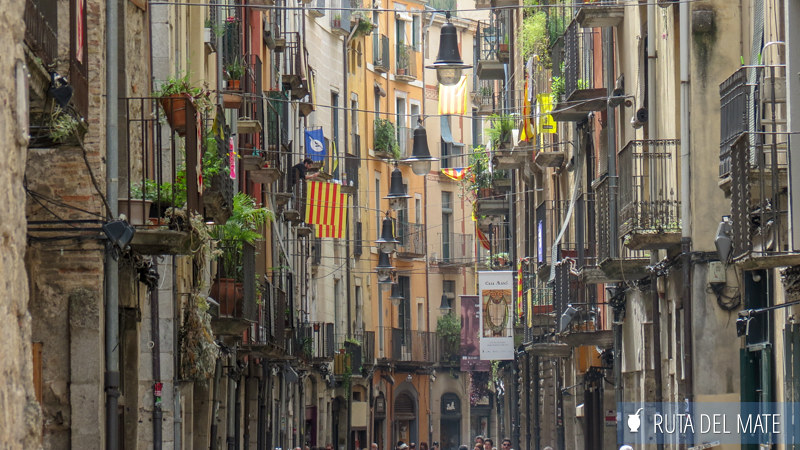
The Cathedral, another must-see in Girona, dominates the upper part of the city. To enter the church, you first climb a beautiful staircase.
From the top you can clearly see the Basilica of Sant Feliu. The church’s style is Romanesque and Gothic, with a Baroque façade. Construction began in the 10th century, and the mix of styles reflects its long history.
If you’re a Game of Thrones fan, you’ll recognize several filming locations in the city, including these famous steps leading up to the Cathedral.
📷 Discover Girona in a different way with this Game of Thrones Small Group Tour.
Gardens of the Germans and the city walls
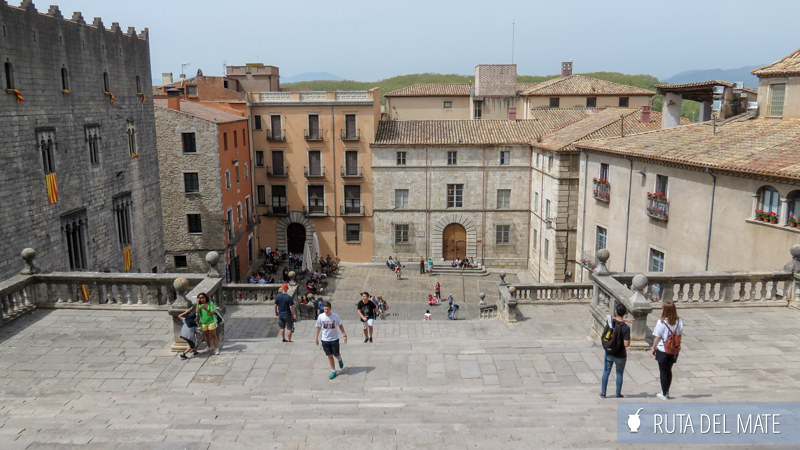
After visiting the Cathedral, we went to enjoy the peace of the Gardens of the Germans (Jardins dels Alemanys). We couldn’t believe the silence inside, compared to the bustle outside. We spent some time strolling among the walls, fountains, and flowers of the place.
Where to stay in Girona?
The bulk of the city’s hotel options are concentrated around the historic center. Here are some recommendations for staying in Girona:
- Hotel Històric: set in an 18th-century house in the historic center, just a few meters from the Cathedral. The rooms have been renovated with upscale details.
- Hotel Gran Ultonia: modern inside, it offers a stunning rooftop terrace to enjoy city views over a drink. Ideal for couples.
- BYPILLOW Erba: a good budget option in Girona. Conveniently located near both the center and the train station, it offers a buffet breakfast and simple, comfortable rooms.
🏨 Want more options? Find the best accommodation in Girona here.
3) Sant Martí Vell
This was the first of the most beautiful villages near Barcelona we visited on our route. Nestled on a gentle hill and with a clear medieval style, Sant Martí Vell welcomes you with stone houses, the main church rebuilt in the 16th century as the tallest building, and the town hall.
A lady came up to us (while I was taking a photo at her doorway) and told us that only a few families live there, with no more than 200 people in total.
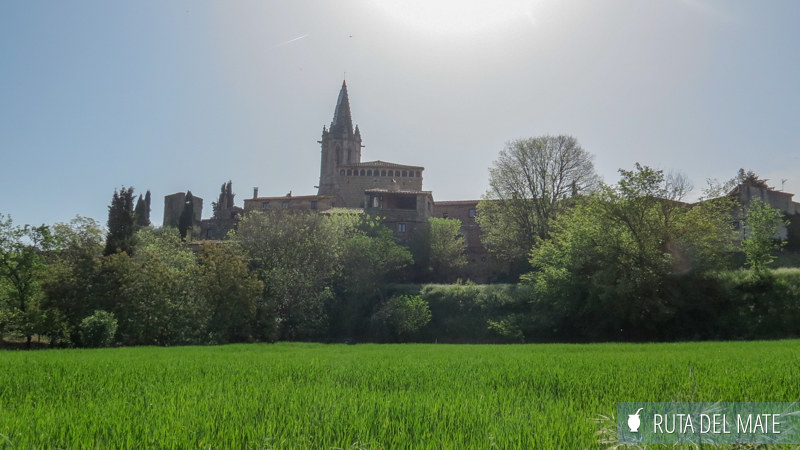
We noticed that many people were visiting the area by bike, since all these villages are just a short distance from one another.
If you have a bit more time, a nice walk you can do from the village is to hike up to the Sanctuary of the Virgin of the Angels (in Catalan: Santuari de la Mare de Déu dels Àngels). This hermitage, nestled in the mountains, was badly damaged during the Spanish Civil War and later restored. It was chosen by Salvador Dalí and his muse Gala as their wedding venue.
There’s a paved but winding road starting in Madremanya that lets you drive up there. It’s a 6 km detour and about 20 minutes by car.

4) Madremanya
You can leave your car in a parking lot and enter the old town on foot. This is another of the most beautiful villages near Barcelona. It’s small, with narrow cobbled streets and charming stone houses. We found it completely deserted and didn’t see anyone during our visit.
When we reached the main square, we came across the town hall, the Church of Sant Esteve, and on one of its walls, a particular stone coat of arms. It shows a carved hand linked to a legend that also explains the name of the village. It comes from the expression “to have a hand for something” and from a mother who knew how to “handle things” so that all her many children thrived.
Others say it comes from the Latin Mater Magna (Great Mother), but we prefer the legend.
This is another village to explore calmly, and you can even walk to nearby spots like the Chapel of Sant Iscle, just 2 km from Madremanya.

5) Monells, another charming village near Barcelona
Once overshadowed by Peratallada and Pals, Monells became famous after being the filming location for the movie “Ocho Apellidos Catalanes”. Even before parking, we were greeted by the Gothic-style Church of Sant Genís.
But the jewel of the village is its main square, Plaça Jaume I, with its beautiful stone buildings and graceful arches or porticos.
In the past, a market was held here, and when it rained, merchants could take shelter under the arcades. There are many details to spot in the square, one of them being the “pedra mitgera”, a faithful reproduction of the original given to Monells by King James I the Conqueror in the 13th century. It established a standard for measuring cereals throughout the Diocese of Girona.
🔝 Check out these recommendations for staying in the best rural houses in the Pyrenees with kids.

6) Peratallada
Although Peratallada is recognized as one of the most beautiful medieval villages in Catalonia, excavations have uncovered remains suggesting pre-Roman settlements. The current village grew around what are now the castle ruins, originally dating back to the 10th century. Today, only parts of it remain.
As soon as you arrive, you’ll notice the village is surrounded by a dry moat, defensive walls, and some towers still standing, most notably the Keep.
Outside the walls, across the road and next to one of the parking lots, is the beautiful Church of Sant Esteve, Romanesque in style and dating from the 13th century. This is where Baron Gilabert de Cruïlles, husband of Guillema de Peratallada, is buried. This couple gave historical recognition to the castle.
“Voltes” means arches in Catalan, and that’s why the main square here is called “Plaça de les Voltes”: the same kind of arches we saw in Monells can be found here too.
The best way to explore is to wander the entire village. Pick up a map at the Tourist Office in the square. The old town isn’t large, but its cobbled streets and flower-decked houses are lovely and perfect for strolling.
📷 Check out the Free Tour of Peratallada and book your spot.

7) Pals
Pals is the largest of the most beautiful villages near Barcelona we visited that day, and even so, it has fewer than 3,000 inhabitants. There’s a modern part at the foot of the hill, but as you climb up, everything takes on a medieval feel.
The village is full of charm and well preserved, though the street layout is still the original and keeps many centuries-old details, like flower-filled windows and archways that guide you further along.
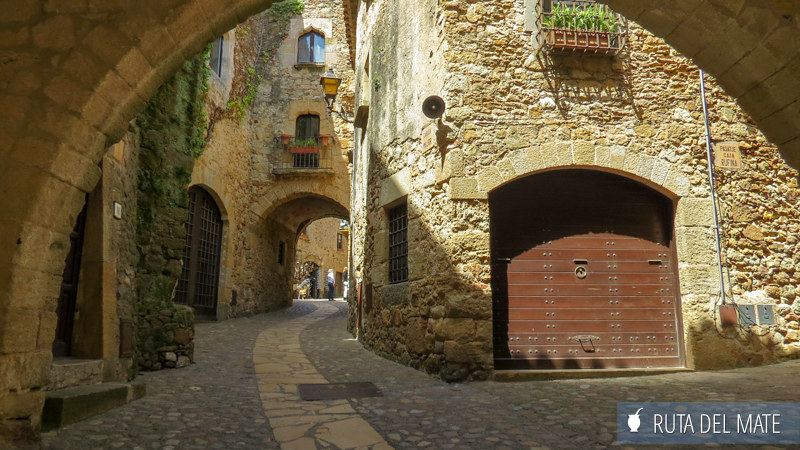
You enter Pals’ walled enclosure through the Gothic archway in the Plaça Major. Inside, you’ll find what remains of the 9th-century castle, now only the Torre de les Hores (Tower of the Hours), which was built later. You can climb it for great views of the village and even the sea in the distance. Admission is free.
The Church of Sant Pere, which also dates back to the 9th century, has a mix of styles from later renovations. Behind it is the Josep Pla viewpoint, but because of the vegetation, the views are limited. The tower still offers the best panorama.
📷 Book here the Free Tour of Pals with an expert guide.

8) Calella de Palafrugell
We then moved on to the villages of Catalonia’s Costa Brava, and our first stop was Calella de Palafrugell. After visiting medieval towns, we switched to another kind of village, originally fishing villages, which have their own special charm.
Calella is considered one of the most beautiful villages on the Costa Brava, and we could clearly see why. The coast is lined with a series of small coves, golden sand, and colorful wooden boats. The beachfront houses are just as picturesque.
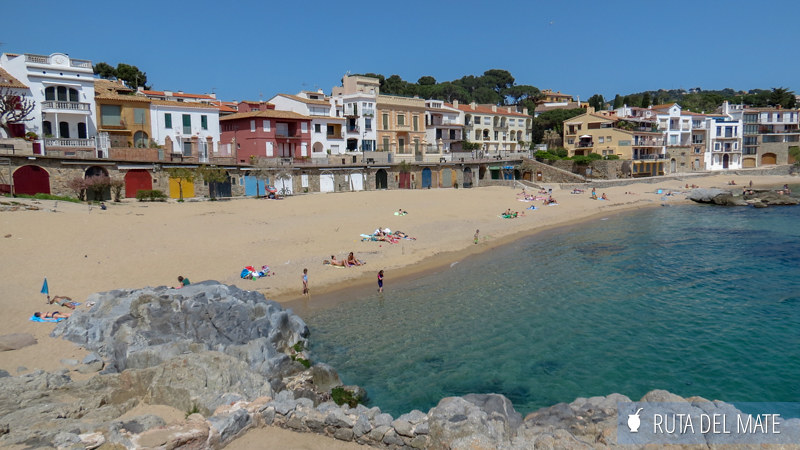
The Port Bo fishermen’s quarter has a unique charm, with narrow cobbled streets, whitewashed houses, and plenty of restaurants and bars where you can relax and enjoy the atmosphere.
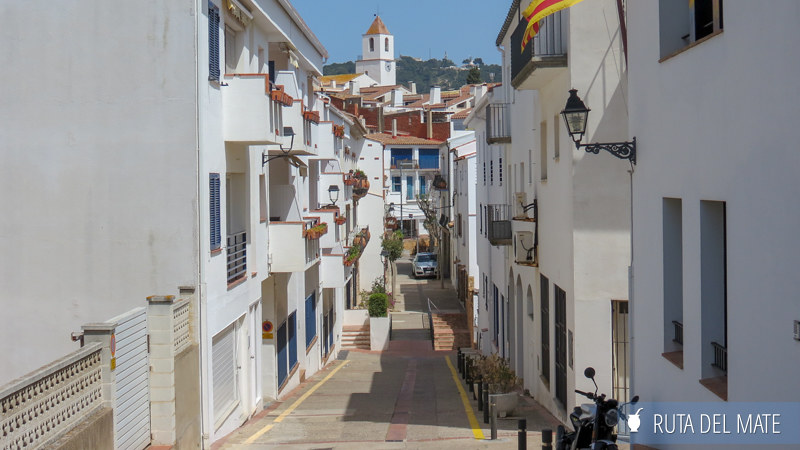
9) Tossa de Mar
Tossa is another charming Costa Brava village, perfect for a day trip from Barcelona. The town is centered around the Platja Gran, but there are other more secluded coves worth visiting as well.
We headed to the Gran beach, where from the promenade we saw the bright blue sea, golden sand, Mediterranean restaurants, and on the southern hill, the medieval castle ruins and the old town (Vila Vella).
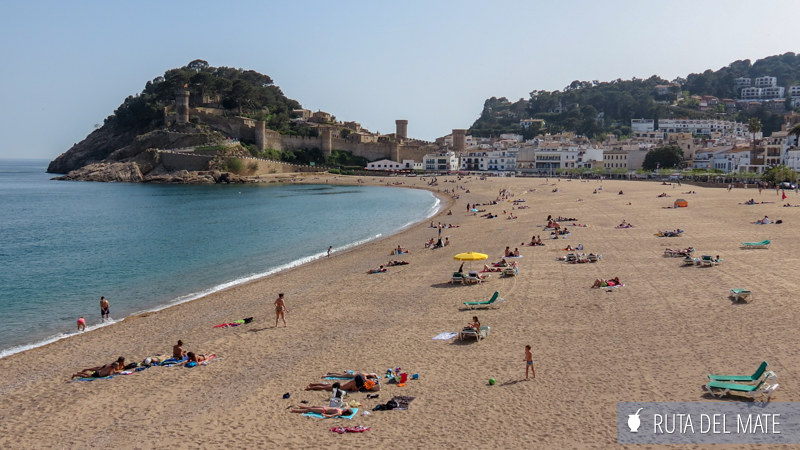
Even with the baby stroller, we made our way up — we didn’t want to miss the views from the top, or the chance to see the old walls, ruined church, and charming colorful cobbled streets up close. The climb isn’t too tough, so it’s definitely worth it.
📷 Tossa de Mar is also an excellent spot for diving and snorkeling. Book your diving baptism in Tossa de Mar and experience an underwater adventure.

10) Visit Montserrat Monastery, a perfect day trip from Barcelona
To wrap up our route, we visited the imposing Montserrat Monastery. We could already see it from the road, perched 720 meters above sea level. During our visit we saw everything we wanted: the basilica, the “Moreneta” (the Black Madonna of Montserrat), and the Escolania boys’ choir, one of the oldest in Europe.
We drove and left the car at a free parking area at the foot of the mountain, then took the “cremallera,” a kind of funicular/train that goes up to the monastery.
Once there, we went to the information desk, where we learned that entry to the church is free, but the museum and audiovisual space require tickets. We chose to visit the Audiovisual Space, but first we went to see the Virgin, as there was already a long line.
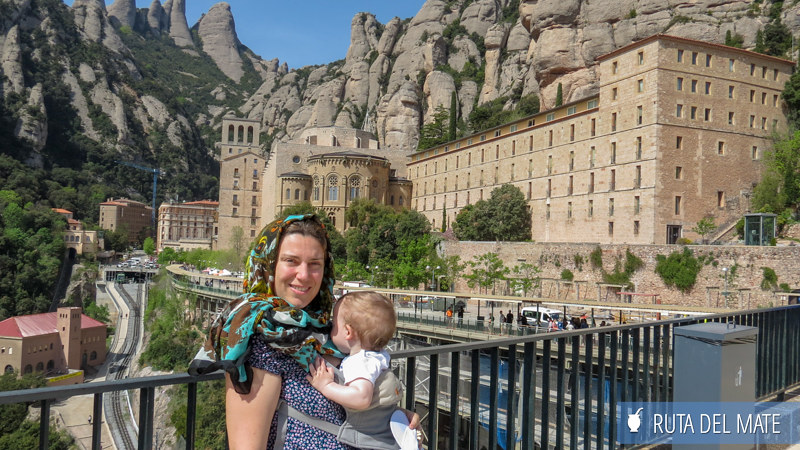
We waited for over an hour to see the Moreneta with the Child Jesus, but it was worth it. Just as we were about to climb the last steps, the choir began to sing, filling the basilica with angelic voices.
The Virgin can also be seen from the church, although from a distance it looks very small.
📷 If you want a Spanish-language guided tour to Montserrat, check out these options: day trip to Montserrat with the rack railway or combined tour of Montserrat and a Penedès winery.

Other beautiful villages near Barcelona
On this trip we didn’t have time to visit other Catalan villages we would have liked to, though we had seen some of them on previous trips. Here are a few more to consider when planning your route:
- Sitges beaches, perfect in summer.
- Figueres and the Salvador Dalí Museum.
📷 Book here the Salvador Dalí tour through Figueres, Cadaqués, and Cape Creus.
- Cadaqués and Roses, two of the prettiest villages on the Costa Brava.
- The Penedès wine region, full of vineyards and charming spots.

Where to stay in the most beautiful villages near Barcelona
There are plenty of rural houses and seaside accommodations in these towns. Based on our trip through the most beautiful villages in and around Barcelona, we recommend:
- Hotel la Plaça: in Madremanya, a charming country house with a large garden and pool. Offers rooms and suites with small kitchens overlooking the countryside. Perfect for couples.
- Hotel Mas Salvi: an upscale hotel on the outskirts of Pals, housed in a 17th-century country house. Facilities include a pool, spacious gardens, and a restaurant.
- Hotel Mediterrani: in Calella de Palafrugell, a family-run hotel with great value for money. Rooms with sea views and excellent service.
- Hotel Cap d’Or: in Tossa de Mar, right by the castle and facing the beach. Rooms with sea views, a terrace for breakfast by the beach, and an in-house restaurant.
What you need for your trips to Europe
Plan your journey easily with these trusted resources: