Barcelona is cheerful, colorful, youthful – one of those cities where you might not hear much Spanish spoken on the streets. In this article we’ll tell you things to do in Barcelona in three days.
If it’s your first time in Europe, Barcelona is surely a must-visit. A very cosmopolitan city, known as the birthplace of Antoni Gaudí, with La Rambla, the seaside promenade, and its Gothic Quarter.
Map – Things to do in Barcelona in 3 days
The “Ciudad Condal”, so called because it was the capital of the County of Barcelona between the 9th and 12th centuries, has plenty of sights to see. Here’s our list of things to do in Barcelona in 3 days or more:
Join a Free Tour in Barcelona
This is a tip we always give – no matter your budget, it’s a fantastic way to get to know the city. There are several free tours in Barcelona, we recommend this Free Tour of Barcelona, includes Plaça Catalunya, the Gothic Quarter, and El Born.
Detailed 3-Day Barcelona Itinerary
- Day 1: Casa Batlló, La Pedrera, Plaça Catalunya, La Rambla, Gothic Quarter, and Barceloneta.
- Day 2: Sagrada Familia, Hospital de Sant Pau, and Park Güell.
- Day 3: Montjuïc Hill, Plaça Espanya, and Camp Nou.
📷 Book the Barcelona Hop-On Hop-Off Bus. You can get on and off as many times as you like.
Day 1 – Casa Batlló, La Pedrera, historic center, and Barceloneta beaches
Passeig de Gràcia is one of the city’s main avenues, with a carefully planned layout, plenty of trees, wide sidewalks, and the best of everything: restaurants, fashion stores, and also Gaudí’s houses open to visitors: Casa Milà (La Pedrera) and Casa Batlló.
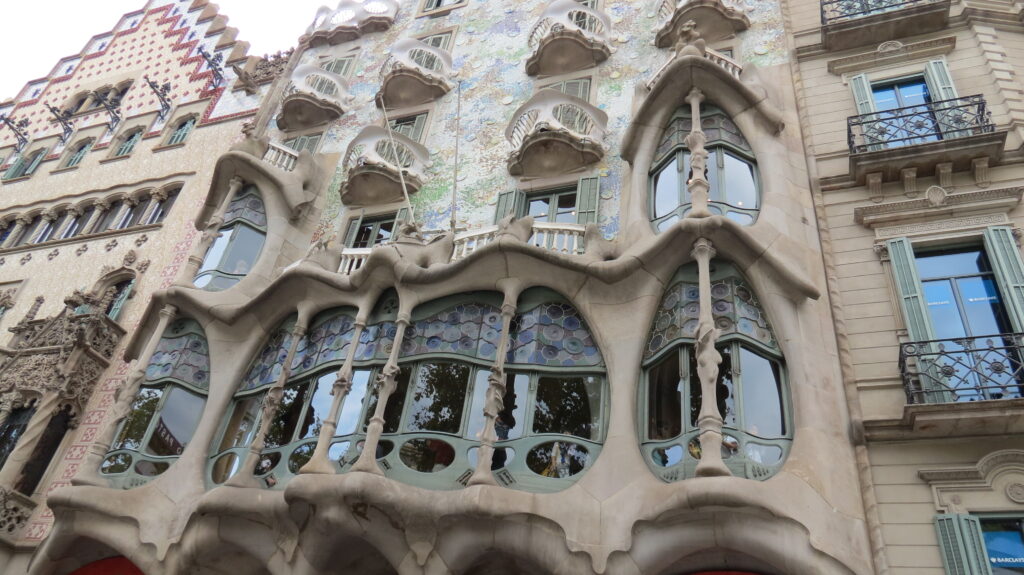
Casa Batlló
Casa Batlló was designed by Gaudí in the early 20th century at the request of Josep Batlló. Its façade is truly impressive, featuring Gaudí’s signature details such as irregular-shaped windows and unique interior chimney designs.
The visit to Casa Batlló takes approximately one hour.
📷 Get your Casa Batlló ticket in advance
La Pedrera
Another of Gaudí’s famous works is La Pedrera (Casa Milà), built as the residence of the Milà family. Its most striking feature is the rooftop area, with sculpted chimneys and views over the city center.
A visit to La Pedrera takes about an hour and a half.
📷 Book your skip-the-line ticket to La Pedrera and avoid the long queues.
Plaça Catalunya
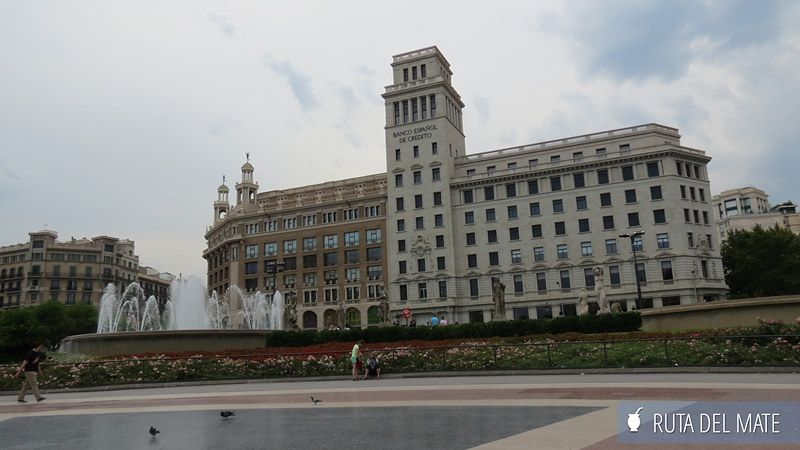
Continue walking until you reach the iconic Plaça Catalunya, a central meeting point and reference in the city.
It’s known for its large fountain in the center and for being surrounded by shops, including El Corte Inglés, a huge department store where you can find just about anything.
La Rambla
From Plaça de Catalunya, walking towards the sea, begins La Rambla, a pedestrian boulevard that practically ends at the waterfront. In fact, it continues in the other direction too and makes for a pleasant stroll, but the real buzz starts at Plaça de Catalunya: street performers everywhere, people strolling, coming from the beach, going, coming, especially lots of foreigners.

Among the highlights along La Rambla are Plaça Reial, a lively square with plenty of bar terraces, and the Mercado de San José, better known as La Boquería, where you’ll find fruit and vegetable stalls, cured hams, and above all juices of every color and flavor.

At the end of La Rambla, you’ll find the Columbus Monument. Columbus points east, where he wanted to go by sailing west.

La Barceloneta
From the Columbus Monument, walk along the port until you reach the famous Barceloneta. Here begins the seaside promenade and the city’s most central beaches.
This area is full of life both day and night, with people jogging, exercising, or just hanging out. We recommend walking along the promenade at least as far as Barcelona’s Olympic Port, about a half-hour walk.
If you’d like, stop for a break at one of the beachfront bars. They’re not cheap, but the views are excellent.
📷 Book the free tour of Barceloneta and Ciutadella Park to discover their history.

Gothic Quarter
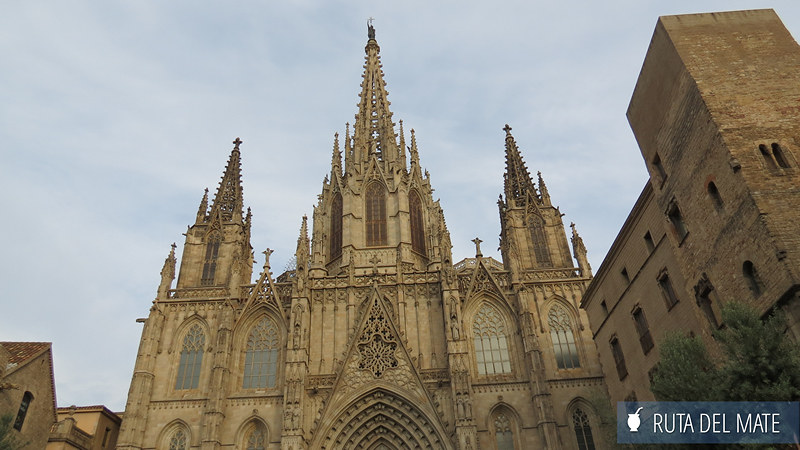
With its unmistakable Gothic style, this is the oldest neighborhood in the city and one of Barcelona’s main attractions.
It’s truly worth exploring, especially wandering through the narrow streets, admiring the architecture, and stopping for a beer in one of the many bars.

Highlights in the Gothic Quarter include: the Basilica of La Mercè, the Church of Sant Jaume, the Church of Santa Anna, Barcelona Cathedral, the Temple of Augustus, and many small squares.
📷 Book the free night tour of the Gothic Quarter and see the neighborhood beautifully lit by lamplight.
Day 2 – Sagrada Familia, Hospital de Sant Pau & Park Güell
Sagrada Familia
This Basilica or Expiatory Temple of the Sagrada Familia is a breathtakingly beautiful masterpiece by Gaudí, and one of our greatest wishes is to someday see it completed—to be able to admire the work in its entirety.
It’s hard to describe, but let’s try. The Sagrada Familia is a church, but not in the traditional sense… well, perhaps inside yes, but every stone, every detail, every ornament, every color was placed there for a reason that Gaudí himself established from the very beginning… and those reasons are religious.

Regarding symbolism, as an example, the turtles found at the base of each column at one of the entrances represent water and land. The water turtle is placed on the column closest to the sea, while the land turtle is the one facing the mountains.
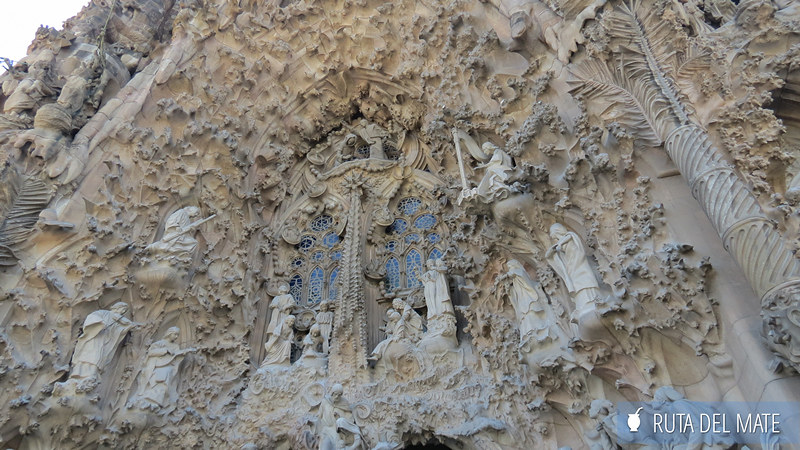
In fact, it’s like two churches in one, because in the lower part there is a church that looks more traditionally decorated and is where Gaudí is buried. He died in the early 20th century after being hit by a tram. It’s truly a church within a church.

For many years construction was halted (between Gaudí’s death and World War II), but in the second half of the 20th century it was resumed, with other architects interpreting Gaudí’s plans and instructions.
Given the extraordinary design of this basilica, today’s technology has proven that such an ambitious project is indeed feasible.
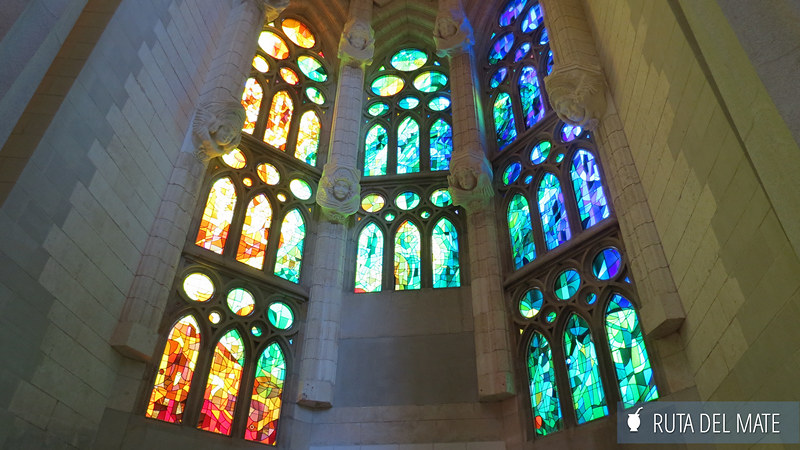
We purchased our tickets in advance and chose to go up the Passion Tower (you can choose between this one and the Nativity Tower), with a timed entry slot. We definitely recommend it.
From the small windows you can see the Barcelona coastline, along with unique details of the Sagrada Familia from a different perspective.
Info: Our full visit lasted about 2 hours. It’s essential to book tickets online in advance to pick the best time slots and skip the entrance line, which can be up to 2 hours long.
📷 Check here the Sagrada Familia visit with tower climb. Includes skip-the-line tickets, a guide so you don’t miss anything, and access to one of the towers. If you prefer not to climb, you can book the guided tour with entry to the Sagrada Familia only.

Hospital de Sant Pau
Very close to the Sagrada Familia is this site. Its full name is Hospital de la Santa Creu i Sant Pau, and it is a UNESCO World Heritage Site. Next to this Modernist building, a new hospital was constructed so that the old pavilions (protected heritage buildings) could be gradually vacated.
However, some of the historic pavilions are still in use as hospital facilities.

Park Güell
Another of Gaudí’s masterpieces and an absolute must-see in Barcelona. While there is a free-access section, the paid area allows you to visit Gaudí’s most iconic works and enjoy panoramic views over the city.
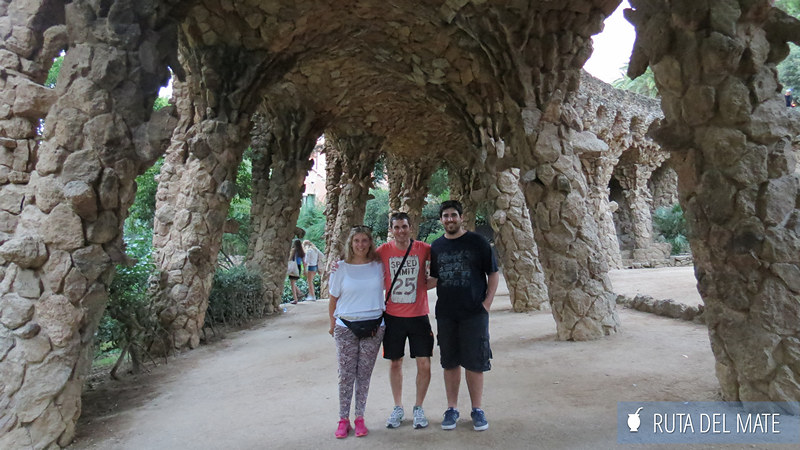
Inside the park, one of the first sights is the Laundry Room Portico, which used to be in the free section. Walking around this area you can also enjoy the views over Barcelona from above.
In the monumental area, you’ll find the Greek Theatre or Nature Square, a large terrace surrounded by colorful tiled benches. The route continues through the Hypostyle Hall until reaching the Dragon Stairway, which is usually packed with tourists.
Further down, near the entrance (and for us, the exit), are the Porter’s Lodge Pavilion and the Caretaker’s House.
💯 Tip: About one hour before closing time, entry to the paid area becomes free. Still, we recommend you purchase a ticket or join a guided tour to enjoy it fully during the day, since at the free hour it’s usually quite dark and harder to appreciate the details.

Day 3 – Plaça Espanya, Montjuïc Hill, and Camp Nou
Plaça Espanya
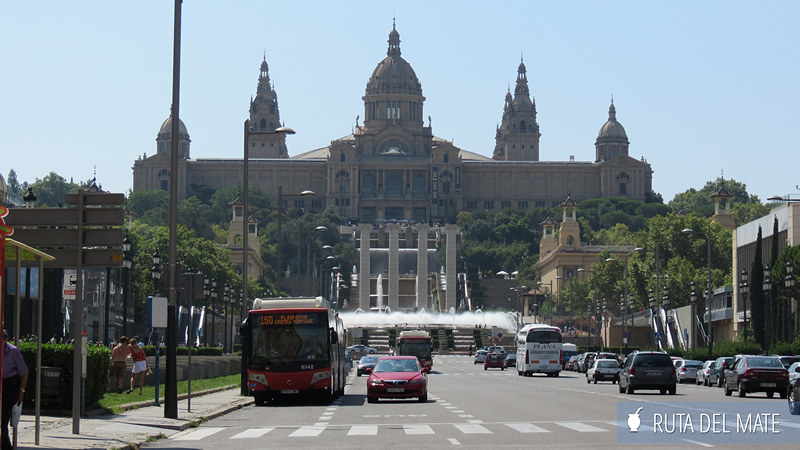
It’s the second largest square in Spain, after Madrid’s Plaza Mayor. But it’s not just the square itself that stands out, rather the grand avenue lined by two Venetian towers, leading up to the beautiful building housing the National Art Museum of Catalonia, accompanied by impressive fountains with light shows.
We visited during the day, but were told that at night there’s a light and water show with the fountains.
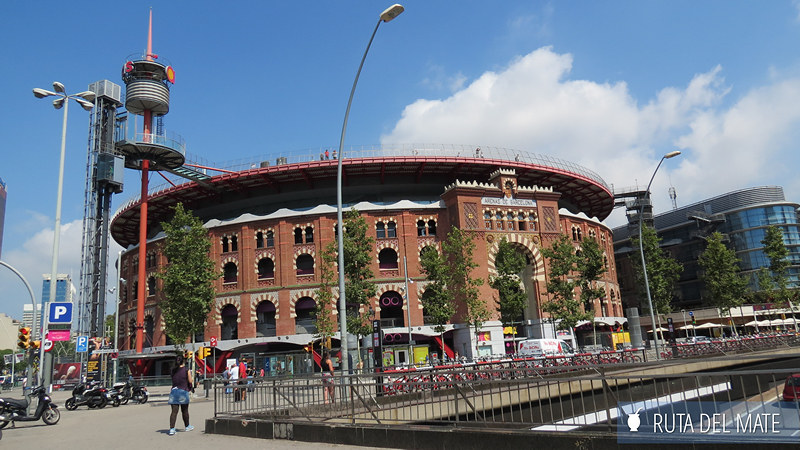
Nearby you’ll also find the old bullring, built in Mudejar style. Today it houses the Arenas de Barcelona shopping mall, which still preserves the circular structure of the old bullring inside.
Climb Montjuïc Hill
Located on the west side of the city, Montjuïc Hill is home to the complex that hosted the 1992 Barcelona Olympic Games.
It’s worth visiting for two reasons: first, the panoramic views over the port and the sea; second, to walk around the Olympic facilities such as the Olympic Stadium, swimming pools, and the Palau Sant Jordi arena.
If you continue to the very top, you’ll reach the Montjuïc Castle, which offers the best views of the sea.
There are two ways to get up Montjuïc: walking, with a moderately demanding uphill climb, or by taking the Montjuïc cable car, which guarantees stunning views on the way up. If you’d like, we also recommend joining the free tour of Montjuïc.
Visit Camp Nou, FC Barcelona’s Stadium
You can’t leave Barcelona without visiting the legendary Camp Nou stadium. There are two ways to see it from the inside: one is by attending an FC Barcelona match, and the other is by joining the stadium tour, which includes the museum, locker rooms, stands, commentary boxes, and the pitch side.
What to Visit if You Have More Than 3 Days in Barcelona
Other Barcelona Beaches to Enjoy the Sun
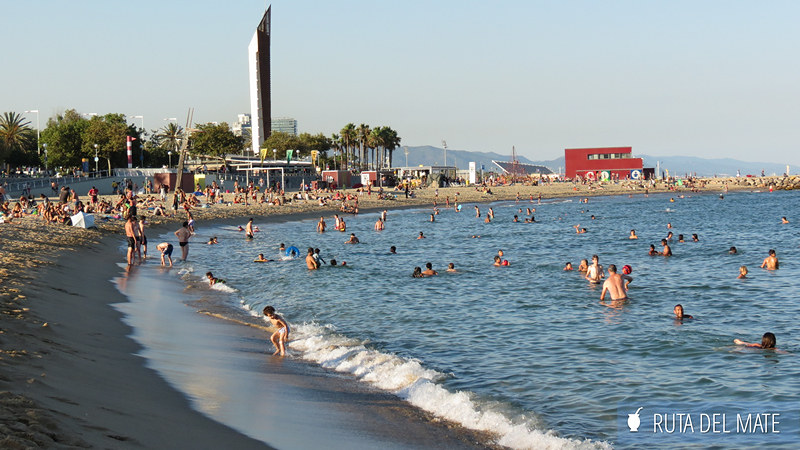
While Barceloneta Beach may be the city’s most famous, with its lovely promenade and lively bar scene, its central location means it’s almost always packed, especially in peak season.
Barceloneta, along with San Sebastián Beach, is a must-see spot in the city, but if you actually want to swim in the Mediterranean, we recommend quieter beaches.
Another option we visited is near the Poblenou metro stop—about four blocks down to the sea. This is Mar Bella Beach, which is nudist. We chose Bogatell Beach, just a bit further south, since we didn’t feel quite ready for Mar Bella.
You can also head further out and visit Sitges to the south or the Costa Brava to the north.
Take a Boat Trip to Admire Barcelona from the Sea
Seeing the city from the water not only gives you a new perspective but also offers a chance to relax and have fun. Barcelona has many options: eco catamarans, classic schooners, dreamlike sailing boats, speedboats, sunset cruises, even party boats or pirate ships. Here are our top picks:
- Sail on an Eco Catamaran – book here.
- Watch the sunset from a Catamaran with chill-out music – book here.
Things to do Around Barcelona
Catalonia boasts stunning landscapes: from the Penedés wine region, to mountain monasteries like Montserrat, charming medieval villages, the famous Costa Brava, and the high peaks of the Pyrénées.
🔝 If you want to take a tour around Barcelona’s surroundings, we recommend this road trip through the most beautiful villages in Catalonia.
🔝 Discover in the following article more excursions you can take from Barcelona.
Practical information for your trip to Barcelona
– Where to stay in Barcelona
Since the city is large and there are many attractions to see in Barcelona, the best option is to stay near a metro station. One of the ideal areas is the Gràcia neighborhood, close to the Sagrada Familia and not far from the city’s historic center.
Our recommendations for staying in the Gràcia neighborhood are the following:
- Hotel La Casa del Sol: close to Fontana and Joanic metro stations, it offers simple, clean, and comfortable rooms. The hotel also has a restaurant.
- Hotel BestPrice Gracia: 450 meters from Joanic metro station, this small hotel offers excellent value for money.
- Hotel Sagrada Familia: close to Gaudí’s masterpiece and surrounded by bars and restaurants, it has an ideal location. It also features a rooftop terrace with views of the Sagrada Familia.
If you prefer to be closer to the Barceloneta beaches and La Rambla, then it’s better to stay in the Gothic Quarter or near Plaça Catalunya. Our recommendations for staying in this area are the following:
- Oriente Atiram: located on La Rambla, near the Columbus Monument, this 19th-century building has a rooftop terrace.
- Hotel Oasis: just 50 meters from Barceloneta metro station, this modern, stylish hotel has spacious rooms and offers proximity to both the beach and the Gothic Quarter.
- Hotel Continental Barcelona: with a prime location on La Rambla, opposite Plaça Catalunya. It offers a very good breakfast and 24-hour buffet service. Ideal for couples or families.
🏨 Want to look for other options? Find the best accommodation in Barcelona here.
– How to get to Barcelona
There are many options to get to Barcelona from different parts of Europe and the rest of the world.
The city’s airport receives a large number of daily flights from different parts of the world and has one of the best connections for flying within Europe, with many low-cost airlines using it. From the airport there is a shuttle bus connecting to the city center.
By train, you can arrive with the AVE (high-speed train) from Madrid, and it also connects with other cities in Spain and France.
The bus station is also very busy, connecting Barcelona with other parts of Europe and even England.
You can also book a private transfer from the airport, train station, or other points in the city and surroundings to your hotel.
What you need for your trips to Europe
Plan your journey easily with these trusted resources:


