If you’re eager to discover the land of chocolate and beer, here’s a complete 5-day Belgium itinerary based on our experience.
With this 5-day itinerary, you’ll explore Belgium’s rich medieval history, visit its most iconic cities, and enjoy its scenic routes.
You’ll also find tips on where to try delicious Belgian chocolate, traditional beers, and their famous fries.
At the end of each city section, I’ll include suggestions on where to eat and stay, so your 5 days in Belgium will be as complete and stress-free as possible.
How to get around Belgium?
The train network in Belgium is excellent. You can travel from city to city without having to return to the capital. The SNCB operates domestic trains with daily frequencies every 15 to 30 minutes.
Journeys are usually short: 1 hour from Brussels to Bruges or 25 minutes from Bruges to Ghent, and prices rarely exceed €20 on longer routes. They also offer 10-ride passes that can save you money.
I highly recommend it, plus the green, wide landscapes of Belgium are even better enjoyed from the train window. This way, you’ll cover all the cities in this 5-day itinerary by traveling early in the morning (the first train usually departs at 00:30) or in the evening (the last one is around 23:45). Frequencies vary by city, so I recommend checking the official website or asking at the Central Station.
You can always rent a car for more flexibility, especially if you’re traveling with kids or lots of luggage. I recommend renting in Brussels to start and end your route in the same place.
💯 Learn all about travel insurance in our article: Best Travel Insurance for Europe 2025: Discounts!
Complete itinerary – Belgium in 5 Days:
- Day 1, Brussels: Grand Place, Manneken Pis, Galeries Saint-Hubert, Mont des Arts, Cathedral of St. Michael and St. Gudula, Atomium, Magritte Museum.
- Day 2, Bruges: Market Square (Markt), Belfry, Dijver Canal, Arentshof Pavilion, Church of Our Lady, Begijnhof, Minnewater (Lake of Love), Basilica of the Holy Blood.
- Day 3, Ghent: Gravensteen Castle, Patershol district, Werregarenstraatje (Graffiti Street), St. Nicholas’ Church, St. Bavo’s Cathedral, Belfry.
- Day 4, Antwerp: Central Station, Antwerp Zoo, Meir Street, Meir Palace, Rubenshuis, Groenplaats, Cathedral of Our Lady, Grote Markt, Antwerp City Hall, Museum aan de Stroom (MAS), Plantin-Moretus Museum.
- Day 5, Leuven: University Library and Tower, Ladeuzeplein, Great Beguinage (Groot Begijnhof), Oude Markt, Town Hall (Stadhuis), St. Peter’s Church, Grote Markt, Botanical Garden (Kruidtuin).
Day 1: Brussels
We start this 5-day Belgium itinerary exploring Brussels, the capital. Begin at the Grand Place, one of the most emblematic squares in Europe, surrounded by golden buildings.
A few blocks away, you’ll find the famous Manneken Pis statue. Then walk to the Galeries Saint-Hubert, 19th-century shopping arcades that remain elegant to this day. I especially recommend Neuhaus, the chocolate house par excellence in Brussels, known as the inventor of the Belgian filled chocolate praline.
After a light lunch, head to Mont des Arts, a complex including the Royal Library of Belgium, the National Archives of Belgium, the Brussels Convention Center, and a public garden perfect for a stroll.
It’s an ideal spot to enjoy one of the best panoramic views of the city. Just a short walk away, you can visit the Cathedral of St. Michael and St. Gudula, a protected heritage site in Brussels and the first of many Gothic architectural masterpieces you’ll see during this trip.
To visit the Atomium, located on the outskirts of the capital, you’ll need about 45 minutes by public transport. This iconic attraction sits inside a large park with its own museum and walking paths.
I highly recommend it if the weather is nice and you’re traveling with kids, as the park is spacious and well-maintained. You can even plan a picnic in the afternoon and enjoy some nature.
Finally, Brussels has many outstanding museums: the Museum of Ancient Art, the Museum of Modern Art, BOZAR, the design museum next to the Atomium, and more.
The one I consider a must-visit is the Magritte Museum, part of the Royal Museums of Fine Arts of Belgium, along with the Old Masters and Modern Art museums. It’s fully dedicated to René Magritte, the famous Belgian surrealist painter. You’ll see his most iconic works, sketches, and personal objects. If you like surrealism as much as I do, it’s absolutely worth it.
📷 If you’d like to explore the city center with an expert guide, I recommend booking the Free Tour of Brussels. There’s also a fun guided tour of Brussels’ chocolate shops and breweries with tastings included.
Where to eat and stay in Brussels
For dinner, I recommend In’t Spinnekopke, a Belgian classic serving traditional dishes such as moules-frites (mussels with fries) and carbonnade flamande (beef stew cooked in beer). Perfect to end your first day with a hearty Flemish meal.
There are plenty of good options for where to stay in Brussels. If you’re looking for great value, Atelier K Art Guesthouse is a guesthouse with private and family rooms, about 15 minutes’ walk from the center. It offers common areas such as a garden, terrace, dining room, and kitchen.
If you’re looking for something more luxurious and central, Hotel Fleur de Ville has spacious, well-equipped rooms, wonderful views, and its own international restaurant. For a budget option, Sleep Well Youth Hostel offers shared rooms just steps from the historic center.

Day 2: Bruges
Bruges can be done as a day trip from Brussels. The city is a key part of Belgium’s medieval history. Famous for its canals, it’s living history of the Flemish kingdom.
Start your walk at the Main Square or Markt to admire the typical Belgian facades. Grab a beer from almost any shop and, since drinking in the street is allowed, enjoy it under the Belfry of Bruges.
Then stroll along the Dijver Canal, Bruges’ main canal, which takes you through the city, passing the Arentshof Pavilion and just steps away from the Onze-Lieve-Vrouwekerk, the Church of Our Lady of Bruges.
Finally, you’ll reach Minnewater or the Lake of Love, after passing the Begijnhof, a district of nuns and lay women where silence and tranquility are strictly observed. At the lake, you can rest while watching the many swans, a protected animal with a fun legend that makes them a symbol of Bruges.
Lastly, don’t miss the Basiliek van het Heilig Bloed, the Basilica of the Holy Blood, famous for holding a cloth said to contain the blood of Christ.
📷 Book your spot on the Free Tour of Bruges. Another option I recommend is joining a guided tour that includes a boat ride through the canals.
Where to eat and stay in Bruges
I recommend trying a waffle (savory or sweet), a true Belgian classic, at House of Waffles, one of the top spots to eat in Bruges. Don’t miss it—located on Wollestraat, one of the main streets, you’ll always find long lines at the door.
On this same street, you’ll also find several chocolate shops. All offer handmade products with family recipes. I suggest following your intuition to choose one.
If you want to spend the night in Bruges, you can go for a luxury option like the Grand Hotel Casselbergh, known for its services and glamour, just a few blocks from the main square.
For a more affordable option, consider Bed&Breakfast Quay17, with an excellent location and private rooms but shared common areas. It also has a beautiful terrace where you can enjoy the city lights at night, plus a bonus: sauna! A must if you’re visiting in winter after a full day of walking around Bruges.

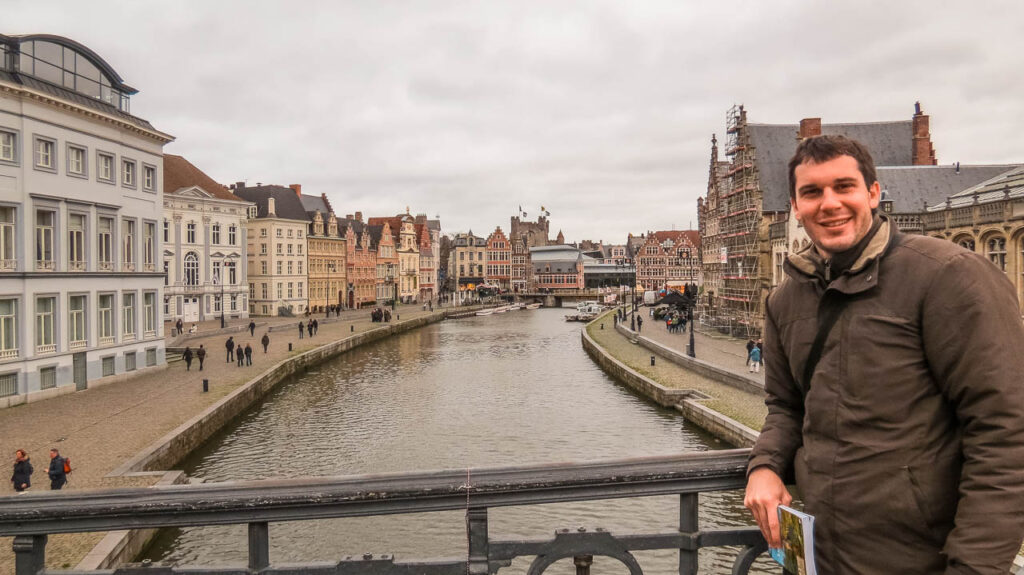
Day 3: Ghent
You can also visit Ghent on a day trip from Brussels. The city has a strong student vibe, as it is home to one of Belgium’s largest universities.
Visit Gravensteen, where you can take an audio-guided tour in Spanish to learn more about the city’s history.
As you wander through the alleys of Patershol, the oldest neighborhood in Ghent, you’ll come across stalls selling hot chocolate and freshly made waffles. Since the weather in Belgium is often gray, I highly recommend eating plenty of chocolate and drinking plenty of beer.
A must-see stop in Ghent is the Werregarenstraatje or Graffitistraat, an alley covered in graffiti that is constantly changing, a clear sign of the city’s artistic and youthful spirit. You’ll also see plenty of students carrying instruments or notebooks, walking out of old church and convent doors from another era.
Finally, make sure to visit St. Nicholas’ Church. Next to it, you’ll find St. Bavo’s Cathedral or Sint-Baafskathedraal and the Belfry. Gothic architecture is a classic in Belgium dating back to the Flemish kingdom.
The story goes that in 1949, Ghent students occupied the Castle of the Counts to protest the rise in beer prices. In honor of these heroes, you shouldn’t miss having a Belgian beer at one of the taverns along the Lys River, Ghent’s main canal.
And of course, you have to try the classic Belgian fries at one of the local frituur stands.
📷 Book your spot on the Free Tour of Ghent.
If you’re short on time in Belgium, I recommend this day trip from Brussels that includes both Ghent and Bruges.
Where to eat and stay in Ghent
For food, look for t’Vrijdagsgevoel, a traditional brasserie serving the famous dishes: waterzooi (creamy fish or chicken stew) and gentse stoverij (beef stew in beer sauce). These are Ghent classics you can’t miss.
For accommodation, I recommend staying on a boat! The Boatel is a boat-hotel located 800 meters from the Sint-Baafskathedraal, right on the Lys River. A truly unique experience. If you prefer something more traditional, the Yalo Urban Boutique Hotel Gent offers stunning views of the city and a central location.
Day 4: Antwerp
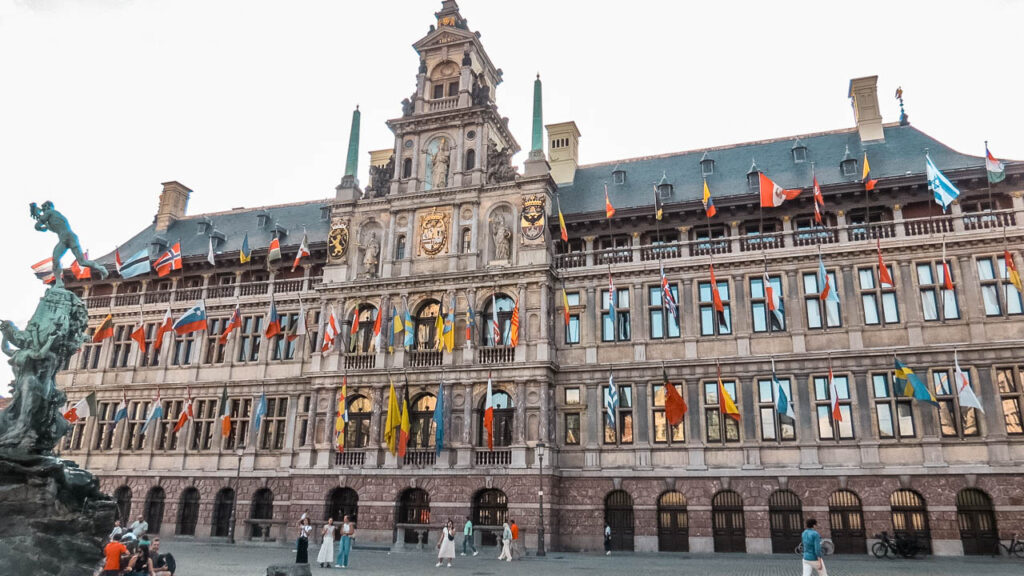
The fourth day in Belgium takes us through Antwerp, starting at the Central Station, considered one of the most beautiful train stations in the world, also known as the railway cathedral.
From there, walk a few minutes to the Antwerp Zoo, one of the oldest in Europe. Continue along Meir Street, the city’s main avenue, full of 18th-century buildings and shops, and you’ll pass the Palace on the Meir, once owned by Napoleon.
Along this avenue you’ll find the Rubenshuis, the former residence and workshop of the famous Baroque painter Peter Paul Rubens, now a museum. The residence has been closed for renovation for a few years, but you can still visit the library, the garden, and the Rubens Experience, a multimedia exhibition about his life and work.
Keep walking towards Groenplaats, a wide square perfect for a picnic lunch under the statue of Rubens. Just steps away is the Cathedral of Our Lady of Antwerp, where for only €12 you can admire its Gothic architecture and several of Rubens’ masterpieces. Then head over to the Grote Markt, the city’s main square, surrounded by ornate guild houses and the Antwerp Town Hall, a UNESCO World Heritage Site.
Walking towards the Scheldt River, you’ll pass Nello, a Belgian chocolate shop where you can try the famous cuberdons or neuzeke, a classic Belgian sweet recognized as a regional product. Buy a box and enjoy them while walking along the river until you reach the modern Museum aan de Stroom (MAS), whose stepped façade has become an icon of Antwerp. From its free panoramic terrace, you’ll get one of the best views of the city and the port.
To wrap up the day, walk about 10 minutes to the Plantin-Moretus Museum, the former printing house, today declared a UNESCO World Heritage Site. Here you’ll discover the history of books and printing in Europe—a perfect ending to a day full of history and art in one of the most important cities of the former Flemish kingdom.
📷 Book your spot on the free tour of Antwerp. Another option we recommend is a bike tour of Antwerp.
Where to eat and stay in Antwerp
After such a busy day, you won’t want to walk far for dinner: Billie’s Bier Kafetaria is a Belgian pub located just steps from the Plantin-Moretus Museum. It offers a Belgian and European menu with an extensive selection of Flemish craft beers.
If your plan is to taste as many beers as possible, I recommend staying nearby. Motel One Antwerp, just a few blocks from Billie’s Bier Kafetaria, is an affordable option with a great location and highly rated services.
On the other hand, if your priority is to start the day early, you can stay at the modern A-STAY Antwerp, located just a few meters from Central Station. A slightly more upscale option that lets you start your itinerary literally from your hotel door.
Day 5: Leuven
Leuven is another of Belgium’s most famous university cities. Located just 25 km from Brussels, you can visit it on a day trip from Brussels, which also includes a stop in Mechelen.
Start your visit at the University Library and Tower, located in Ladeuzeplein, Leuven’s largest square. At the entrance to the library, you’ll read that the original library was burned down during World War I, which meant the loss of countless literary treasures.
You can climb the tower and enjoy one of the best panoramic views of Leuven. In the center of Ladeuzeplein you’ll find a controversial sculpture—some love it, some hate it, I’ll leave that up to you.
From the square, walk a few minutes to the Grand Beguinage of Leuven, a historic quarter of cobblestone streets and red-brick houses, declared a UNESCO World Heritage Site. Just a few blocks away, you’ll find the city’s main square for bars and cafés—perfect for lunch or for enjoying a classic Belgian beer with fries.
After this break, continue a few steps to the Leuven Town Hall (currently closed to the public), an unmissable building thanks to its façade covered in Gothic statues. Right across the street is St. Peter’s Church, another major landmark of the city.
You can end your day and your itinerary here at the Grote Markt, where you’ll find plenty of bars and restaurants for dinner, or head to the Leuven Botanical Garden, the oldest in Belgium, for a final walk among gardens and ponds. Entry is free and it stays open until 8 pm in summer, and until 6 pm the rest of the year.
Where to eat and stay in Leuven
If you’d like to dine near the Stadhuis, I recommend Troubadour, a restaurant with affordable prices, tables overlooking the Town Hall, vegetarian options, and traditional Belgian dishes. Try the stoofvlees with fries, paired with a classic Belgian beer.
Alternatively, if you end your visit at the Kruidtuin, you’ll be close to Mykene, a more modern restaurant specializing in contemporary Belgian cuisine with traditional recipes and a great beer selection.
For the last night of this 5-day Belgium itinerary, here are three hotel recommendations for different budgets:
- Martin’s Klooster Hotel: located in a renovated 16th-century convent. A touch of luxury and history, with an interior courtyard and excellent location close to the historic center.
- Hotel La Royale: a simpler option without sacrificing comfort. Located right across from Leuven station, it’s convenient for train travel to other parts of Belgium. Comfortable rooms and breakfast included. Excellent value for money and well rated for location and service.
- Hotel Guesthouse Begijnhof: a restored 17th-century house turned into a hotel. Rooms may include a kitchen and private bathroom. The hotel offers free bicycles to get to the center, located a few kilometers away. A quiet, affordable option, ideal for solo travelers or couples.
What you need for your trips to Europe
Plan your journey easily with these trusted resources: