
Visit Stonehenge was a childhood dream. The mystery it holds and the legends surrounding this place are appealing; in the end, that’s what makes it one of the most visited places in England. Let’s explore Stonehenge together in this article.
Stonehenge is a sandstone monument located about 13 km north of Salisbury and 140 km west of London. Its origins are so ancient that they’re unknown, although archaeologists estimate it dates back to before 2000 BC.
There are various theories, mysteries, and legends about the use of this structure that make visiting Stonehenge a mystical experience:
- it could have been a religious temple;
- a funerary monument, though not a cemetery per se, since not many human remains were found buried for the long period it was supposedly in use;
- an astronomical observatory used to predict seasons;
- a sun worship sanctuary.
Whatever it was, the mystery remains and invites the imagination to soar.

1) What do you see on a visit to Stonehenge?
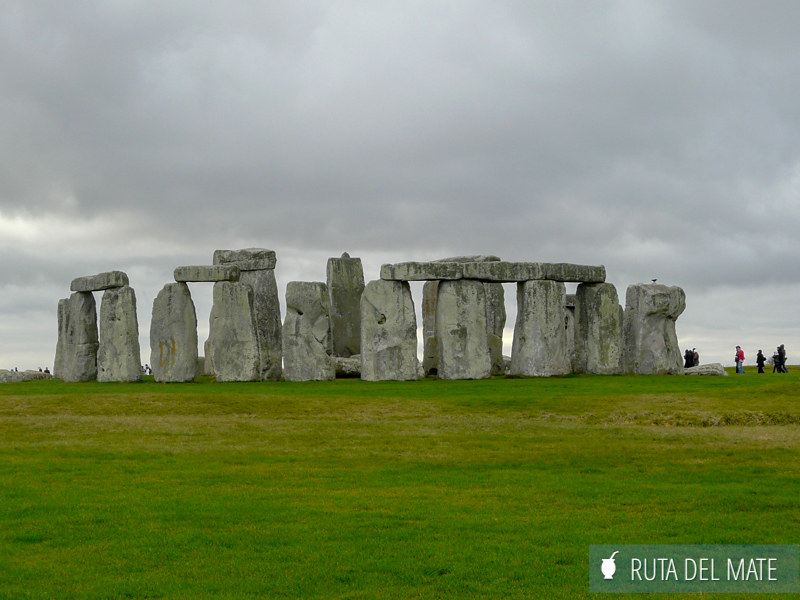
Upon entering the site, there’s a path that circles the monument. On the visit to Stonehenge, the rectangular stones are seen from different angles, each placed vertically and some horizontally on top of the others, forming an arch.
These arches also form two rows of circles, one outer with connected arches, and another inner with individual arches.

These shapes aren’t just placed randomly. At certain times of the year, specifically during the winter and summer solstices, sunlight at dawn and dusk shines through the main entrance to the site (which is believed to have been the entrance for the processions held inside) in such an aligned way that it shows the astronomical knowledge of the people who created this wonder.
During your visit to Stonehenge, you can’t touch the stones, except during the summer and winter solstices and the spring and autumn equinoxes. There’s a visitor center with information.
📝 The general admission to visit Stonehenge updated for 2025 is £30 (without “gift aid” and if purchased on-site) and includes an audio guide. If you buy your ticket in advance, there’s a discount.
📷 Take a trip to Stonehenge from London.
2) Why Visit Stonehenge
Stonehenge is one of those must-visit places in England, whether it’s for the ancient history of this prehistoric monument or for wondering how they managed to bring those heavy stones from so far away.
Or, once they brought the stones, what technique they used for its construction. Or for the mystical, spiritual, and astronomical elements that surround it.
Stonehenge is part of the English heritage and is also a World Heritage Site. I think I’ve listed enough reasons why visiting Stonehenge is worthwhile.
3) What’s the best time to visit Stonehenge
Stonehenge is located in the southwest of England, and just being in this country, it’s highly likely to rain, or even snow. Still, the best weather is around summer, in the months of June, July, and August.
The most sought-after days for fans of the mystical (druids, pagans, and spiritualists, among others) to visit Stonehenge are the summer and winter solstices.
If you know you’ll be around during that time (June 21-22 / December 21-22), get your ticket in advance. It won’t be the party it was in the ’80s, filled with music, alcohol, and drugs, but it’ll definitely be worth it for the energy this place gives off.

4) What else can you do in the area besides visiting Stonehenge
a) Visit Old Sarum
Old Sarum is located near Stonehenge, just a few kilometers away, and it’s the site of the ancient Salisbury city settlement. Evidence of this includes the small ruins and marks on the ground where a fortress and a church once stood.
b) Salisbury
From the Salisbury train station, there’s a bus that takes you to the ruins, passing through this town. So what I did was take it to visit the ruins, but on the way back, I got off here to have lunch and stroll a bit.
I was surprised to find a charming town, where you can still see typical medieval architecture in some of its houses.
The best thing, as always, is to get lost in its alleys and discover unique corners, where the modern blends with the old. To learn more about the history of Stonehenge and the town, you can visit the Salisbury Museum.
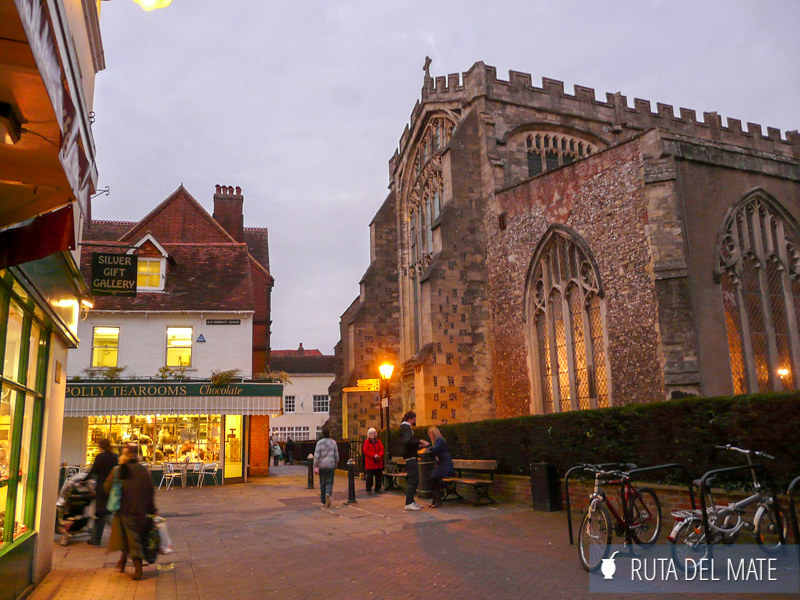
But one of the main things to see in Salisbury, which is why many tourists visit, is the Salisbury Cathedral, whose construction began and ended in the years 1220 and 1258, and houses the Magna Carta inside.
This cathedral has several features that distinguish it from other English cathedrals:
- it’s considered one of the best examples of early English architecture,
- it has the tallest tower in any church in the UK,
- it also has the largest cloister,
- the best-preserved original of the Magna Carta,
- the oldest working clock in the world.
Additionally, Salisbury Cathedral has an exceptional and outstanding beauty from every angle.
📷 Book here the tour that includes Stonehenge, Salisbury, and Windsor in one day from London.

c) Bath
A medieval city that has Roman Baths which are a UNESCO World Heritage site, along with other things to do, like strolling across its bridges lined with shops or admiring the Georgian architecture of its houses.
📷 This is one of the most complete day trips you can take from London that includes Stonehenge among its destinations. Also, this
5) Where to Stay in Stonehenge?
There are many towns around Stonehenge where you can stay. Our recommendations are:
- The Stones Hotel: 6 km from Stonehenge in the town of Salisbury, it’s a stylish hotel with parking, a restaurant, and a bar.
- Fairlawn House: one of the closest accommodations to Stonehenge in the town of Amesbury. It operates in a large mansion and offers an excellent continental breakfast.
- Stonehenge Cottages: located in the village of Lower Woodford, 10 minutes by car from Stonehenge. They are well-decorated, comfortable apartments with kitchens and parking.
6) How to get to Stonehenge from London
Near Salisbury, you’ll find the following airports:
- Bournemouth
- Southampton
- Bristol
- London
Traveling from London to Stonehenge by Train
Most travelers visit Stonehenge from London. The train station that offers direct service to Salisbury, without needing transfers, is Waterloo.
Once you arrive at Salisbury train station, you can pay for a tourist bus that takes you right to the ruins. It takes about 40 minutes to get there, and along the way, you’ll listen to a recording introducing the site.
What you need for your trips to Europe
Plan your journey easily with these trusted resources: