
Many people wonder things to do in Liverpool besides taking the Beatles tour. And there’s a lot! We’ll tell you below.
Liverpool is a maritime trading city founded in the early 13th century, whose ensemble of neoclassical and Victorian buildings is a UNESCO World Heritage Site. Known for its football and, yes, for being the birthplace of the Beatles, its port was once one of the world’s most important centers for the trade in goods and slaves.
It’s not my first time visiting Liverpool. I’ve always been drawn to the Beatles, their story, and the chance to see the city where they grew up and where many of their songs were born.
In this article, we’ll set aside Liverpool’s connection to the Fab Four and focus on the city’s history. After all, there’s plenty to see and do in Liverpool beyond everything related to the band.
💯 That said, if you’d like to know more about how to see Liverpool through the Beatles, you can read this article, which includes maps and directions on how to reach each place on your own or on a tour.
A brief intro to Liverpool’s history
Let’s start exploring what you can’t miss in Liverpool through its history.
These marshy lands at the mouth of the River Mersey had long been home to small rural settlements that weren’t officially recognized. The most important port and town in the area was Chester, about 30 kilometers south of Liverpool.
In 1207, King John of England, commonly known as John Lackland, made Liverpool a borough, and that year is considered its founding date.
This king was Richard the Lionheart’s younger brother and, because of certain actions, ambitions, and ill intent in English history, he became linked to the Robin Hood legend. The fact is he founded Liverpool because he wanted a departure port for troops from England to Ireland, so they wouldn’t have to go through Chester, its control and its “customs”.
From its founding until the 16th century, Liverpool kept a low profile and had few residents; it was a small town overshadowed by Chester. From the 17th century on, it began to gain importance for several reasons:
- Chester’s port began to fill with sediment and became unusable. In fact, if you check a current map, Chester is set back from the sea.
- The Great Fire of London happened in 1666, and for six months Liverpool became the foremost city in the British Empire.
- The first slave-trading ships began to arrive. Of the global slave trade, 40% passed through Liverpool. This brought an infamous prosperity to the city. Although the trade was abolished in 1807, it continued illegally until 1855.
Liverpool has many buildings dating from the 18th century, but there’s no real “old town” as such, since it’s been taken over by modern offices and trendy shops. We’ll then explore all those spots you have to see to experience Liverpool fully.
💯 Are you visiting other places in England and the UK? Check out things to do in London in 3 days.
Things to do in Liverpool in 2 days
1) Liverpool Castle and the Queen Victoria Monument
In 1880 Liverpool was granted city status, marking the start of present-day Liverpool’s history around Castle St., one of the city’s oldest streets.
If it’s called Castle St., you’d expect to find a castle there, right? There was one, but by the 17th century it had fallen into ruin and was finally demolished in 1715. Today, that site is home to the Queen Victoria Monument, unveiled in 1902, with a plaque commemorating the castle that once stood there.
Castle St. therefore begins where the castle would have stood and, after a few blocks, ends at the town hall, which has a beautiful dome topped by the goddess Minerva.
All the buildings on that street, except for one (damaged during World War II), are Victorian in style. It’s worth taking time to admire the details of the facades.
📷 Book the free Liverpool tour here and discover the main attractions with an expert guide.
💯 Check out our article on how to apply for the ETA for the United Kingdom, a required step if you’re traveling to England, Scotland, Wales, or Northern Ireland.
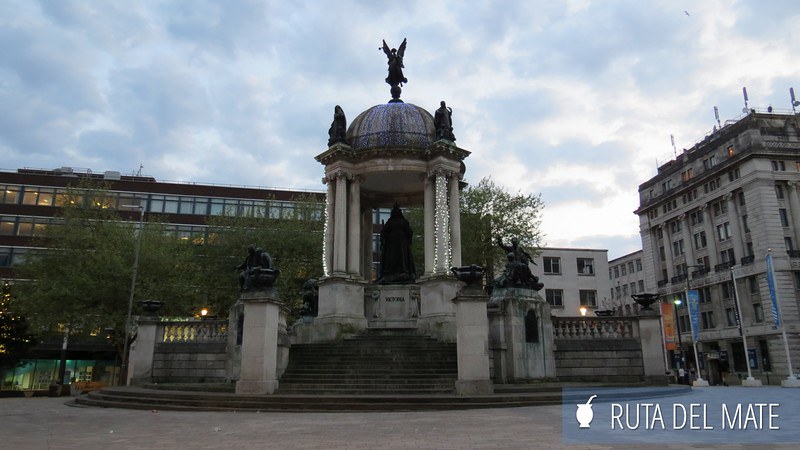
2) Central Library and St George’s Hall
Although from the town hall you can see the Liver Birds on the Liver Building, we move away from the waterfront and head the other way.
We then arrive at the square, home to the Wellington Statue, at the junction of Lime and William Brown streets. From there you can see a group of neoclassical buildings that are part of English Heritage and are a World Heritage Site.
These date back to the late 18th century, and were, they say, built with money from the slave trade. In addition to the two we’ll mention, there’s also the Walker Art Gallery and the World Museum Liverpool (not to be confused with the Museum of Liverpool, which is on the Dock).
St. George Hall
St. George Hall, dating from 1856, was the building that housed the city’s courts and is now used for exhibitions, weddings and banquets. It closes at 5 p.m., so plan accordingly, and admission is free.
It can be recognized by its steps, its Corinthian columns and an equestrian statue of Prince Albert.
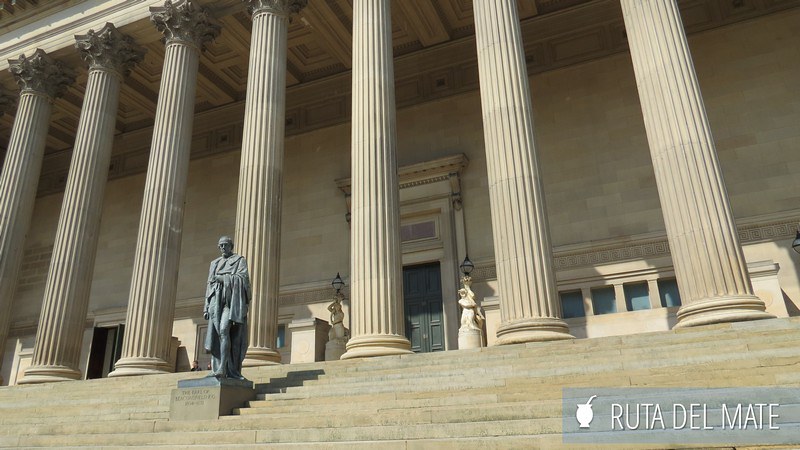
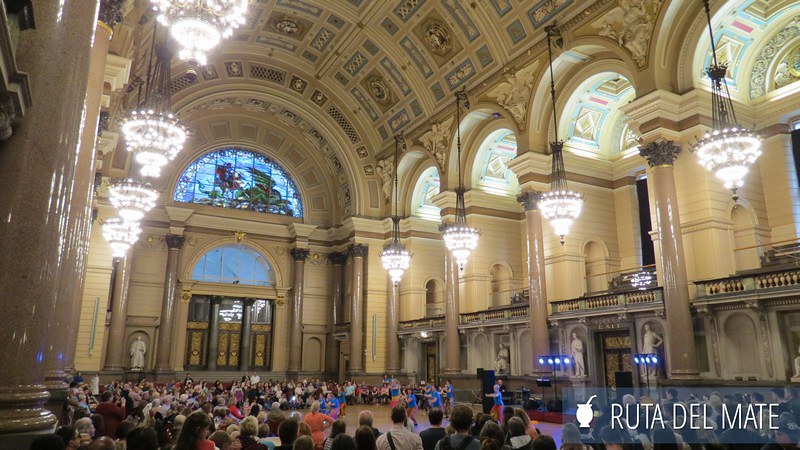
Central Library
Admission is free, and it’s worth going in. Although the exterior retains its neoclassical style, the interior has been renovated and modernized, from its look to its facilities.
Don’t miss the Picton Reading Room, a circular space where even the tapping of fingers on the furniture can be distracting because of the acoustics. It’s one of Liverpool’s attractions not to be missed.

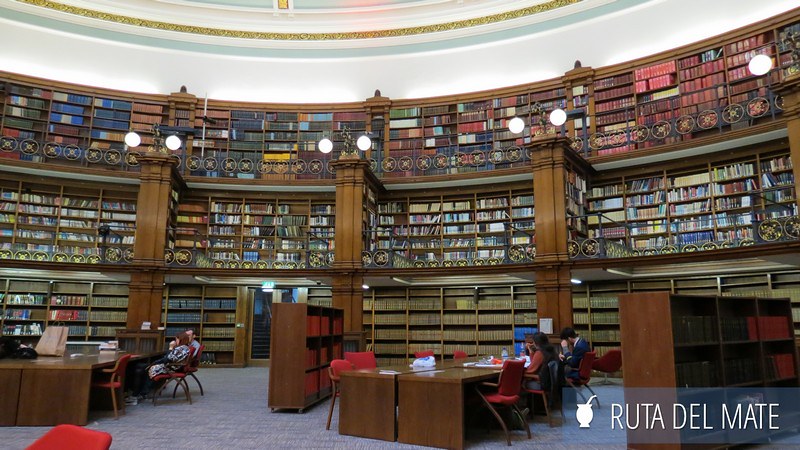
3) How World War II affected Liverpool: the port
During World War II, Liverpool was the second most bombed city in England after London. As bad as that was, it could have been worse. Because of its geographic location, to bring fuel there from the continent, aircraft had to carry lighter bombs and, consequently, less powerful ones.
After the war, Liverpool became impoverished, fell into decline, and became increasingly suburban. There are numerous memorials from this period that you should visit in Liverpool.
The Albert Dock
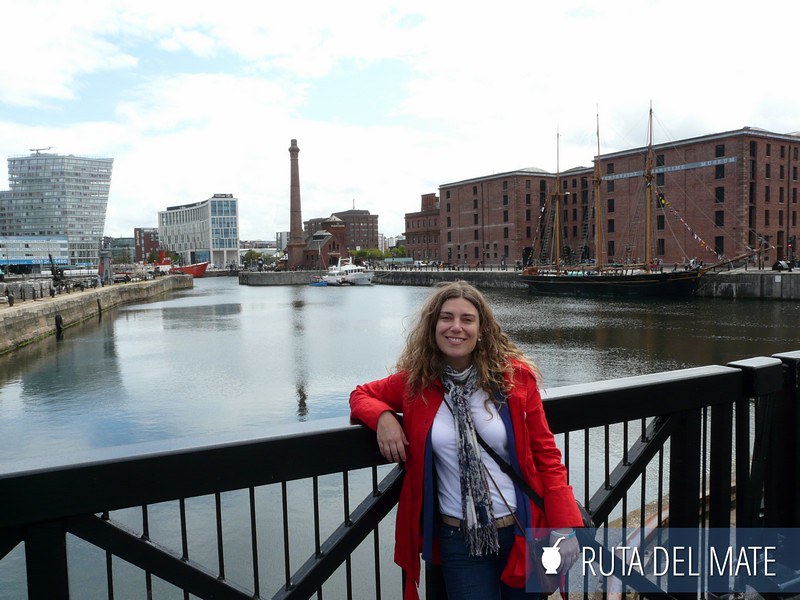
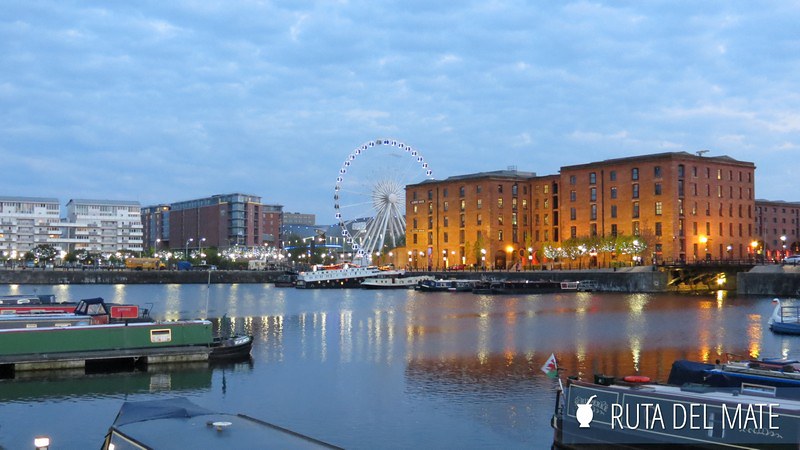
What is now the Albert Dock used to be Liverpool’s main port, which became obsolete for several reasons:
- part of it was damaged during World War II
- the arrival of large shipping containers for trade (there wasn’t enough space there)
- the construction of a larger port to the north of the city
In the 1980s a proposal was made to renovate the abandoned buildings, because the area had become dangerous and run-down. That’s how the docks filled with restaurants, bars, souvenir shops and several museums, including the one dedicated to the Beatles, the International Slavery Museum and the Maritime Museum.
Walking around the Albert Dock, both day and night, is one of those things you should do in Liverpool.
Museums on the Liverpool waterfront
- Merseyside Maritime Museum, which covers the city’s port history and also the Titanic. Free admission.
- International Slavery Museum, there aren’t many museums about slavery. This is the only one in Europe and one of three in the world, so it’s a must-see in Liverpool. Free admission.
- Museum of Liverpool, different from the one near St. George’s Hall, it covers the city’s history. Free admission.
- The Beatles Museum, covered in our article about the Beatles. Paid admission.
- Tate Liverpool, an art museum. Free admission.

The Pier Head
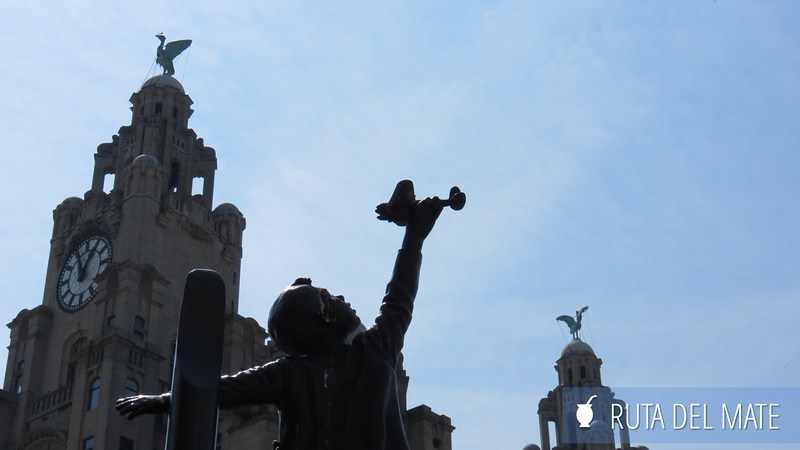
In the riverside area you should distinguish between two places: the aforementioned Albert Dock, where the old dock buildings are, and the Pier Head, a terminal where the ferries depart. From this open area called Pier Head you can see: the river, modern buildings, neoclassical buildings, the new Beatles statue, and several memorials.
Inside the “old” buildings, which date back to the early 19th century, are the so-called Three Graces. They’re made up of the Royal Liver, Cunard, and Port of Liverpool buildings, among some of the most beautiful buildings to see in Liverpool.
The best-known of the three is the Royal Liver, which houses in its domes two birds that represent the city’s symbol. It’s said these birds might have been intended as eagles, but because the carvers had never seen one, they made them up. Or they might be cormorants, more typical of the area. In the end, since no one could decide, they were christened the “Liver birds”.
📷 Book the Royal Liver Building 360 Tour here and discover all its details.
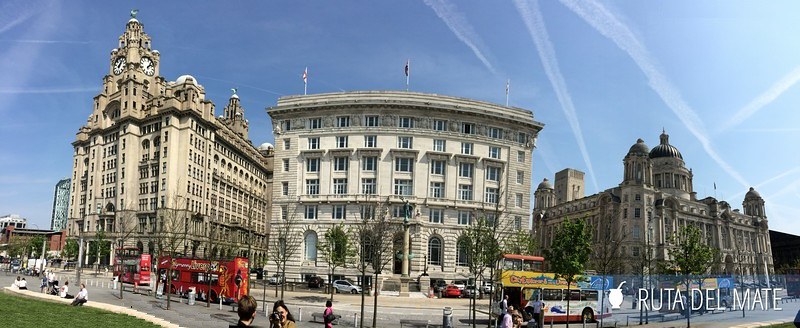
Legend has it they’re a male and a female. The one facing the sea is the female, watching over the men who set sail, and the one facing inland is the male, watching to see when the pubs open.

Next to the Three Graces are the “Three Disgraces“, modern buildings that have nothing to do with the three neoclassical gems.
Some say these buildings ruin the skyline as seen from the River Mersey, so much so that they’ve been Carbuncle Cup finalists, an award for the ugliest buildings built in the UK that year. Ugly or not, a curiosity to see on your trip to Liverpool.
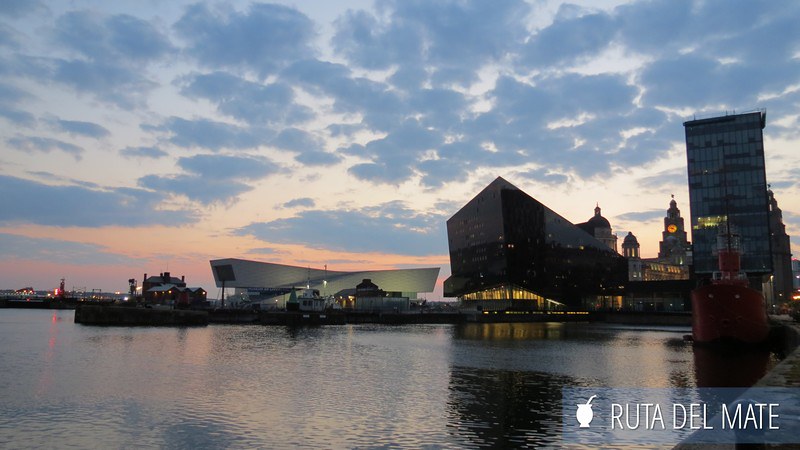
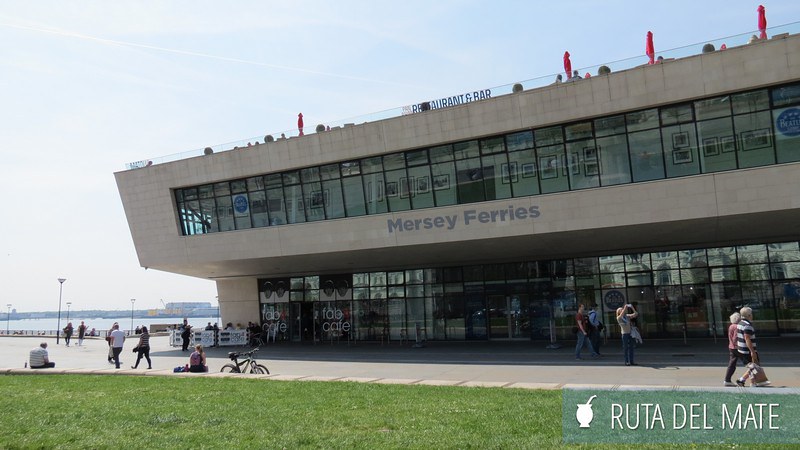
One of them actually won, and it’s the Mersey Ferries terminal. What do you think? Is it really that ugly?
4) The world in a city
As a port city, Liverpool attracted immigrants from all over the world, and that has shifted its residents’ English accent a bit, making it the second most unintelligible in the UK, after Newcastle.
It’s even been given a name, “Scouse“, and its native residents are often called “the Scousers“.
As part of its multicultural makeup, the city has a wide variety of neighborhoods and buildings, such as the German Church in Liverpool, the Greek Orthodox Church of St. Nicholas, the synagogue on Princess Rd., St. Peter’s Roman Catholic Church (often attended by Poles), and the places listed below that are must-sees in Liverpool.
Chinatown
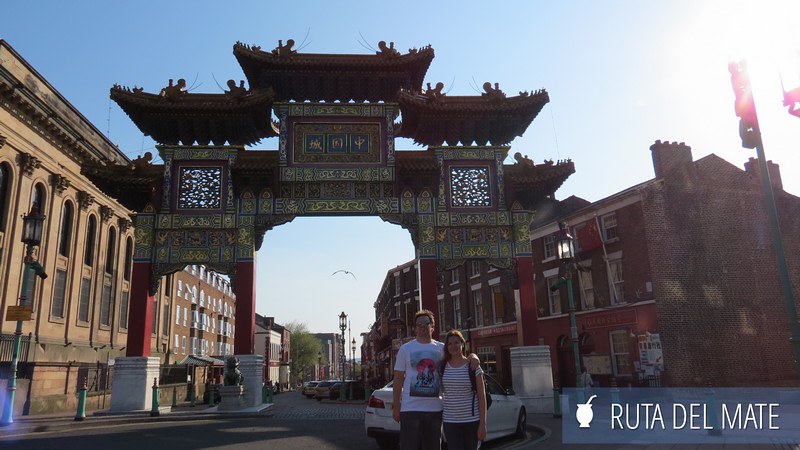
This is home to one of Europe’s oldest Chinese communities, and it’s filled with Chinese restaurants and shops. It features a beautiful paifang, one of those carved, colorful wooden arches that serve as the entrance to Chinatown.
Liverpool Cathedral
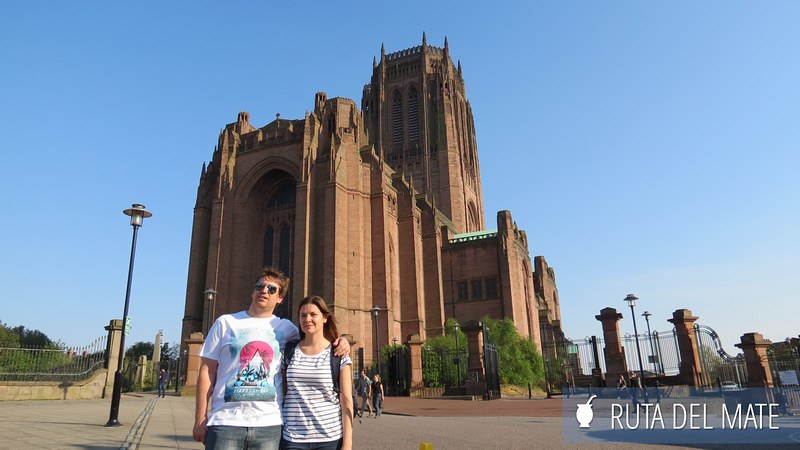
The Cathedral Church of Christ in Liverpool is Anglican, and it’s where the Diocese of Liverpool is based. It’s one of the largest cathedrals in the world. Admission is free, but a fee is required for an audio guide and to climb one of the towers for city views.
Metropolitan Cathedral
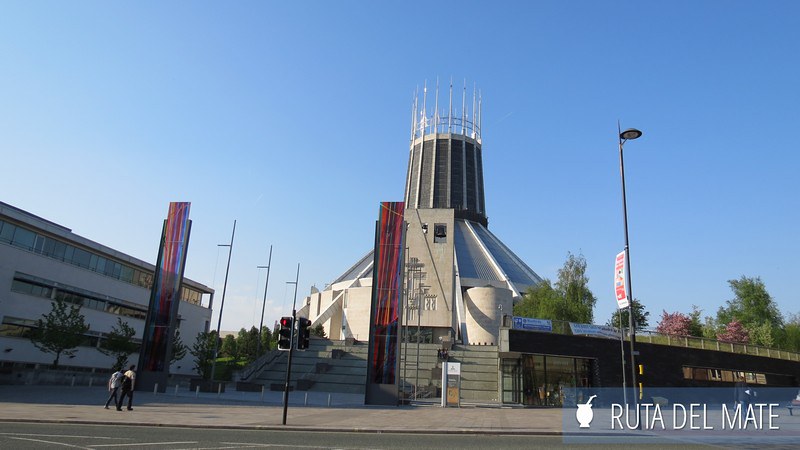
It is Roman Catholic and was originally planned to be even larger and less “modern”, for lack of a better term. It has a striking design, which I personally didn’t like much, but that shouldn’t stop you from visiting it on a trip to Liverpool.
St. Luke’s Church
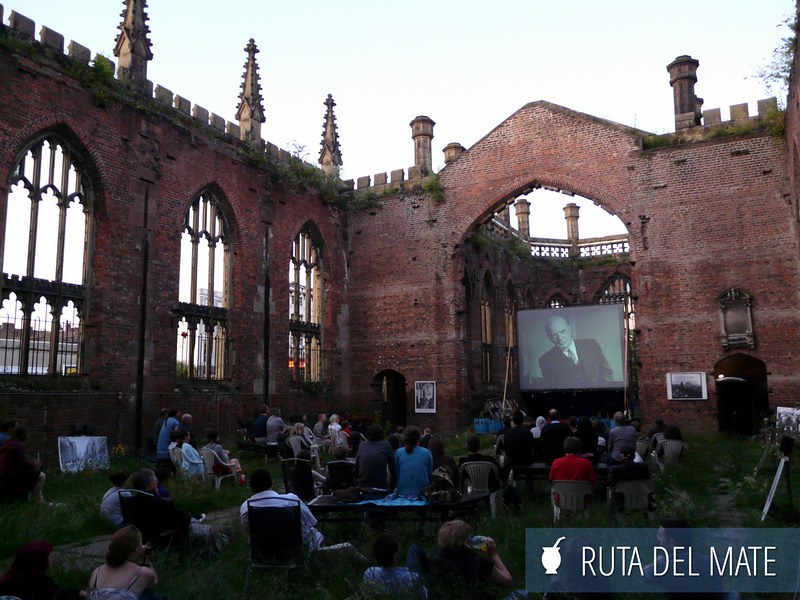
Right next to these two large churches is St. Luke’s Church, now used as a cultural space hosting exhibitions and events. Its walls are still standing today, since the roof and everything else were heavily damaged by bombing during World War II.
Wandering around Liverpool, I came across this Anglican church and they were just showing an old movie. Isn’t that great?
5) And there’s much more to do in Liverpool, such as
- If you’re a football fan you can’t miss Liverpool or Everton’s stadiums and learning about their triumphs and tragedies. You can book the Liverpool Anfield stadium tour from here.
- Go to a local pub to sing karaoke.
- Visit the University of Liverpool.
- Go up the Radio City Tower, which can be seen from everywhere.
- Find out what a “Lamb Banana” is.
- Go to Crosby Beach to see the artwork “Another Place” (I’ve included a photo of the spot from my friend Ale)
- Take a cruise on the River Mersey.
View this post on Instagram
Practical information for traveling to Liverpool
What to eat in Liverpool
There are lots of places to eat cheaply in Liverpool, since there are plenty of promotions and set meals at very good prices. Many of the bars near the Cavern Club offer decent prices; it’s just a matter of going in and checking the menu.
One of the dishes we tried was the classic sausages with mash and peas (cumberland sausages and seasoned mash) and a steak and ale pie with chips (british steak and ale pie).
Also, Liverpool’s traditional dish is Scouse, which also comes from what was mentioned above, its accent and maritime character. Scouse is a very hearty meat-and-potato stew that was commonly eaten in the suburbs because it was an inexpensive dish.


Where to stay in Liverpool?
Although there are many options, it’s best to stay near Liverpool Central or Lime stations. Another option is the St George’s area, where many tours depart. Here are some recommendations:
- Ibis Liverpool Centre Albert Dock: opposite Albert Dock and just a short walk from the Liverpool One shopping center. Simple rooms, a bar, and good value for money.
- The Sir Thomas Hotel: in the city center, very close to the Cavern Quarter. Housed in an older building with clean, renovated, and spacious rooms.
- Staycity Aparthotels Duke Street: close to Liverpool Central station, these are modern apartments with kitchens, ideal for couples or families.
- YHA Liverpool: I stayed here many years ago, and I’d recommend it for backpackers or young solo travelers.
🏨 Want to look for other options? Find the best accommodation in Liverpool here.
How to get to Liverpool
Cheap flights to Liverpool
To get to Liverpool by plane, there are two easy options. One is to fly directly to Liverpool John Lennon Airport (LPL), and the other is to fly into Manchester Airport (MAN).
The first is in the city, so it’s easily reachable by public transport, and there’s even a bus that links the airport to Liverpool city center. Manchester is halfway between the two cities. The last time I went, I arrived at Manchester Airport.
How to get from Manchester Airport to Liverpool city center
- Train: I ruled this out because it’s more expensive and slower (about £15).
- Bus: You can buy tickets online, but you have to book for a specific departure time. Tickets are also sold at Manchester Airport offices, although you’ll pay a £2 airport surcharge. I didn’t need it, but check the return fares as they’re often more economical. The bus goes to Liverpool One.
- Booking transfers from Manchester Airport to Liverpool city center.
What you need for your trips to Europe
Plan your journey easily with these trusted resources:


