Discover things to do in Paris, the city of lights, love, and art. A list with several suggestions to do and visit, with updated prices.
Paris is one of those cities that is always on the bucket list. It doesn’t matter if it’s your first time in Europe or if you’ve been there before: there’s always something new to see in Paris. The classic lives alongside the alternative, and every corner has its charm.
We’ve been lucky enough to visit it several times since living in Spain, so this guide combines our own experiences with practical tips to help you plan your trip.
In this article, you’ll find a complete selection of places to see in Paris: famous monuments, historic neighborhoods, museums, walks along the Seine, and even day trips nearby. Everything is organized by theme so you can plan your visit according to how much time you have. Plus, at the end of the article, you’ll find recommendations on where to stay in the city and useful links for your trip.
Who wouldn’t want to visit the city of love at least once in their life? Let’s explore the best of Paris!
🔝 Don’t miss this article with the 10-day France travel itinerary.
Map – Things to do in París
Before diving into everything to see in Paris, it’s useful to take a look at the map. The city is large, and what may seem close on the map can actually take you 20 to 30 minutes by metro or quite a while walking. That’s why, if you plan to move between several points in one day, it’s worth thinking about logistics.
A good idea is to use the Paris Visite Ticket or the Navigo Découverte, which offer unlimited travel on the metro, bus, RER, and tram for periods of 1 to 5 days. For example, a 3-day pass costs around €62, perfect for getting around quickly without having to buy single tickets all the time.
If you prefer more flexibility and don’t need so many zones, the pack of 10 t+ tickets loaded on the Navigo Easy card also gives you speed and some savings.
Is the Paris Pass worth it?
If you’re going to spend several days in Paris and want to visit museums, monuments, and attractions without worrying about buying each ticket separately, the Paris Pass can be a good option. It includes free access to more than 90 places and experiences, such as the Eiffel Tower, Notre Dame, the Louvre Museum, a Seine River cruise, the hop-on hop-off bus, and much more.
Buying tickets separately can get expensive, so if you plan to visit several of these attractions, it can help you save money and avoid lines. Keep in mind there are different versions of the pass depending on the duration and type of activities included.
We tell you more about it in this article.
Iconic places to see in Paris
Eiffel Tower
The Eiffel Tower is, without a doubt, the symbol of Paris. Standing 324 meters tall, you can climb to the second floor by stairs or reach the top by elevator. We’ve done both on different trips, and it’s worth doing at least once.
🎟 General admission: €36.10 to the top by elevator / €27.50 to the 2nd floor by stairs + elevator to the top. Check updated prices on the official website.
- Buy your ticket online in advance and choose your time slot.
- The best time to go up is before sunset: you’ll see the city by day and as the lights start to come on.
- There are restaurants on the 1st and 2nd floors, and a champagne bar at the top.
📷 Book your guided tour of the Eiffel Tower here, which includes access to the upper floors and a full explanation of the monument.

Champ de Mars
This large park at the foot of the Tower is ideal for a picnic, relaxing, or simply sitting and enjoying the perfect postcard view.
Photo with the Eiffel Tower
The best views are from the Trocadero Gardens or the Palais de Chaillot. At certain times of the day, you’ll see lines of influencers in dresses with professional photographers trying to get the perfect shot. If you want to do the same… now you know where!
Arc de Triomphe and Champs-Élysées
The Arc de Triomphe was built by order of Napoleon after the victory at Austerlitz. It stands in the middle of Place Charles de Gaulle, from which 12 avenues radiate, forming a star when seen from above.
- To see it up close, don’t cross the street: there’s an underpass.
- Below it lies the Tomb of the Unknown Soldier with an eternal flame.
- From the top, you get excellent views of Paris and there’s a small museum.
🎟 General admission: €16 from 1/10 to 1/6, and €22 from 2/6 to 30/9. Buy your ticket here.
The Champs-Élysées start at Place de la Concorde and end at the Arc. It’s one of the most famous avenues in the world, lined with luxury shops, historic cafés, and its namesake gardens. Perfect for strolling, window shopping, or simply walking with Paris as your backdrop.
Sacré-Cœur and the Montmartre District
The Basilica of the Sacred Heart sits atop Montmartre, one of the most characterful neighborhoods in Paris. The white church stands out for its dome, its enormous bell “La Savoyarde” (the largest in France), and the panoramic views from above. Photography is not allowed inside.
In the square in front of the basilica, you’ll usually find artists, musicians, and plenty of people. Walking down the cobbled streets, you’ll discover the bohemian atmosphere of the neighborhood, full of history and bars. We recommend taking a free walking tour of the area — we did it and loved it.
📷 Book your free tour of Montmartre here.
Notre Dame and Surroundings
Notre Dame Cathedral is one of the icons of Paris. Its Gothic architecture, famous gargoyles, and history have made it a must-visit. It was also immortalized by Victor Hugo in his novel Notre-Dame de Paris (1831), better known to many as The Hunchback of Notre Dame.
Update: The cathedral reopened to the public on December 7, 2024, after several years of restoration following the 2019 fire. Although the church can now be visited, some areas (such as the stained glass windows, the choir, and the towers) are still under renovation and will gradually reopen between 2025 and 2027.
In addition to its architectural and symbolic value, Notre Dame was the setting for historic events, such as the coronation of Napoleon Bonaparte as Emperor in 1804. Although tradition dictated that kings be crowned in the city of Reims, Napoleon chose Paris for this key moment.
Very close by, on the Île de la Cité, you can visit Sainte-Chapelle, famous for its colorful stained glass windows, and the Conciergerie, a former royal residence later used as a prison. Marie Antoinette was held there before being executed during the French Revolution.
In front of the cathedral, on the ground, you’ll find France’s kilometer zero, the point from which all national roads in the country begin.
Although coronations were traditionally held at Sainte-Chapelle, some also took place here, including Napoleon Bonaparte’s as Emperor of France.

Exploring the Seine and its Bridges
The River Seine flows through Paris, giving the city a unique identity. Walking along its banks is a relaxing way to discover part of Paris’ heritage, and if you have time, you can add a boat ride or simply cross some of its most iconic bridges.
Boat Ride on the Seine
A boat ride is one of the most classic things to do in Paris. During the trip, you’ll enjoy privileged views of several landmarks: the Eiffel Tower, the Orsay Museum, the Louvre, and Notre Dame, among others.
You can choose from several options, depending on the type of experience you’re looking for:
- Classic Seine River boat tour: Ideal if you want an overview of the main attractions from the water. It lasts about an hour and is a great option if you’re short on time.
- Lunch cruise: Perfect if you’re looking for a more special experience. Sail while enjoying a set menu onboard with panoramic views.
- Night cruise with gourmet dinner and live music: A romantic and more exclusive option. Includes high-quality cuisine, nighttime monument lighting, and a carefully curated atmosphere.
And if you prefer something more budget-friendly, you can stroll along the pedestrian riverbanks of the Seine, which have benches, book stalls, and a lively atmosphere.

Bridges Worth Crossing in Paris
Pont Alexandre III
One of the most impressive and ornate bridges in the city, it connects Les Invalides with the Grand and Petit Palais. It was inaugurated for the 1900 Universal Exposition and is named after Tsar Alexander III. The foundation stone was laid by his son, Nicholas II, the last Tsar of Russia.
Pont des Arts
This pedestrian iron bridge connects the Institut de France with the Louvre. For years it was a symbol of eternal love due to the “love locks” couples attached to it. Although locks are no longer allowed, it remains a place with great views and a romantic atmosphere.
Pont Neuf
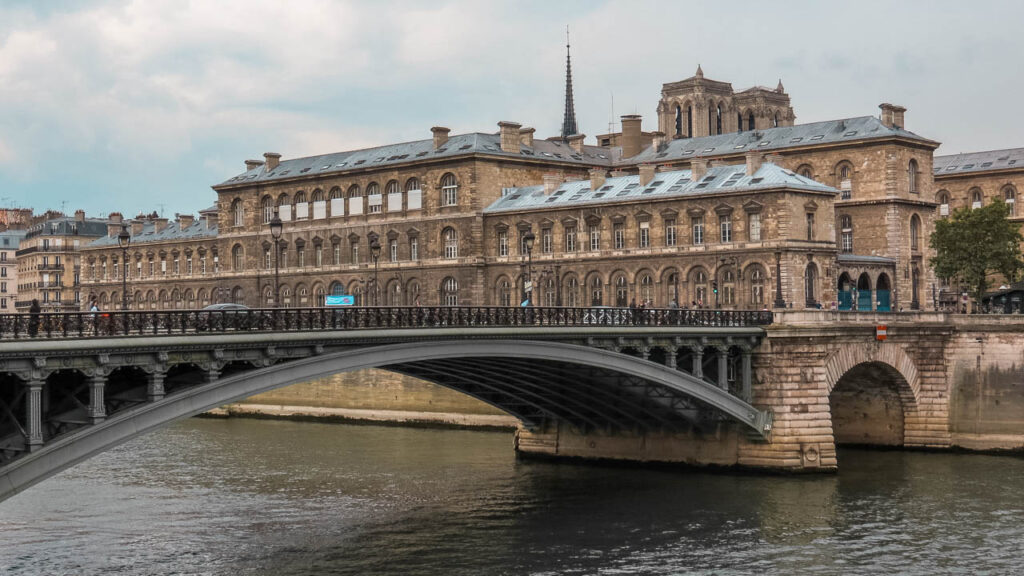
Despite its name (“New Bridge”), it is the oldest bridge in Paris. Completed in 1607, it was the first in the city to be built entirely of stone. Today, it connects both banks of the Seine while crossing the Île de la Cité.
Pont de l’Alma
Located very close to the Eiffel Tower, it is sadly famous as the site of Princess Diana’s fatal accident in 1997. At one end you’ll find the Flame of Liberty, a life-size replica of the torch from the Statue of Liberty. Originally installed to commemorate the friendship between France and the USA, it has since become an unofficial memorial to Diana.
💯 Want to travel to Paris without spending too much? Check out our article on how to travel to Paris on a budget.
Museums Worth Visiting in Paris
Paris is home to some of the most important museums in the world. If you love art, you could easily spend several days exploring them. But even if you’re not an art enthusiast, there are places worth visiting for their history, architecture, or a particular masterpiece.
🗓️ Useful tip: many museums are free on the first Sunday of the month, especially during the low season (November to March). You can also make use of the Paris Pass, which includes entry to several of them.
Louvre Museum
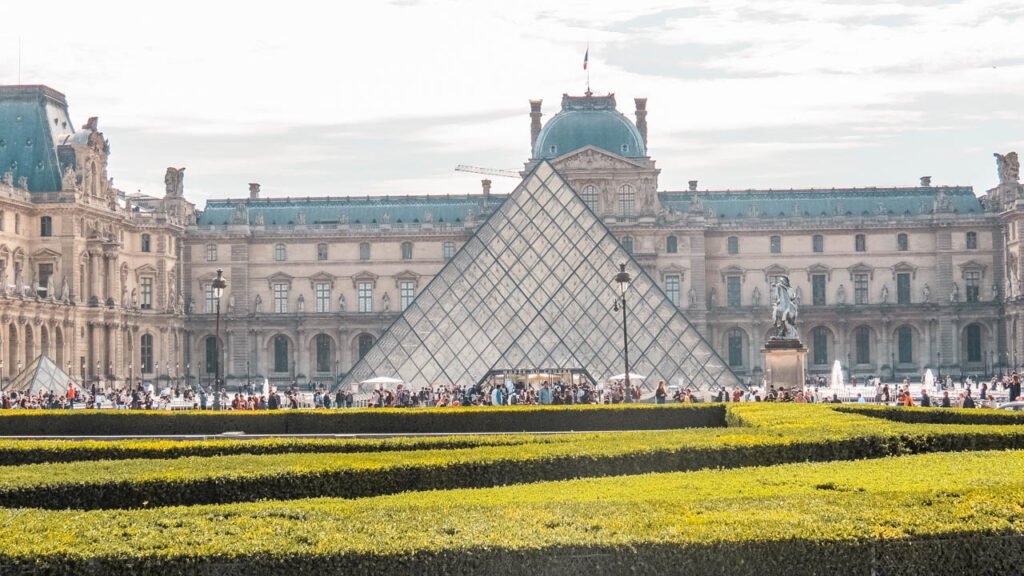
The most visited museum in the world and an absolute must-see. While most come to see the Mona Lisa, there is so much more: from Greek sculptures like the Venus de Milo to Napoleon’s apartments. The building itself is worth the visit — it was once a royal palace.
Outside, don’t miss the glass pyramids in the main courtyard, and look for the inverted pyramid inside the underground shopping center.
🎟 General admission: €22. Tickets can be purchased online from the official website.
📌 You can also book a guided tour of the Louvre Museum if you prefer to explore it with someone who will explain the highlights.
📷 If you want to explore the Louvre with someone who will explain every detail, there’s a Louvre Museum guided tour we recommend.
Orsay Museum
Housed in a former railway station, it has an outstanding collection of Impressionist and Post-Impressionist art, featuring works by Monet, Renoir, Van Gogh, Cézanne, Manet, and many more.
In addition to its collections, the building itself is beautiful, with a large clock overlooking the Seine from above.
🎟 General admission: €16. Book your ticket in advance.
📌 There’s also the option of a guided tour of the Orsay Museum, perfect for not missing the essentials.
Pompidou Centre
The most important modern and contemporary art museum in France. The building stands out for its “inside-out” design: colorful pipes, exterior staircases, and a very distinctive look.
The collection includes works by Picasso, Duchamp, Kandinsky, Matisse, and many other 20th-century artists. There are also temporary exhibitions, a terrace with views, and a library.
🎟 General admission: €18. To access only the building and views: €8. All tickets can be purchased online.
Other Recommended Museums
If you have more days or prefer quieter museums, Paris has plenty of lesser-known options:
- Musée de l’Orangerie: famous for Monet’s Water Lilies.
- Rodin Museum: sculptures in beautiful gardens, very close to Les Invalides.
- Picasso Museum: located in Le Marais, with a large collection of the artist’s works.
- Perfume Museum, Counterfeit Museum, Vampire Museum, or even the Sewer Museum: quirky and different options for those looking for something off the beaten path.
📌 If you plan to visit several museums, check whether it’s worth getting the Paris Pass.
If you’re a passionate art lover, Paris has much to offer in museums such as Rodin, Picasso, and the Orangerie.
It also has alternative and eccentric museums you shouldn’t miss, such as the Sewer Museum, the Chocolate Museum, the Perfume Museum, the Vampire and Legendary Creatures Museum, the Counterfeit Museum, and just about any other curiosity you can imagine.
Alternative Paris: Catacombs, Cemeteries, and History
If you’ve already seen the classics or are simply interested in a different side of the city, Paris also offers places full of history, the graves of famous figures, and sites that are fascinating more for their stories than their appearance. Some are darker, others just different — but all are worth visiting.
Les Invalides and Napoleon’s Tomb
This complex was created by Louis XIV to house retired soldiers, but today it is best known as the resting place of Napoleon Bonaparte.
General admission includes access to the Army Museum, which has an interesting collection of artillery, armor, and military artifacts. At the heart of the building is the Dôme des Invalides, where Napoleon’s tomb lies under a grand golden dome visible from various points in the city.
🎟 General admission: €17.
Paris Catacombs
This network of underground tunnels was originally limestone quarries. In the late 18th century, when Parisian cemeteries began to overflow, millions of human remains were moved here.
Today, you can walk 1.5 km of this labyrinth, where the bones are arranged in eerily neat patterns. It’s a striking experience, especially if you’ve never seen anything like it.
🎟 General admission with audio guide: €31. It’s recommended to book online in advance as spots are limited.
Panthéon of Paris
Located in the Latin Quarter, the Panthéon was conceived as a church but ended up as a secular mausoleum for great figures in French history. From the outside, it resembles its Roman counterpart, and inside it holds the remains of Victor Hugo, Marie Curie, Alexandre Dumas, Jean-Jacques Rousseau, Voltaire, and Louis Braille, among others.
🎟 General admission: around €13. Check the official website for updates.
Historic Cemeteries of Paris
Montparnasse Cemetery
Here are the graves of Julio Cortázar, Samuel Beckett, César Vallejo, Jean-Paul Sartre, and Simone de Beauvoir. It’s less touristy than other cemeteries and has a calmer atmosphere.
Père-Lachaise Cemetery
The most visited cemetery in the city and one of the most famous in the world. Jim Morrison’s grave is the most sought after, but you’ll also find Oscar Wilde, Molière, Édith Piaf, Frédéric Chopin, and Marcel Proust buried here.
Paris Neighborhoods with History and Charm
Every neighborhood in Paris has its own personality. Some are touristy, others more local, and some still preserve the bohemian atmosphere often associated with the city. Here are the ones worth strolling through at a slow pace to discover another side of Paris.
Montmartre
Montmartre is one of the most visited neighborhoods, but it still has corners full of local life. At the top is the Basilica of the Sacred Heart, and at its feet, cobblestone streets, squares with artists, bakeries, and bistros.
Don’t miss:
- Place du Tertre, with portrait artists and a bohemian atmosphere.
- Wall of Love, with the phrase written in over 300 languages.
- Café des Deux Moulins, featured in the film Amélie.
- Montmartre Cemetery, where Cortázar and other artists are buried.
At night it’s usually livelier, and some say you should be a bit cautious, but between the basilica and the cemetery it’s generally a peaceful area.
Latin Quarter
Despite the name, it has nothing to do with Latin America. It’s called this because it was once a university area where Latin was spoken in the Middle Ages. Today, it still has a youthful and relaxed vibe.
What to see:
- The Panthéon.
- Bookstores, including the famous Shakespeare and Company.
- Narrow streets filled with restaurants offering set menus.
- Easy access to the Luxembourg Gardens and Sainte-Chapelle.
Ideal for a daytime walk or a lunch stop.
Le Marais and Bastille
Le Marais is one of the most beautiful neighborhoods for aimless wandering. Narrow streets, boutiques, art galleries, patisseries, and an elegant yet relaxed atmosphere. Here you’ll find:
- Place des Vosges, one of the oldest and most harmonious squares in Paris.
- The Picasso Museum.
- Cafés with peaceful terraces.
Very close is the Bastille area, where the old fortress/prison stood before being stormed during the French Revolution. Today, only the square and the commemorative column remain, but it’s a good historical reference.
La Défense
It’s Paris’ financial and business district, full of skyscrapers, wide avenues, and a stark contrast to the historic center.
The most striking feature is the Grande Arche de la Défense, a modern cube-shaped building which, when viewed from the Arc de Triomphe, aligns perfectly with it and the Arc de Triomphe du Carrousel at the Louvre.
Worth visiting if you’re interested in modern architecture or alternative viewpoints.

Curious Streets and Corners
Paris is full of hidden details. Here are a few worth looking for:
- Rue du Chat qui Pêche: the narrowest street in Paris.
- Art Nouveau-style metro signs: scattered across the city, some restored to their former glory.
- Kilometer Zero: in front of Notre Dame, marking the point from which all distances in France are measured.
- Galeries Lafayette: although it’s a department store, it’s worth stepping inside to see the colorful glass dome and heading up to the free rooftop terrace for views.
Paris at Night
Paris transforms completely after sunset. Many monuments are illuminated, and several spots take on a different atmosphere in the evening. You don’t need to spend much to enjoy it: walk, sit by the Seine, or head to a viewpoint for a perfect end to the day.
The Eiffel Tower Illuminated
Each night, the Eiffel Tower is fully lit, and during the first five minutes of every hour, it sparkles with twinkling lights. It’s a simple, free, and very photogenic show. The best place to watch is from the Trocadéro Gardens, but it’s also beautiful from the Champ de Mars or even from certain nighttime Seine cruises.
Nighttime Viewpoints
- Montparnasse Tower: offers one of the best views of Paris… because you can’t see the tower itself. From its panoramic terrace, you can see the entire city lit up.
🎟 Entry: from €24. You can buy tickets online.
- Arc de Triomphe: also open for nighttime visits (last entry at 10 pm).
- Some Seine riverboats offer night cruises, perfect for seeing the monuments lit up from the water.
Night Tours and Walks
If you want to keep exploring with context, there are guided night tours that cover the most iconic spots with historical explanations, legends, or curiosities.
- Paris Night Tour.
- Mysteries and Legends Tour, ideal if you’re into the alternative side of the city.
Tip: At night, avoid more remote areas if you’re alone or with children. Paris is generally safe, but like in any large city, it’s better to stay in busier areas.
Eating in Paris: What to Try and Where
French cuisine is world-famous, and in Paris you can try everything from classic dishes to street food and top-tier pastries. You don’t need to spend a fortune to eat well: here are some ideas of what to try and where to find it, without falling into tourist-only spots.
Typical Dishes and Sweets to Try
- Crêpes: sweet or savory, found at street stalls or in crêperies.
- Croissant and pain au chocolat: perfect for breakfast.
- Macarons: available in budget-friendly versions and more sophisticated ones (like those from Ladurée or Pierre Hermé).
- Fondue: a good option for sharing in the colder months.
- Soupe à l’oignon (French onion soup), quiche lorraine, coq au vin, among others.
For breakfast or an afternoon snack, a good artisanal bakery or local café will give you a more authentic (and much cheaper) experience than any English-sign café in the city center.
Iconic Places to Eat or Drink in Paris
- Café des Deux Moulins (Montmartre): famous from the film Amélie, it still operates as a café.
- Marché des Enfants Rouges (Le Marais): a market with options for quick bites or sit-down lunches.
- Rue Cler: a pedestrian street with cheese shops, bakeries, fruit stands, and local produce. Perfect for putting together a picnic.
- Bouillon Chartier: a traditional restaurant serving classic dishes at good prices (expect to queue).
Tips to Spend Less Without Sacrificing Quality
- Lunch (déjeuner) often has more affordable set menus than dinner.
- In supermarkets like Monoprix or Franprix, you can find salads, sandwiches, or ready-to-eat combos.
- Having a picnic in the Champ de Mars, Luxembourg Gardens, or along the Seine is common — and cheap.
- Avoid spots directly in front of monuments: they’re often pricier and the quality doesn’t match the cost.
Day Trips from Paris
If you have several days in the city, it’s a great idea to dedicate one or two to exploring nearby places. From historic palaces to theme parks and fairy-tale towns, there are plenty of worthwhile excursions from Paris.
Palace of Versailles
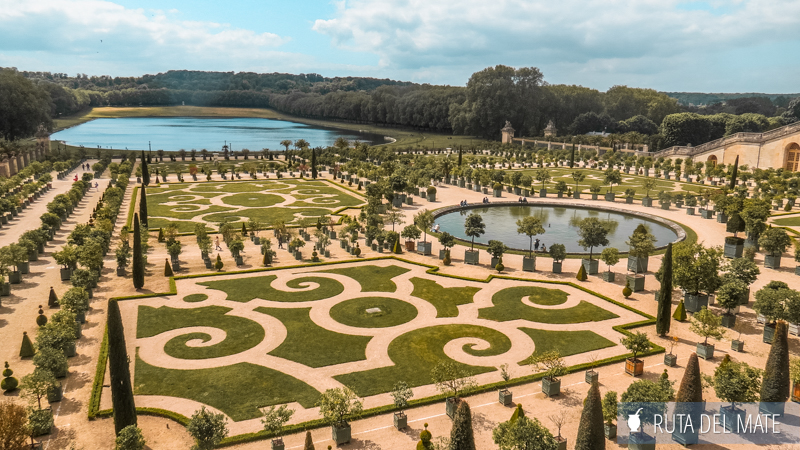
One of the most magnificent palaces in Europe. The Hall of Mirrors, the Gardens of Versailles, and Marie Antoinette’s Estate are just some of the highlights within the complex.
You can reach it by public transport from Paris (RER C to Versailles Château Rive Gauche station) and visit on your own.
🎟 It’s best to buy timed-entry tickets online.
📌 If you prefer everything organized, there are also guided tours from Paris.
🔗 Read our full guide to visiting the Palace of Versailles.
Disneyland Paris
Perfect if you’re traveling with kids or if you’re a fan of theme parks. It’s located in Marne-la-Vallée, about 45 minutes by train from central Paris (RER A).
You can visit on your own or book a tour with transfers included. Tickets should be purchased in advance.
🎟 General admission: varies by date — check the official website.
📌 We plan to take Benji and Feli when they’re a bit older to make the most of it.
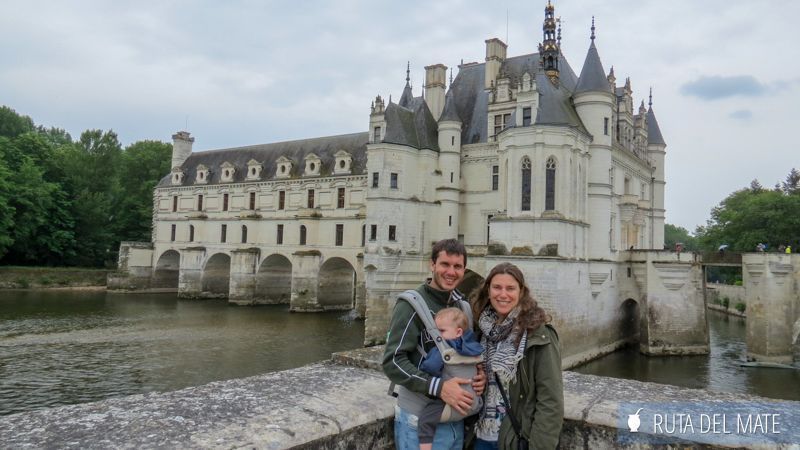
Loire Valley Castles
About 2–3 hours from Paris, the Loire Valley is filled with stunning castles. If you don’t have a car, the easiest option is to book a full-day tour from the city that includes transportation and entrance fees.
Some of the most recommended castles:
- Château de Chambord
- Château de Chenonceau
- Château de Cheverny
🔗 On our blog you’ll find the best castles to visit and tips if visiting with children or babies.
Mont Saint-Michel
This medieval monastery on an island is one of France’s most impressive landmarks. When the tide rises, it’s completely surrounded by water. The interior is equally striking, and the view from the top is worth every step.
From Paris, you can get there by train + bus, although the trip takes several hours. That’s why many prefer to take a full-day organized excursion.
📌 There are also options to stay nearby and explore at a slower pace.
🔝 Here’s our full guide on visiting Mont Saint-Michel.

Where to Stay in Paris
Paris is a large city with attractions spread across various neighborhoods. The most practical choice is to stay near a metro station, as you’ll likely use it daily. Below are some recommended areas to stay in, with specific options in each.
Near the Arc de Triomphe and Champs-Élysées
Ideal area for getting around quickly, well-connected and safe. You’re close to several attractions and there’s a good selection of restaurants.
- Acacias Etoile: 5 minutes from Argentine metro station. Comfortable rooms and a small interior patio.
- ELSA Hotel: 19th-century building just steps from the Champs-Élysées. Has its own bar and a tour desk.
- Hotel Elysée Etoile: 200 meters from the Arc de Triomphe. Spacious rooms, very close to popular restaurants.
Bastille and Le Marais
Great area for walking, dining out, and quick access to the historic center. You’re also close to Notre Dame Cathedral.
- Hotel Marais Bastille: 200 meters from Breguet Sabin metro station. Small rooms but with elegant touches and a good breakfast.
- Hotel Rivoli: simple but with good value for Paris. Close to the Pompidou Centre.
- Hotel Jeanne d’Arc Le Marais: steps from Saint-Paul station. Ideal for families or couples. Larger rooms than usual for Paris.
Montmartre
Bohemian area with lots of character. Although it has a reputation for being lively at night, between Sacré-Cœur and the cemetery it’s quite peaceful.
- Hotel Basss: simple, 10 minutes’ walk from Sacré-Cœur. Quiet street, ideal for resting.
- Hotel Le Chat Noir: very stylish, just 50 meters from the Moulin Rouge. Rooms inspired by cabaret artists.
- Caulaincourt Montmartre: hostel with private and shared rooms. Steps from Caulaincourt station. Ideal if you’re on a budget.
🏨 Want to see more options? Find more places to stay in Paris here.
Transfers from the Airport to Your Hotel
If you’re arriving in Paris by plane and want to avoid the hassle of public transport or taxis on arrival, you can also book a direct transfer from the airport to your hotel. There are options from the three main airports (Charles de Gaulle, Orly, and Beauvais), and the price is fixed, with no surprises. A great option if you’re traveling in a group, with children, or simply want comfort after your flight.
📌 Book your private airport transfer here.
What you need for your trips to Europe
Plan your journey easily with these trusted resources:


